Repair First: How to Keep a Home in Use
A practical repair-first guide for Chicago and Detroit: diagnose the problem, define the scope, find current help, and keep an existing home safe and useful.
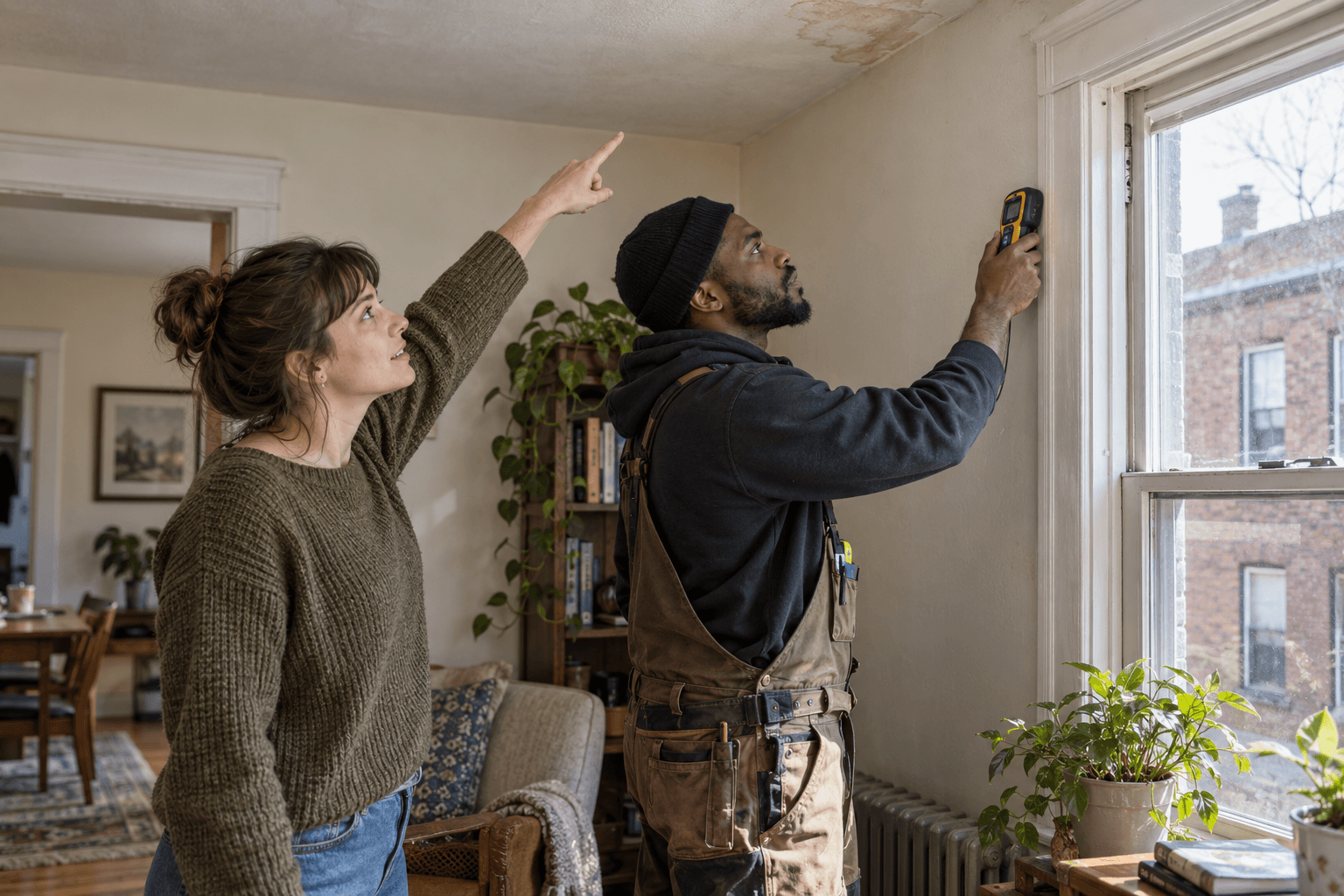
A building does not have to be vacant to be at risk. A roof leak, failed furnace, unsafe porch, or persistent plumbing problem can make a home harder to live in long before anyone talks about redevelopment.
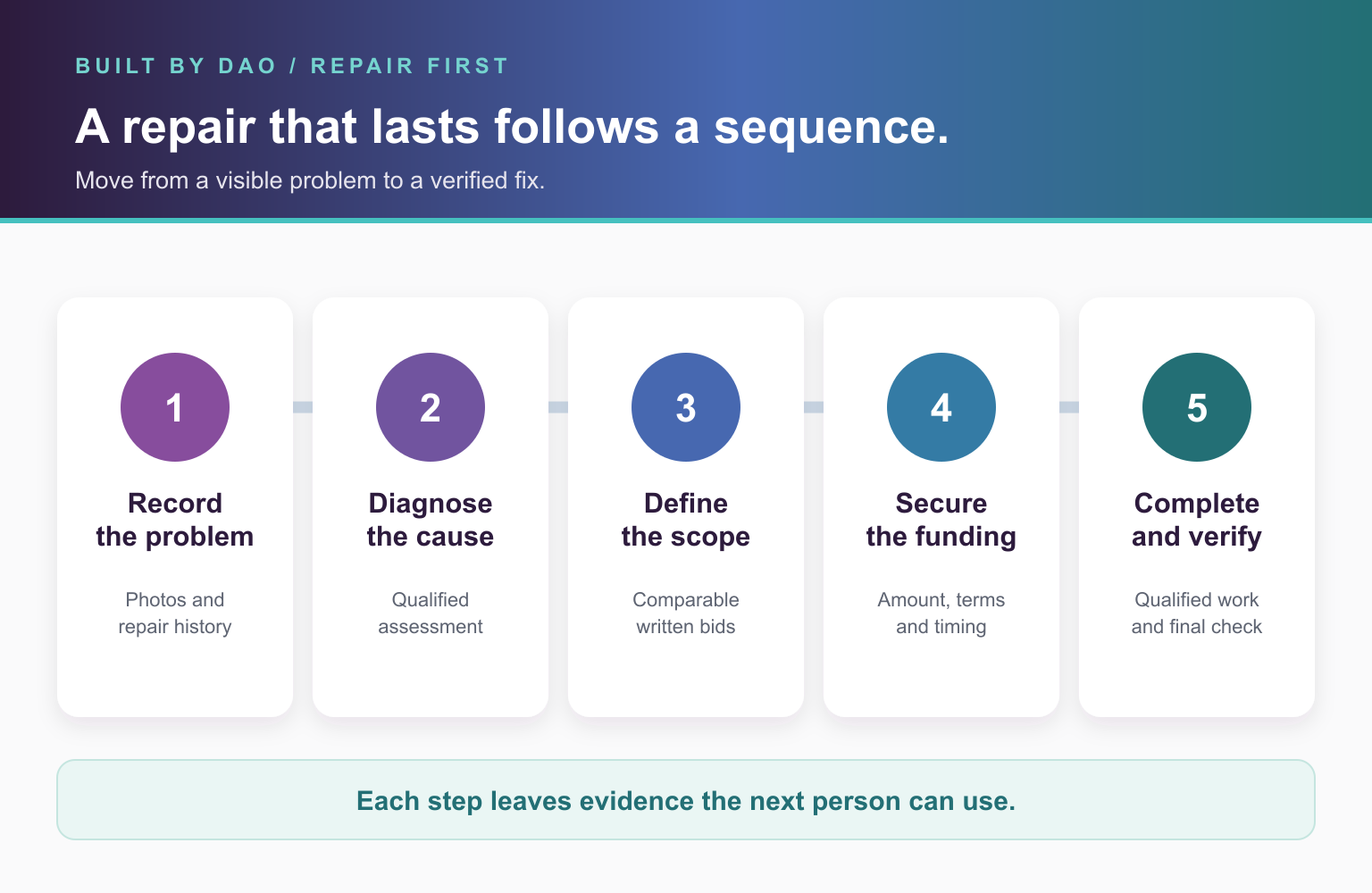
Repair first means asking what it would take to keep that home safe and useful before accepting a more disruptive outcome. It is a practical sequence: identify the problem, assess the whole building, define the work, find a way to pay for it, and confirm the repair actually holds.
For Built By DAO, this belongs beside the work of bringing vacant property back into use. A neighborhood keeps more of what it has built when people can stay in homes that are still worth saving. The first opportunity may be a sound house with one urgent system failing—not a new acquisition.
Start with the failure, then look for its cause
Water on a ceiling is evidence of a problem, not a roofing diagnosis. The source might be a roof covering, flashing, a gutter, a plumbing line, or condensation. Replacing the visible damage without finding the source can leave the building exposed.
The same logic applies elsewhere. A cold room may point to the furnace, insulation, a disconnected duct, or an air leak. A loose porch rail may be a small carpentry job or a sign that the framing below it needs attention.
Record the symptoms before the first quote: where they appear, when they started, whether they change with rain or temperature, and what has already been tried. Take dated photos and keep utility bills, notices, and previous repair records together.
If a condition threatens immediate safety—such as exposed wiring, a gas smell, an unstable structure, or a serious water intrusion—get the appropriate qualified help promptly. A general repair checklist cannot clear a dangerous building for use.
Turn a problem into a scope a contractor can price
A useful repair plan has more than a list of things that look broken. It identifies the cause, the work required, the permits or inspections, and the conditions that would change the price once the work begins.
Walk through five questions with a qualified contractor or inspector:
- What is the immediate risk? Separate urgent health and safety work from work that can be scheduled.
- What failed, and why? Ask what evidence supports the diagnosis and whether another system contributed to it.
- What work fixes the cause? Define materials, labor, access, protection of occupied rooms, and cleanup.
- What else must happen first? Check for electrical, structural, lead, asbestos, or water-damage issues that require specialist review.
- How will completion be verified? Agree on inspections, photographs, warranties, and the person who signs off.
Ask bidders to price the same scope where possible. A low quote that excludes water-damaged framing is not comparable to a higher quote that includes it. Keep a contingency for conditions hidden behind a wall, roof, or floor.
Owners should check local permit rules before work starts. Chicago's permit code requires permits for many repairs and defines specific exemptions; the exemption for one task does not automatically cover the larger project.
Repair, reuse, or replace the component?
“Repair first” does not mean preserving every piece of a building. A damaged part may need replacement, and a dangerous system may need more than a patch. The question is whether the team has tested the smaller, sounder intervention before choosing a larger one.
An intact historic door might be repaired and rehung. A rotten frame may need replacement. Reclaimed trim or brick may fit an older building well, but reused material still needs to meet the job's performance, code, and safety requirements.
This is where repair connects to selective salvage. Materials recovered from one site can become useful inventory for another when someone has documented their condition, dimensions, ownership, and next use. A pile without those records is not yet a supply chain.
Make the financing as specific as the work
“Find funding” is not a project plan. Separate the immediate stabilization work from the full repair, then record the cost, the source of each dollar, and when it will be available. A grant application cannot stop an active leak while it sits in a queue.
Possible sources vary by owner and place: household savings, insurance when the damage is covered, a repair loan, a city program, a nonprofit repair partner, or a coordinated neighborhood effort. Each comes with different eligibility and timing. Get the terms in writing before committing to work.
A complete budget also includes the less visible items: inspection, design where needed, permits, temporary protection, hazardous-material work, contingency, and a return visit if a repair fails inspection. Those costs can decide whether an apparently affordable fix is feasible.
For an organization planning several repairs, use one record per home: owner permission, urgent condition, verified scope, estimate, funding source, contractor, schedule, and completion evidence. That turns a list of addresses into a program a partner or funder can actually evaluate.
Where Chicago homeowners can start
Chicago's Home Repair Program information through CHI 311 is the city route for checking its roof-and-porch repair assistance and current registration status. Open periods and eligibility can change; confirm them with the city before planning around an award.
Rebuilding Together Metro Chicago also has a homeowner repair application. It says free repairs depend on financial eligibility, the type of work, and program priorities. The application is a request for review, not a guarantee of service.
Keep program searches tied to the actual repair. A roof, heating, lead, accessibility, or water problem may belong in a different funding lane. A counselor or program administrator can help identify which current option fits the household and the property.
Where Detroit homeowners can start
Detroit's homeowner resource page lists its Critical Home Repair and LeadSafe programs alongside other resources. The city describes Critical Home Repair as help with urgent health, safety, and accessibility needs for eligible homeowners.
The city's fall 2026 application notice listed leaking roofs, serious plumbing problems, failed heat, electrical hazards, and accessibility repairs. That application window closed September 22, 2026; check the current city page for the next opening rather than relying on an old deadline.
The city says eligibility and priority depend on factors including owner-occupancy, income, household circumstances, severity, and available funds. Its older Renew Detroit roof-and-window program is closed to new applications. A program's name in an old article does not mean it is accepting people today.
What the new federal law changes
The 21st Century ROAD to Housing Act, Public Law 119-101, became law on July 11, 2026. Section 202 establishes a Whole-Home Repairs pilot framework for grants to eligible homeowners and loans to certain small landlords through implementing organizations.
The law recognizes repairs for habitability, accessibility, weatherization, and related needs. But its Section 1202 authorizes no additional funds to carry out the act. A federal framework is not the same as an open local application or money available to a homeowner today.
That distinction matters for planning. Use programs that are actually open and funded for current work. Treat a future federal pilot as a possible additional source once an implementing organization, funding, and application process are in place.
How a repair-first partnership could work
Built By DAO's broader model connects property, practical skills, material reuse, and long-term neighborhood value. Repair is a natural place for those pieces to meet: a real homeowner need, a defined scope, a qualified team, and a way to document what was done.
A credible pilot would start small. A neighborhood organization could identify recurring repair needs; trade partners could assess and price them; a funding partner could support a defined set of homes. Residents would know who is responsible, what the work covers, and how the result will be checked.
That is more useful than promising that every roof can be fixed at once. It gives people a repeatable way to move from a problem to a completed repair—and gives partners a clear role in building the capacity to do more.
If you organize homeowners, bring construction or training capacity, or can help fund a scoped repair effort, start a partnership conversation. Have a specific vacant or underused property that could serve a wider neighborhood purpose? Share the property.
Frequently asked questions
Is a small repair always cheaper than replacement?
No. The cause, surrounding damage, remaining life of the system, and code requirements determine the sound choice. Compare repair and replacement against the same performance goal and the full cost of each.
Can salvaged materials be used in home repairs?
Sometimes. Fit, condition, testing, code requirements, and a documented source matter. Reuse works best when the part has a specific job to do, not when a project is forced to use whatever happens to be available.
Can I apply now for a federal Whole-Home Repairs grant?
The 2026 law creates a pilot framework; it does not itself open a direct homeowner application or provide new funding. Check current city and nonprofit programs while federal implementation develops.
Related Posts
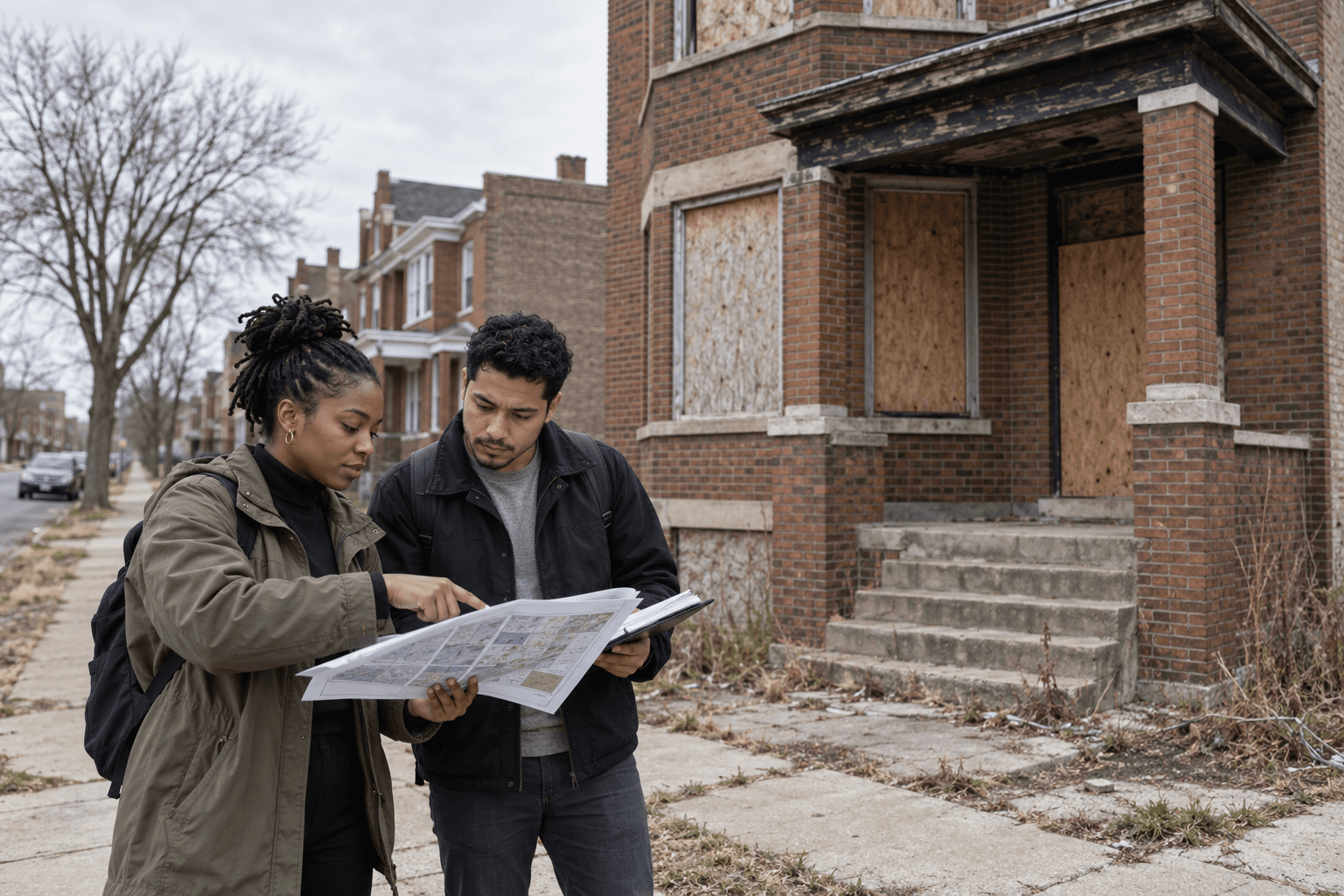
How to Research a Vacant Property Before You Pitch It
A practical first screen for vacant buildings and lots: identify the parcel, check ownership, find the sale route, and decide what needs professional diligence.

South Shore Is Not a Turnaround Story. It's a Custody Question.
South Shore has the bones. What it's been missing is a system that keeps wealth in the hands of the people who built the neighborhood. Community development works when residents hold the keys, not just the lease.
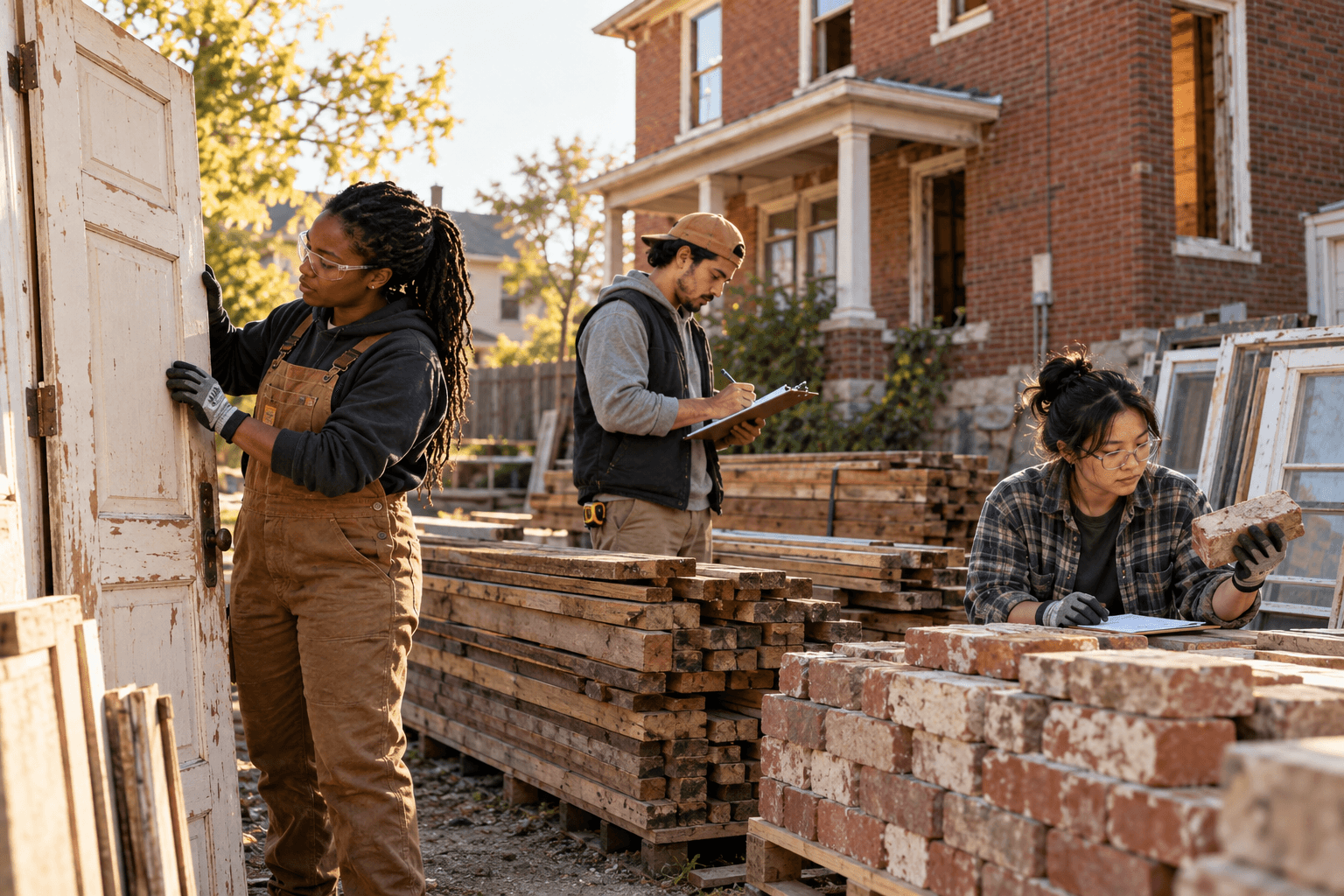
Deconstruction vs. Demolition: What Should Happen Before a Building Comes Down?
Compare deconstruction, selective salvage, and demolition through a practical building assessment: safety, recoverable materials, local buyers, cost, and schedule.