How to Research a Vacant Property Before You Pitch It
A practical first screen for vacant buildings and lots: identify the parcel, check ownership, find the sale route, and decide what needs professional diligence.
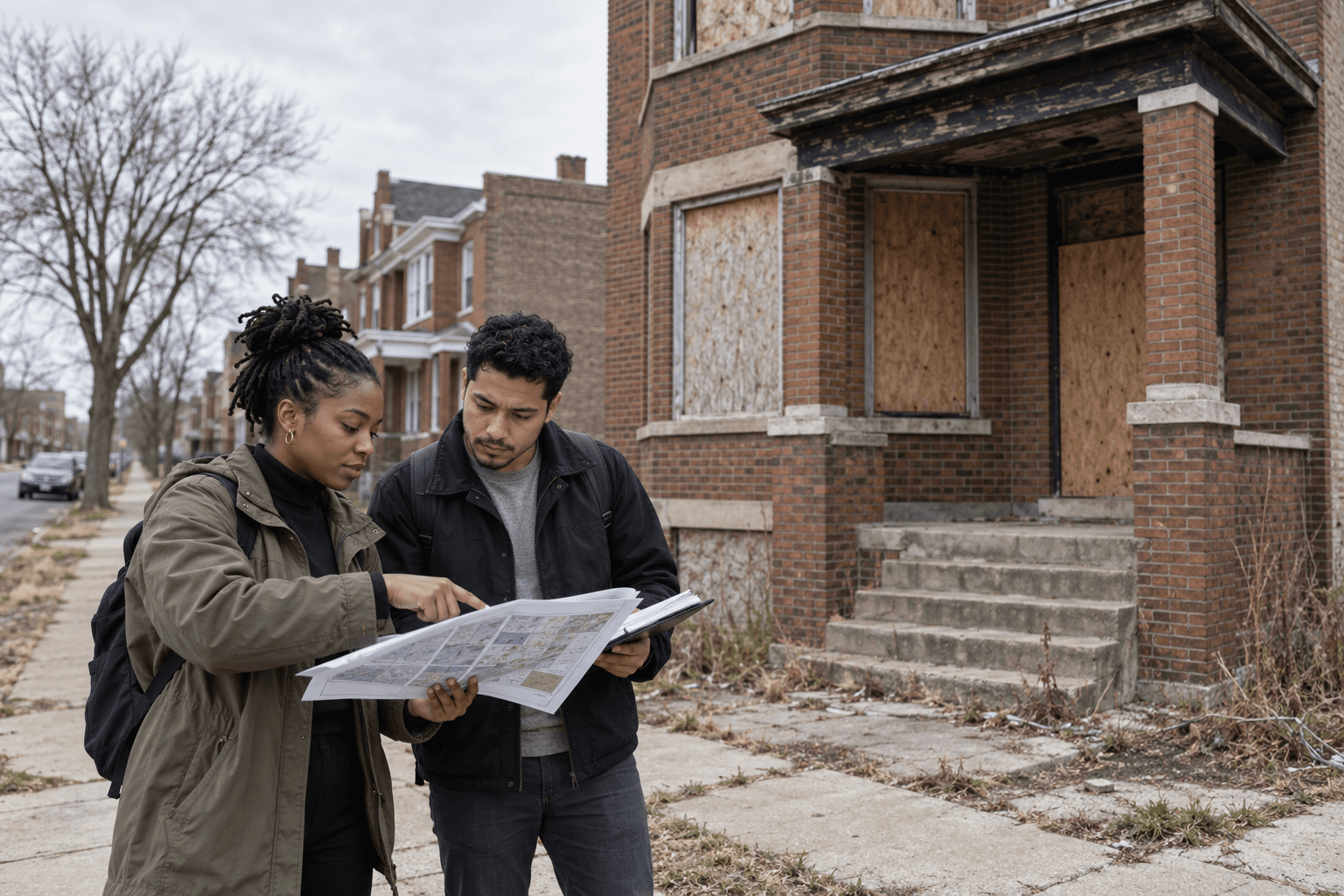
A vacant building can look like an opportunity from the sidewalk and turn out to have no workable path to purchase. Before a community group spends money on designs or raises expectations, it needs a reliable answer to three questions: Which parcel is this? Who can legally sell or convey it? What would it take to put it back to use?
This field guide follows the first investigation, from an address to a short list of properties worth professional diligence. It applies to buildings and lots. Chicago and Detroit have different public systems, so the local links below are starting points, not interchangeable purchasing routes.
Begin with a place, not a listing
Write down the street address, nearby intersections, and what can be seen from public space. A building may occupy more than one parcel; a vacant lot beside it may have a different owner. Photograph only what you can lawfully see and do not enter an unsecured building. Note obvious access, drainage, occupied units, adjacent uses, and signs of recent work. These observations are leads, not a structural assessment.
Then define the intended use. A possible home, workshop, storefront, or mixed-use building calls for different space, utilities, access, approvals, and operating income. Without a use, a low asking price is just a number.
For a first search, record the address, parcel identifier, approximate size, present use, source link, and date checked. Keep a column for what remains unknown. The Center for Community Progress cautions that no single dataset tells the whole story of vacant property; local records and on-the-ground observations have to be read together.
Match the address to the actual parcel
The parcel ID is the key that lets records from different offices line up. In Cook County, the Assessor's property search can help find a property index number (PIN) by address. In Detroit, the City's parcel data guide explains the parcel ID and legal description used for assessment and transfer records. Search by address, then check the mapped boundaries; do not assume the photographed building and the parcel returned are identical.
Public maps can also show parcel dimensions or classification. Those fields help a first screen but are not a survey. If the project depends on an alley, parking area, side lot, loading route, or shared wall, flag the boundary question for a surveyor and title professional before making a binding commitment.
Separate the owner, the taxpayer, and the seller
A tax record, a parcel map, and a sale listing answer different questions. A taxpayer name may be a clue; a listing agent may have marketing authority; neither by itself proves that the person you are speaking with can convey clear title. A recorded deed and subsequent documents are part of the ownership trail, and a title company or real-estate attorney should review it before closing.
For Detroit, the Wayne County Register of Deeds describes how to search and obtain recorded documents. For Chicago, use the Cook County Clerk's Recording Division after identifying the PIN. Record the current apparent owner, the record date and source, and any uncertainty about multiple owners, estates, entities, mortgages, liens, or separate parcels. Do not publish a private person's contact information in a public property pitch.
The practical question is not merely “Who owns it?” It is “Is there a credible path to control it?” A private owner might consider a sale or option. A city or land bank might require an application and use restrictions. A lender, court, or estate might have to act first. Make that path explicit before commissioning a full design.
Public inventory is a route, not a master list
ChiBlockBuilder is Chicago's portal for City-owned vacant land sales. Its map includes useful site information, but it does not make every vacant Chicago parcel City-owned or available under the same program. Detroit's online property application distinguishes City-owned from Detroit Land Bank Authority property and covers certain unlisted properties; other DLBA opportunities appear through BuildingDetroit. Read the current eligibility, use, timing, and approval terms attached to the specific parcel.
A privately held building often never appears in these public portals. Brokers, local owners, community organizations, and direct introductions can surface candidates. Whichever route produces the lead, keep the parcel and ownership checks the same.
Run a low-cost screen before paid diligence
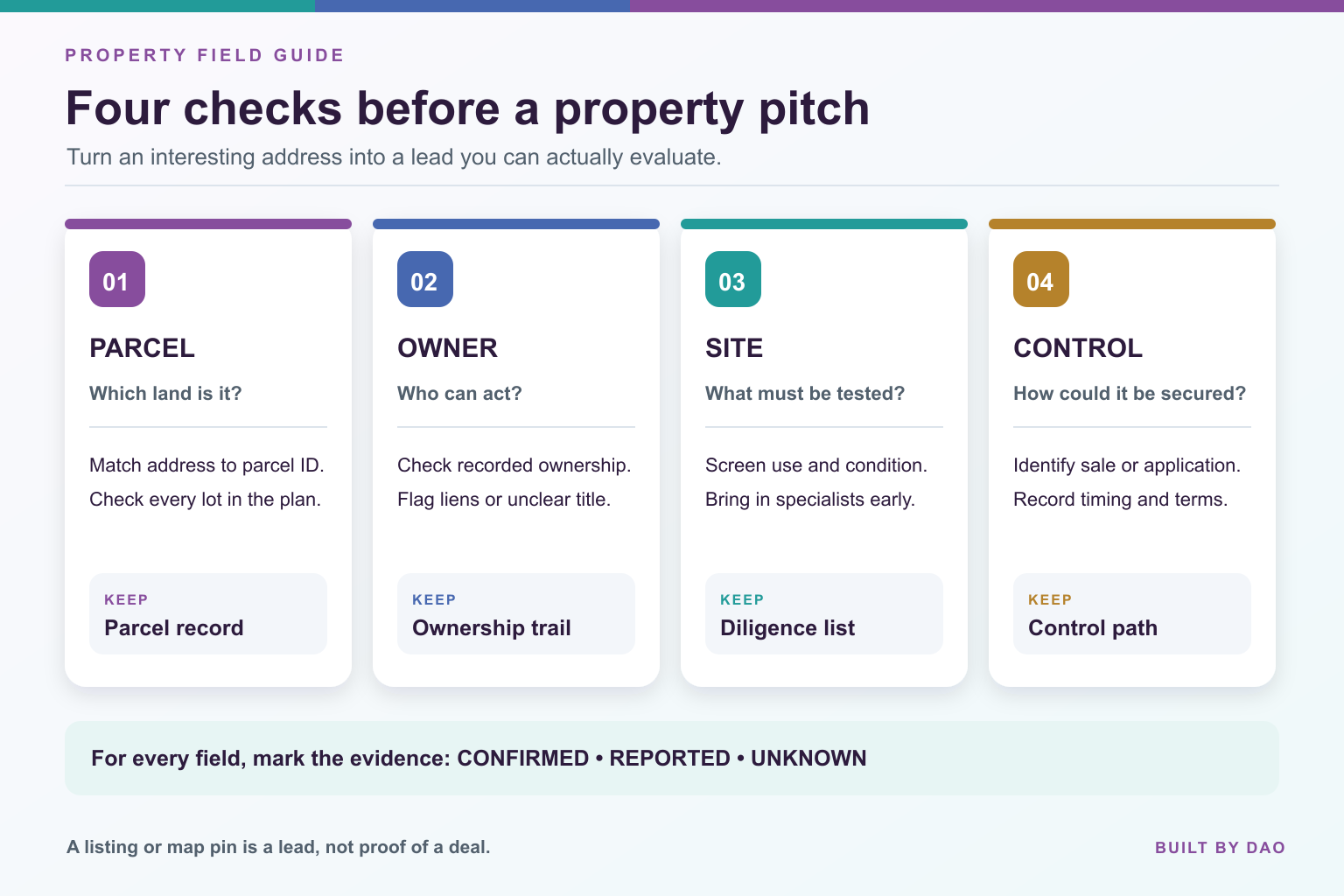
A first-pass screen is designed to decide where to spend professional time. It should cover:
- Use and approvals: likely permitted uses, zoning questions, historic status, occupancy or code issues, and any public-sale conditions.
- Physical condition: roof, structure, water, utilities, access, and visible hazards, with unknowns identified for an architect, engineer, or inspector.
- Environmental history: former industrial, automotive, dry-cleaning, dumping, or other uses that call for specialist review.
- Market and operations: who would actually use the place, what they could pay, what it costs to maintain, and whether a credible operator exists.
- Path to control: who can transact, expected price or program terms, required approvals, and a realistic decision date.
Environmental history deserves attention before acquisition. The EPA's All Appropriate Inquiries guidance explains the professional assessment process used to evaluate contamination and potential liability. A visual walk-through or database search is not a substitute for that work when it is warranted. The purpose of a first screen is to identify the need for an environmental professional early enough to act on the result.
Compare candidates using the same one-page record
Use a short candidate sheet for every property: address and parcel IDs; source and date; intended use; owner and sale route; visible condition; zoning and environmental questions; rough acquisition and rehabilitation ranges; neighbors and existing users; next professional check; and a named person responsible. Mark evidence as confirmed, reported, or unknown. A good candidate is not simply the cheapest building. It is the property whose ownership, site constraints, neighborhood purpose, and project capacity can plausibly meet.
Shortlist two or three rather than making the first interesting building the entire strategy. If a deal fails the ownership or condition test, the search brief and community relationships still have value. Our full project journey shows where sourcing fits alongside community design, finance, delivery, and long-term stewardship.
What to send Built By DAO
If you know of a building or parcel that could serve a neighborhood, share the property. An address, what you know about the owner or listing, the proposed use, and why the place matters locally are enough to start. We can then decide which facts need verification before a project proceeds. The goal of this first step is a credible lead, not a premature promise to buy or build.
Related Posts
The Feasibility Checklist for a Community Building
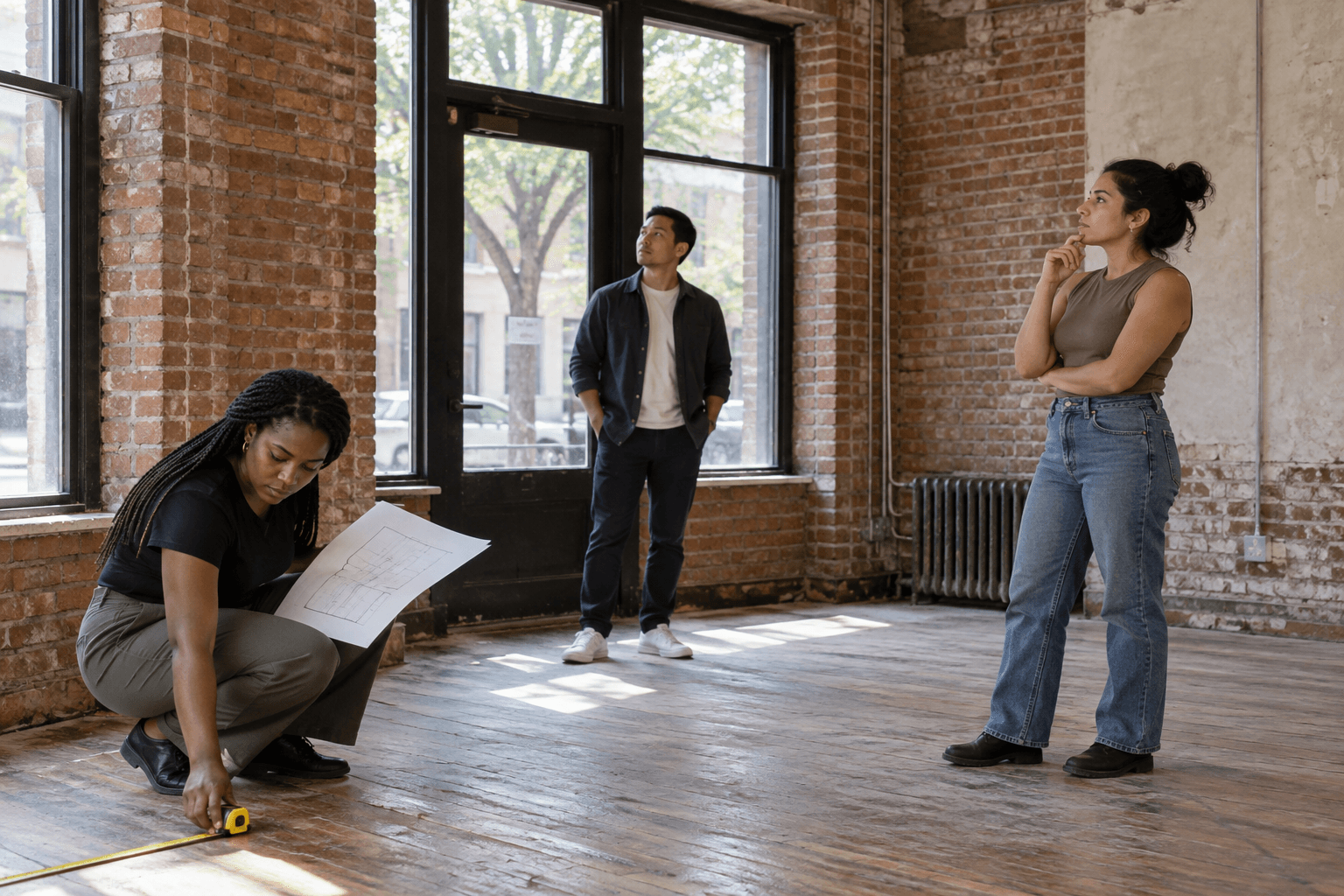
Screen property control, permitted use, building condition, community demand, economics, and team capacity before committing to a neighborhood building.

South Shore Is Not a Turnaround Story. It's a Custody Question.
South Shore has the bones. What it's been missing is a system that keeps wealth in the hands of the people who built the neighborhood. Community development works when residents hold the keys, not just the lease.
Deconstruction vs. Demolition: What Should Happen Before a Building Comes Down?
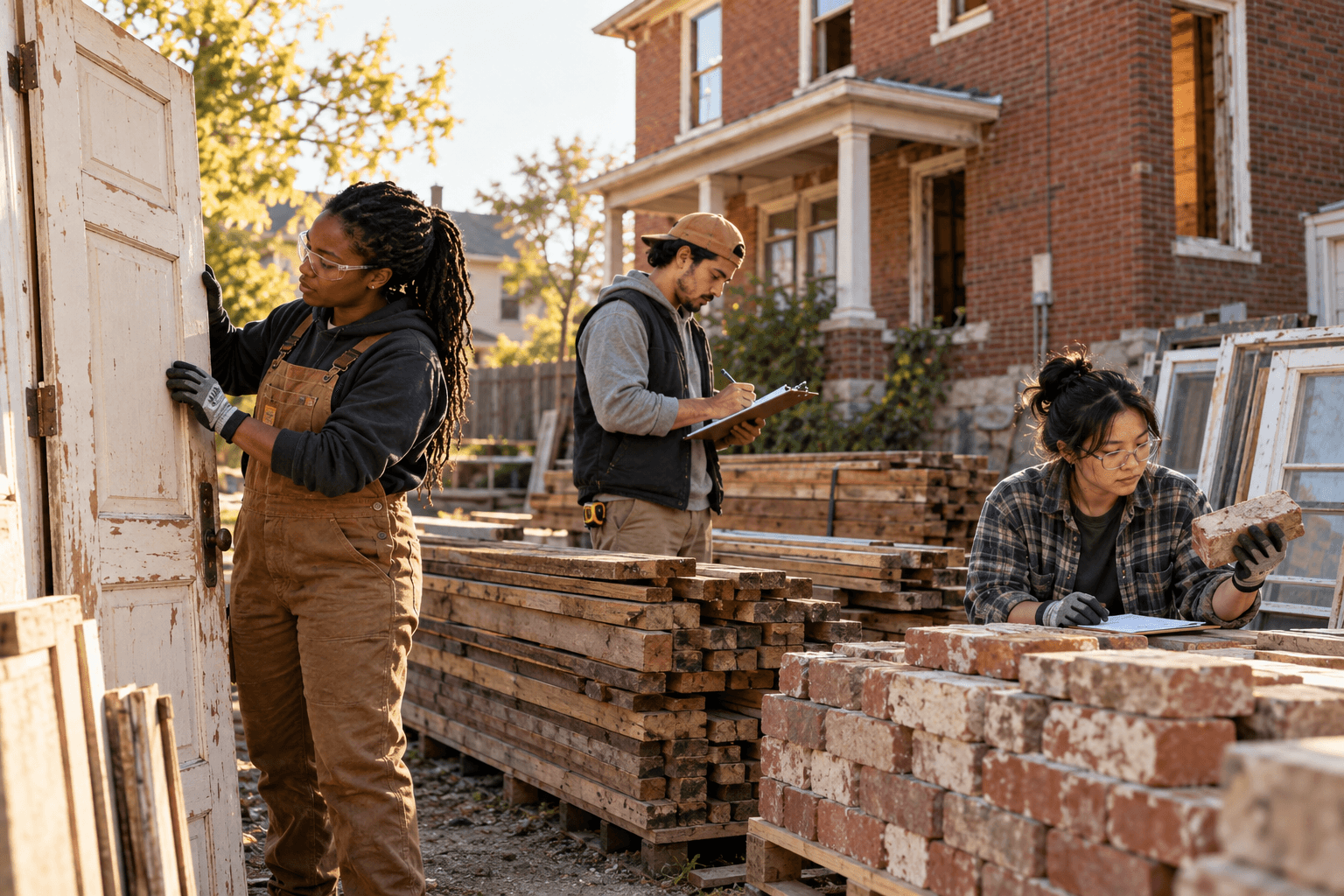
Compare deconstruction, selective salvage, and demolition through a practical building assessment: safety, recoverable materials, local buyers, cost, and schedule.