Chicago City-Owned Vacant Land: A Guide to ChiBlockBuilder and Community Projects
Find a City-owned Chicago lot, choose the right ChiBlockBuilder route, and plan a credible garden, side yard, housing, or neighborhood project.
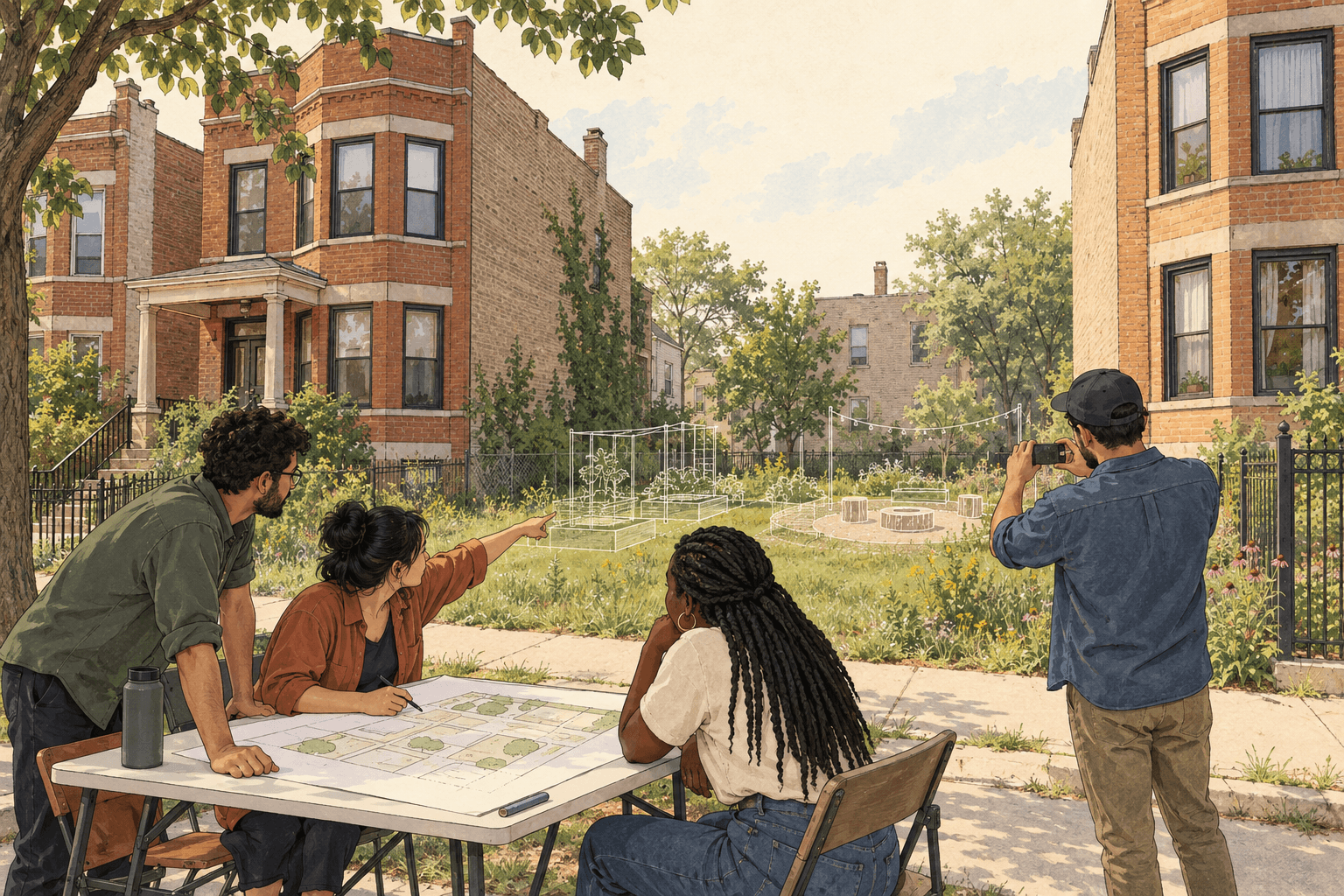
A vacant lot can look like the beginning of a garden, a side yard, or new homes. Before drawing a plan, find out whether the City of Chicago owns it, whether it is currently offered for sale, and which application fits the use you have in mind. Those are three separate questions.
ChiBlockBuilder is the City's starting point for many sales of City-owned vacant land. Its map and program guides help residents, community groups, and development teams move from an address to a real proposal. This guide explains how to use them and how to think beyond the purchase to the people who will care for the site.
Start with the parcel, not the price
Search the ChiBlockBuilder map for the address or area that interests you. The City shows information such as lot size, zoning, market value, and its environmental-review summary. Write down the parcel identifier and the application route shown for that listing.
Work from the listing outward. A useful first pass is: save the address and parcel number; read the listing's proposed sale category; compare its map data with what you can see from the public sidewalk; then open the linked application guide. If a lot looks perfect on a map but the available route does not match your use, you do not yet have an application strategy. Ask the land-sales team whether another route is possible before paying for plans.
The City has a broader inventory of land it owns. An inventory parcel is not automatically an active sale listing. If you cannot find a parcel in an open application, contact the City before assuming you can buy it through ChiBlockBuilder.
Ownership matters too. A vacant parcel held by the Cook County Land Bank Authority follows its own process. Privately owned land is another conversation altogether. Chicago's portal is a route to City-owned land, not a universal land bank.
Match the proposed use to the City's route
ChiBlockBuilder groups land sales by intended use. The City's application guide is the source for the current rules and the application attached to each listing. Four routes are especially useful to distinguish:
- Side yard: A Side Yard application is for an eligible owner-occupant whose home shares a lot line with the parcel. It extends that home's yard. A neighborhood group cannot use this route simply because the lot is nearby.
- Shared open space: The Open Space route is for a fenced lot managed for local neighborhood activities. The City describes residents, groups, nonprofits, and businesses as possible applicants. A plan for use and maintenance matters as much as the purchase.
- Urban agriculture: The Urban Agriculture route is for land managed by local growers. It carries use and licensing obligations specific to agriculture. A garden idea needs an operating plan, not just a drawing of raised beds.
- Development: A proposal for homes, mixed use, a business, or a community-serving building belongs in the applicable development route. The City also describes distinct affordable-housing and Missing Middle programs. Choose the program attached to the parcel and intended project; a discounted lot price in one program does not carry over to the others.
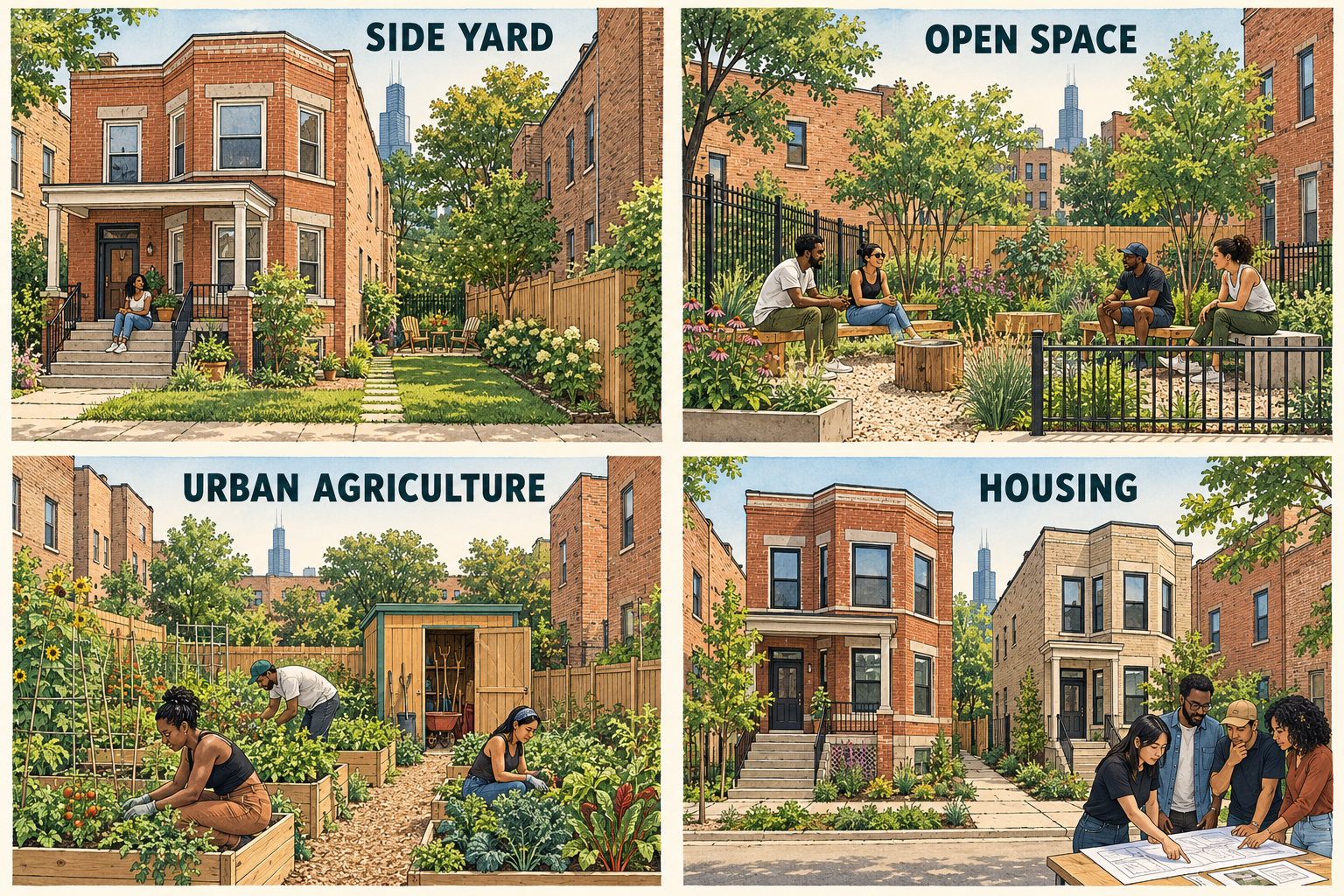
Four distinct uses for City-owned vacant land. Each listing has its own program rules and eligibility. Open the image to view it larger.
Side yard: an extension of one home
This is a narrow program, and that is its value. The buyer must be an eligible owner-occupant of the home immediately next door, with a shared lot line. The City's current Side Yard guide describes a minimum offer tied to a percentage of the listed market value, a fencing requirement, a prohibition on using the lot for parking, and a five-year resale restriction. Check the guide for the current figures and the particular listing before budgeting.
An owner who wants more room for a garden or outdoor gathering may have a good fit. A block club that wants to hold a site for everyone does not become an adjacent owner by filing as a group. It should examine the open-space path instead.
Open space: a public-facing use with a real steward
The City's Open Space guide allows a resident, group of residents, nonprofit, or business to propose a fenced space for neighborhood activities. The guide calls for a site plan, budget, community engagement, and evidence that the applicant can maintain the property. It also describes an improvement deadline and a restriction on resale. This is not a route for buying a cheap parcel now and deciding its use years later.
Think through who opens and closes the site, what neighbors can use it for, who carries insurance, and who pays for fencing, water, repairs, and routine care. If several people are involved, write down how the group will make decisions and what happens when one organizer leaves.
Urban agriculture: growing is the operating purpose
The Urban Agriculture guide describes a discounted land route tied to a long agricultural-use commitment. It calls for local growers, progress toward the project, and the applicable City licensing process. A food-growing plan may belong here; an occasional garden beside a meeting space may fit the open-space route better. Compare both guides before choosing an application.
The plan should show who grows, who maintains soil and water systems, how produce or space will be used, and how the project will operate after the first growing season. The City's current milestones and land-use terms are more important than the headline purchase price.
Housing and mixed use: the project must stand up financially
The market-rate development guide asks applicants to describe the project, team, site plan, itemized budget, financing, community impact, and offer. The City weighs experience and readiness alongside the price. A project with community benefit still has to demonstrate that it can be financed and built.
Affordable housing and Missing Middle have their own goals and application rounds; neither should be assumed open for every parcel at every time. An affordable co-op, land-trust home, or small multifamily proposal should start by finding the program that actually permits its structure and use, then assembling a team that can deliver it.
Chicago's City Lots for Working Families is another route for affordable homeownership development, and the City lists cooperatives and community land trusts among possible structures. Its terms and applicant requirements are its own. The important first move is to identify the specific program, then read its current guide before estimating a purchase price or promising neighbors a particular outcome.
None of these categories is a promise that every lot will be offered or that a selected applicant immediately owns the land. The program, listing, application, approval, and closing are separate steps.
What to check before applying
A useful site plan starts with evidence about the lot and a realistic account of the work after closing. We would put these questions on one page:
- Is this the right parcel? Confirm the owner, boundaries, active listing, parcel number, and application category. Visit the site from public access; do not assume a map tells the whole story.
- Can the proposed use fit? Check the City's zoning information, then identify any approvals or design work the project may need. A proposed garden and a two-flat have very different paths.
- What remains unknown about the land? Read the City's environmental information, but treat the summary as a starting point. The City says buyers remain responsible for their own due diligence.
- Who will do and pay for the work? Budget for acquisition, design, approvals, site preparation, utilities, construction or planting, insurance, and ongoing care. The City's property-tax guide also matters: land that was untaxed in City ownership can carry taxes after a private sale.
- Who will hold title and make decisions? Name the applicant, funding sources, decision-makers, maintenance team, and way neighbors will participate. This is especially important when a group, rather than one adjoining homeowner, is pursuing the site.
For a development proposal, the City asks for evidence that a team can finance and deliver the plan, along with its proposed use, budget, and community impact. For open space or agriculture, the long-term steward needs to be just as credible. Selection for a sale process is not the same as a completed transfer; approvals and closing steps still follow.
Turn the answers into a one-page project brief
Before hiring a designer or submitting an application, put the essentials in one document: parcel address and listing link; proposed use; why this route fits; applicant and ownership structure; named project lead; approximate acquisition and improvement budget; likely funding sources; timeline; maintenance plan; and what nearby residents have said. If you cannot fill a line yet, mark it as a question to investigate. That is more useful than disguising a missing budget as a confident render.
For a housing proposal, add the intended number and type of homes, the likely development team, and a credible financing path. For shared open space, add access rules, upkeep roles, and a reserve for recurring costs. The same lot can support different stories, but only one specific proposal can be evaluated at a time.
The City may require its Economic Disclosure Statement and other application materials. Read the current program guide before assembling documents; requirements differ by route. If the guide leaves a material question unanswered, the City's land-sales team offers help in English and Spanish. Ask while the plan is still easy to change.
From a vacant lot to a neighborhood asset
Consider a group that wants to turn a listed lot into a shared growing space. The land application answers whether the group can acquire the parcel under the City's rules. It does not, by itself, decide who can use the garden, who holds the keys, who pays the water bill, or what happens when the first volunteers move away.
Suppose a group of neighbors finds a listed lot between two occupied buildings. One neighbor owns the home next door, but the group wants everyone on the block to use the space. The Side Yard route may look tempting because of that neighbor's address, yet it would put the property in one household's yard. The group instead studies the Open Space and Urban Agriculture guides, asks which use is primary, and sketches a budget and operating plan. If growing food is the core activity, it tests the agriculture route's long-term commitments. If the site is primarily a place to gather with some planting, it tests Open Space. In either case, it identifies the entity and people responsible for the property before applying.
That is a hypothetical example, not a description of a particular listed parcel. Its point is that ownership, eligibility, and lasting use have to line up. A parcel can be attractive and still be wrong for the group or the program.
Those choices are the beginning of community ownership. A block club, nonprofit, land trust, cooperative, or another entity may fit different goals and program rules. The right structure is the one that can carry the property, the obligations, and the benefit over time. Our community ownership visual guide shows the larger pattern; the land banks and cooperatives guide explains related ownership models. Chicago's City land-sales portal, though, has its own rules and should not be mistaken for a land bank.
Built By DAO is interested in projects that make land useful and keep neighborhood value close to the people who create it. If you know a Chicago parcel worth exploring, share the property with us. If you represent a block club, organization, or development team shaping a larger idea, start a partnership conversation.
Common questions
Can anyone buy a Chicago vacant lot for $1?
No. ChiBlockBuilder has different sale routes with different eligibility, pricing, and use obligations. Some programs offer deeply discounted land for a defined public purpose; others use market value or a proposal process. Read the current guide for the listed parcel before using any price in a budget.
Can a group apply for a side yard?
The City's Side Yard route centers on an eligible owner-occupant whose home is immediately adjacent to the lot. A group seeking a shared space should look at the Open Space or other applicable route instead.
Is a City-owned lot automatically available through ChiBlockBuilder?
No. The City's land inventory and its active sale listings are different. Confirm that the parcel is offered and which application applies. For a Cook County Land Bank parcel, use that agency's process.
How is this different from Detroit's land bank?
The ownership and sale systems differ. Chicago's ChiBlockBuilder organizes City-owned land sales by proposed use; Detroit's Land Bank Authority has its own property programs and compliance process. Our Detroit Land Bank guide walks through that city's routes.
Checked against City of Chicago program pages in September 2026. Listings, prices, eligibility, and application rounds can change. Confirm the current terms for the particular parcel and program with the City before acting.
Related Posts
Detroit Side Lots, Neighborhood Lots, and Community Projects: Which Path Fits?
Compare Detroit Side Lots, Neighborhood Lots, and group project routes, then prepare the parcel, ownership, budget, and maintenance plan.

Renting in Chicago While Wealth Stays Out of Reach: What Income Inequality Costs You
Chicago's income gap isn't just a statistic — it shapes where people live, what they can afford, and whether they ever build wealth. Here's what that means for renters, and what's changing.
Chicago’s Missing Middle Housing: From Vacant Lot to Homes
How Chicago vacant lots can become small-scale homes: the City’s Missing Middle initiative, site checks, community design, financing, and delivery.