Detroit Land Bank: A Guide to Property and Community Projects
Find the right Detroit Land Bank route for a house, vacant lot, or neighborhood project, then plan the ownership and stewardship that make it last.
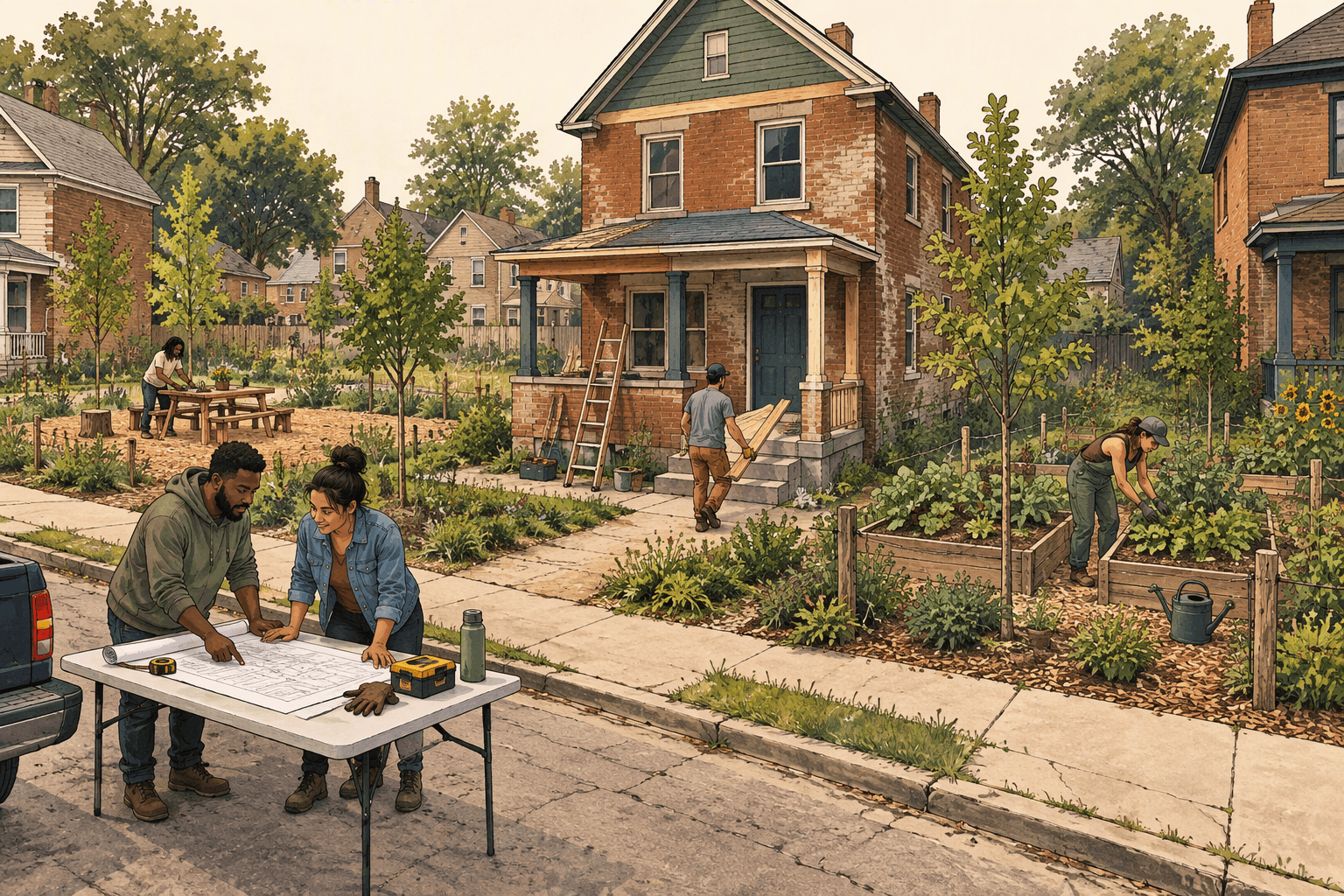
The Detroit Land Bank Authority can be a starting point for a home, a garden, or a larger neighborhood project. The right first question is not “What is cheapest?” It is “Who owns the parcel, which sale program fits the intended use, and who will care for it after closing?”
This guide helps residents, block clubs, and community organizations sort those questions before they apply. It also shows how a single property search can connect to a longer-term community ownership plan.
First, find out who owns the property
Detroit has more than one public property seller. The City of Detroit says the Detroit Land Bank Authority (DLBA) holds vacant residential properties, including houses and lots. The City holds much of the publicly owned commercial land and buildings.
That distinction shapes the next step. For a house or residential lot, start with the DLBA's programs and listings. For a former commercial site, start with the City's property page.
An empty parcel is not necessarily for sale. Check the owner and the actual listing or application route before building a budget around it. The DLBA's Create a Project guide specifically starts with an ownership lookup.
Match the project to the right DLBA route
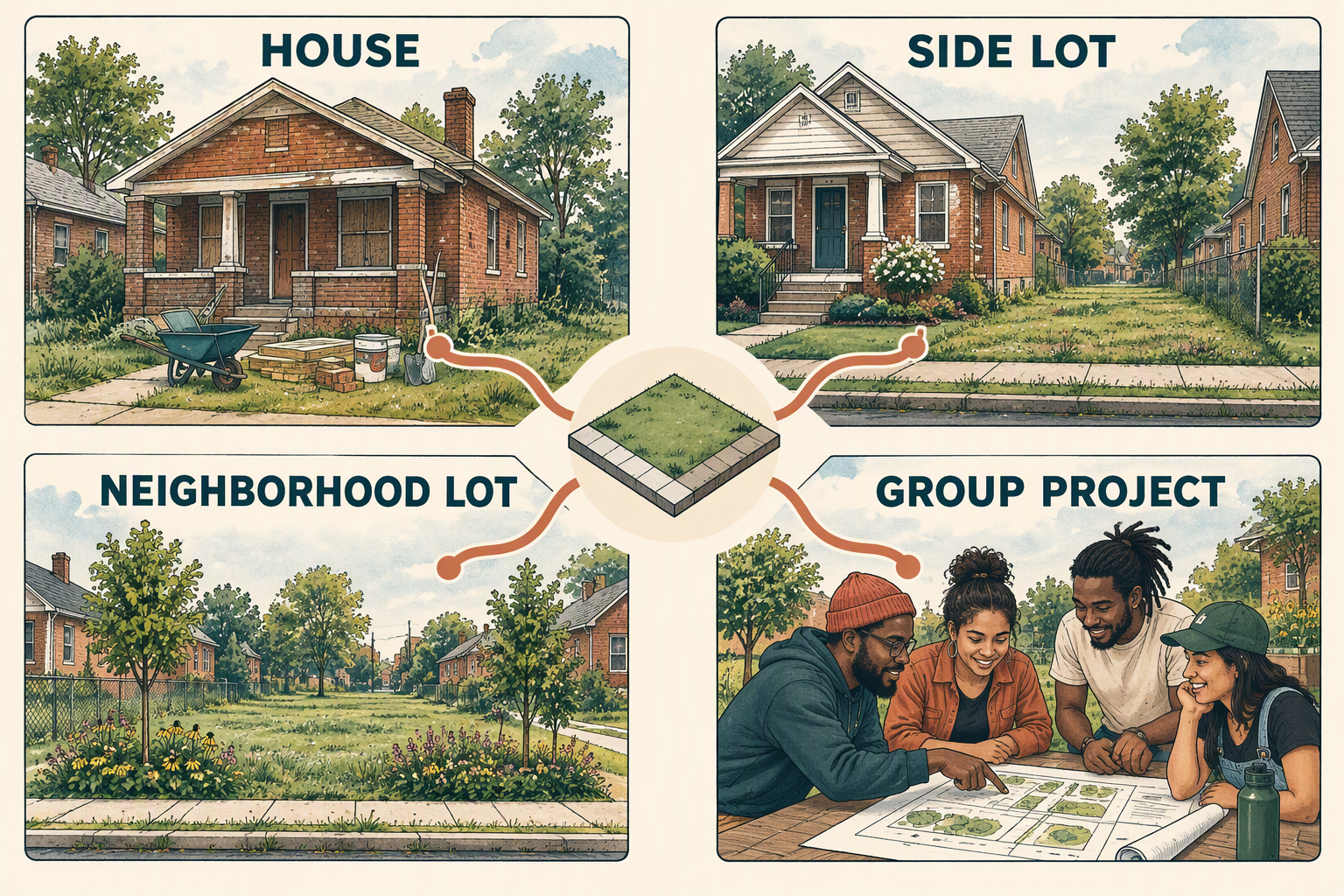
Four common starting points for a property search. Open the image to view it larger. Program eligibility and availability depend on the parcel and buyer.
- A house to renovate: compare Auction, Own It Now, Rehabbed & Ready, and marketed listings. The routes serve different property conditions and buyers.
- A lot next to your occupied home: review the Side Lot program, which centers on an eligible neighboring homeowner.
- A nearby lot for small-scale use: review the Neighborhood Lot program. Its buyer and use rules differ from Side Lots.
- A group-led garden or gathering space: explore land reuse and Create-a-Project, where a use plan and continuing stewardship matter.
- An unlisted DLBA property: look at purchase by application after confirming the DLBA owns the parcel.
This is a route map, not an eligibility determination. Each program has its own property rules, buyer requirements, sale process, and current listings. Check the DLBA page for the specific parcel before applying.
Buying a house: plan the use before the bid
An Auction or Own It Now listing can make a house visible. The important next step is a credible plan to renovate it and put it back into use.
The DLBA's Compliance team tracks renovation progress after a sale. Buyers are introduced to a representative and asked to submit progress photos. The terms of the actual purchase agreement govern the project.
Before committing, walk the property when access is available, get a scope from qualified trades, and map acquisition, repairs, carrying costs, permits, and occupancy. Read the listing and agreement for reporting and completion requirements.
Buying land: decide who will steward it
A Side Lot and a Neighborhood Lot may be on the same block, but they serve different buyers and uses. The DLBA's land reuse page sets out the current programs.
For a garden or shared neighborhood space, settle the ownership and maintenance questions early. Who is eligible to apply? Who will maintain the site? What permissions, design, or use rules apply? A useful lot plan answers those questions alongside the site design.
When a neighborhood group is the buyer
A block club, nonprofit, or community development organization may be pursuing more than one parcel. The DLBA has land project routes for qualifying local groups and a separate Community Partner policy for eligible organizations.
“Community Partner” has a specific DLBA meaning. Its policy sets conditions including Detroit location, federal tax-exempt status, good standing on taxes and blight matters, and a local recommendation. A neighborhood group should check eligibility rather than assume the label applies.
The DLBA also looks at whether the proposed use fits the property and whether the applicant can finance and complete it. A strong proposal therefore connects the parcel to a real neighborhood purpose, a budget, a timeline, and a steward.
That is where cooperative thinking becomes useful. A group can decide whether a shared space, a housing cooperative, a land trust, or another ownership structure fits its goals. The property program and the ownership structure are separate decisions; one does not automatically grant the other.
Our land banks and cooperatives guide explains the broader model. The housing cooperative guide goes deeper on how residents organize ownership and governance.
A practical sequence for a community project
- Name the use. Describe the people served, the activity on the site, and the long-term steward.
- Identify the parcel. Confirm ownership, address, zoning, listing status, and any known site constraints.
- Choose the route. Compare the current DLBA or City program with the planned use and the applicant's eligibility.
- Build the project budget. Include acquisition, professional work, construction, approvals, operating costs, and ongoing maintenance.
- Bring neighbors into the design. Local knowledge can sharpen the plan and connect future users to the property.
- Set the ownership structure. Decide who will hold title, who makes decisions, and how the asset stays useful to the neighborhood.
- Apply with a credible schedule. Keep the program's approval, renovation, reporting, and stewardship requirements in the project plan.
For a City-owned commercial parcel, the City's own checklist calls for a proposed use, estimated development costs, and a project timeline. For an unlisted DLBA parcel, follow the DLBA application route.
What community ownership adds
A property purchase answers who gets the deed. Community ownership also asks who benefits from the property, who helps govern it, and what happens after the first project succeeds.
Imagine neighbors turning several vacant lots into a connected garden and meeting space. The land purchase is one milestone. The enduring work is the group that manages the space, funds upkeep, and keeps it welcoming to the block.
A housing project has a different structure and set of costs, but the same need for a durable owner and a clear decision process. Our community ownership visual guide shows how those pieces can fit together.
Built By DAO is interested in those longer arcs: property, useful work, resident participation, and lasting neighborhood value. If you have a Detroit property or an early project concept, share the property with us. If you represent a group exploring a partnership, start a partnership conversation.
Common questions
Can a block club buy a DLBA lot?
Some DLBA land programs accept qualifying local groups. The route depends on the parcel, the group's legal form, its neighborhood ties, and its use plan. Start with the current land reuse programs.
Can I apply for a property that is not listed?
If the DLBA owns it, its purchase-by-application process may be the relevant route. Confirm ownership first; City-owned and privately owned properties follow different paths.
Does a land bank purchase automatically create a cooperative?
No. The sale transfers a property under its program terms. A cooperative or other shared-ownership entity requires its own formation, financing, governance, and operating plan. Start with our cooperative setup guide.
Program terms and listings can change. Confirm the current requirements and the terms for the specific parcel with the DLBA or City before applying.
Related Posts

Built By DAO: A Solution for Young Adults Seeking Homeownership and a Digital Nomad Lifestyle
Young adults face unprecedented barriers to homeownership. Built By DAO combines cooperative ownership with digital nomad flexibility to create a new path to building equity.

Renting in Chicago While Wealth Stays Out of Reach: What Income Inequality Costs You
Chicago's income gap isn't just a statistic — it shapes where people live, what they can afford, and whether they ever build wealth. Here's what that means for renters, and what's changing.
Housing Policy Changes That Could Unlock Affordability
From zoning reform to LIHTC expansion, these policy changes could make housing more affordable — especially when combined with private innovation.