Renting in Chicago While Wealth Stays Out of Reach: What Income Inequality Costs You
Chicago's income gap isn't just a statistic — it shapes where people live, what they can afford, and whether they ever build wealth. Here's what that means for renters, and what's changing.

The Numbers Behind the Feeling
If you rent in Chicago, you probably already know something is off. Your rent goes up. Your paycheck stays flat. Your landlord's mortgage gets paid every month — by you — and you walk away with nothing to show for it.
That feeling has a name: the wealth gap. And in Chicago, it's one of the widest in the country.
Chicago ranks among the most economically unequal large cities in the United States. The top 20% of earners in the city make roughly 16 times more than the bottom 20%. That's not a rounding error. That's a structural divide that shapes nearly every housing decision a renter makes — from which neighborhood they can afford to whether they'll ever own anything at all.
Understanding how that gap works is the first step toward doing something about it.
How Chicago's Geography Became a Wealth Map
Chicago is a city of neighborhoods, and those neighborhoods don't have equal access to opportunity. The North Side — areas like Lincoln Park, Lakeview, and the Gold Coast — has median household incomes that routinely exceed $100,000. The South and West Sides tell a different story. In neighborhoods like Englewood, Austin, and Roseland, median incomes can fall below $25,000.
This isn't random. It's the result of decades of policy decisions: redlining, disinvestment, school funding tied to property taxes, and discriminatory lending practices that blocked Black and Latino families from buying homes during the periods when home equity built the most wealth.
Homeownership is the primary way most American families build generational wealth. When entire communities were systematically cut off from that path, the gap compounded over generations. Today's renters in disinvested neighborhoods aren't just experiencing low income. They're experiencing the inherited outcome of those decisions.
What Renting Actually Costs Over Time
Renting isn't inherently bad. It offers flexibility, and buying isn't right for everyone. But the problem is that renting, by design, builds zero equity for the renter.
Consider a renter paying $1,200 per month in Chicago — below the current median for a one-bedroom, which sits closer to $1,500. Over ten years, that's $144,000 paid out. The building's value may have increased. The landlord's equity grew. The renter's net worth from housing: zero.
Meanwhile, a homeowner paying a comparable mortgage payment builds equity with every payment. If their home appreciates — even modestly — they may walk away from that decade with $50,000, $80,000, or more in accessible wealth.
That gap compounds. Equity can be borrowed against for education, medical emergencies, or starting a business. It can be passed to children. It turns housing from a monthly expense into an asset. For renters without a path to ownership, that door stays closed.
Why the Traditional Path to Ownership Is Broken for Many
The standard answer to the renting-versus-owning question has always been: save up, get a mortgage, buy a home. For a growing number of Chicagoans, that path is genuinely blocked.
Down payments in Chicago average between $15,000 and $40,000 depending on the neighborhood and price point. Saving that amount while paying rent, managing student debt, and covering rising costs of living is not a matter of willpower. It's a math problem that doesn't work on a median income of $37,000, which is where the bottom half of Chicago renters sit.
Credit history requirements lock out people who have lived in a cash economy or recovered from financial hardship. Loan products designed for lower-income buyers often carry higher interest rates, increasing the total cost of ownership. And in the neighborhoods where people already live and have community ties, property values have sometimes been artificially suppressed — making banks reluctant to lend at all.
The system wasn't designed with these renters in mind. That's worth saying plainly.

What Community Ownership Changes
This is where a different model enters the picture.
Community ownership doesn't require a single person to save a down payment alone. It doesn't require perfect credit or a six-figure income. It pools resources across a community of members who collectively own and govern real property — and share in its returns.
Here's a concrete example of how this works. A building in a Chicago neighborhood is purchased through a community ownership structure. Members contribute what they can — some a few hundred dollars, some a few thousand. Each contribution corresponds to an ownership stake. As the building generates rental income, members receive a proportional return. As the property value grows, so does the value of each stake. Members don't just benefit financially. They vote on how the property is managed, what improvements are made, and how income is distributed.
This is the model Built By DAO operates on. It uses decentralized governance — meaning no single person or company controls the decisions — to give members real say over real assets. The community owns the platform. The community owns the properties. And the returns stay in the community.
The Equity Gap Can Be Measured in More Than Dollars
Income inequality in Chicago isn't only about money. It shapes health outcomes, educational access, and physical safety. Neighborhoods with concentrated poverty have fewer grocery stores, longer commutes, underfunded schools, and higher rates of chronic illness.
Those outcomes are expensive. When a family can't access wealth through housing, they have less buffer against job loss, medical emergencies, or economic downturns. They're more likely to fall behind on rent during a crisis, which puts them at risk of eviction — an event that makes it even harder to qualify for housing in the future.
Building equity isn't just about getting richer. It's about stability. It's about having options. For communities that have been systematically denied those options, community ownership offers something the traditional housing market hasn't: a way in.
Chicago Has the Community. It Needs the Structure.
Chicago's neighborhoods have something that can't be manufactured: deep, multigenerational community ties. People on the South and West Sides have stayed, built, organized, and invested in their communities even when capital left. That loyalty and social infrastructure is valuable. It's the foundation that any community ownership model builds on.
What's been missing is a structure that lets that community capital become financial capital. Historically, informal investment in a neighborhood — fixing up a block, supporting local businesses, maintaining community institutions — has not translated into financial returns for the people doing it. The returns flowed to outside investors who bought property after the community did the work of stabilization.
Decentralized ownership structures change that equation. They allow community members to become the investors — before the outside capital arrives, while the community's assets are still accessible.
What This Looks Like in Practice
For a renter considering community ownership for the first time, the steps are straightforward.
You identify a platform — like Built By DAO — that operates in your area. You review the properties available for community investment and the terms of membership. You contribute at a level that works for your finances. You receive a stake in the property and access to governance decisions. Over time, you earn returns on that stake and can grow your ownership as your financial situation allows.
You're not a passive participant. You vote on property decisions. You can participate in how the community fund allocates resources. Your voice has weight proportional to your stake, but the governance structure protects minority stakeholders from being overruled on decisions that affect them most.
This is what equity looks like when it's designed to be accessible rather than exclusive.
Closing the Gap Starts With Access
Chicago's income inequality isn't going to be solved by one platform or one policy. The roots go deep and the work is long. But the wealth gap doesn't close on its own. It closes when renters get access to the same tools that have always built wealth for the wealthy: ownership, appreciation, and income from property.
For too long, those tools required capital most renters don't have. Community ownership lowers that threshold. It doesn't eliminate risk or guarantee outcomes. But it opens a path that wasn't there before.
If you're renting in Chicago and watching your money build someone else's equity, you don't have to keep watching. Built By DAO is building a different model — one where the community owns what the community builds.
Explore membership and see what's available in your area.
Related Posts
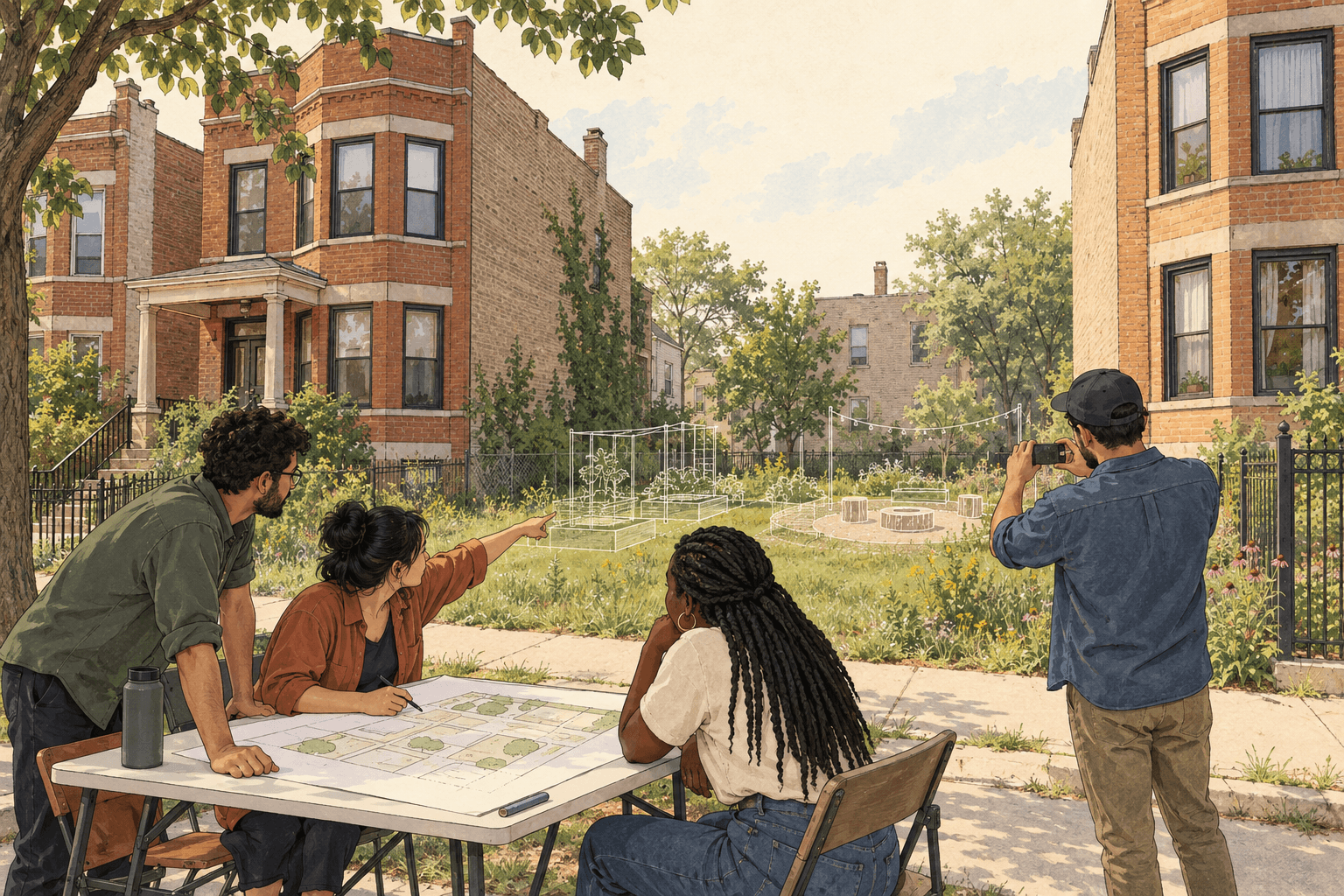
Chicago City-Owned Vacant Land: A Guide to ChiBlockBuilder and Community Projects
Find a City-owned Chicago lot, choose the right ChiBlockBuilder route, and plan a credible garden, side yard, housing, or neighborhood project.
South Shore Is Not a Turnaround Story. It's a Custody Question.
South Shore has the bones. What it's been missing is a system that keeps wealth in the hands of the people who built the neighborhood. Community development works when residents hold the keys, not just the lease.
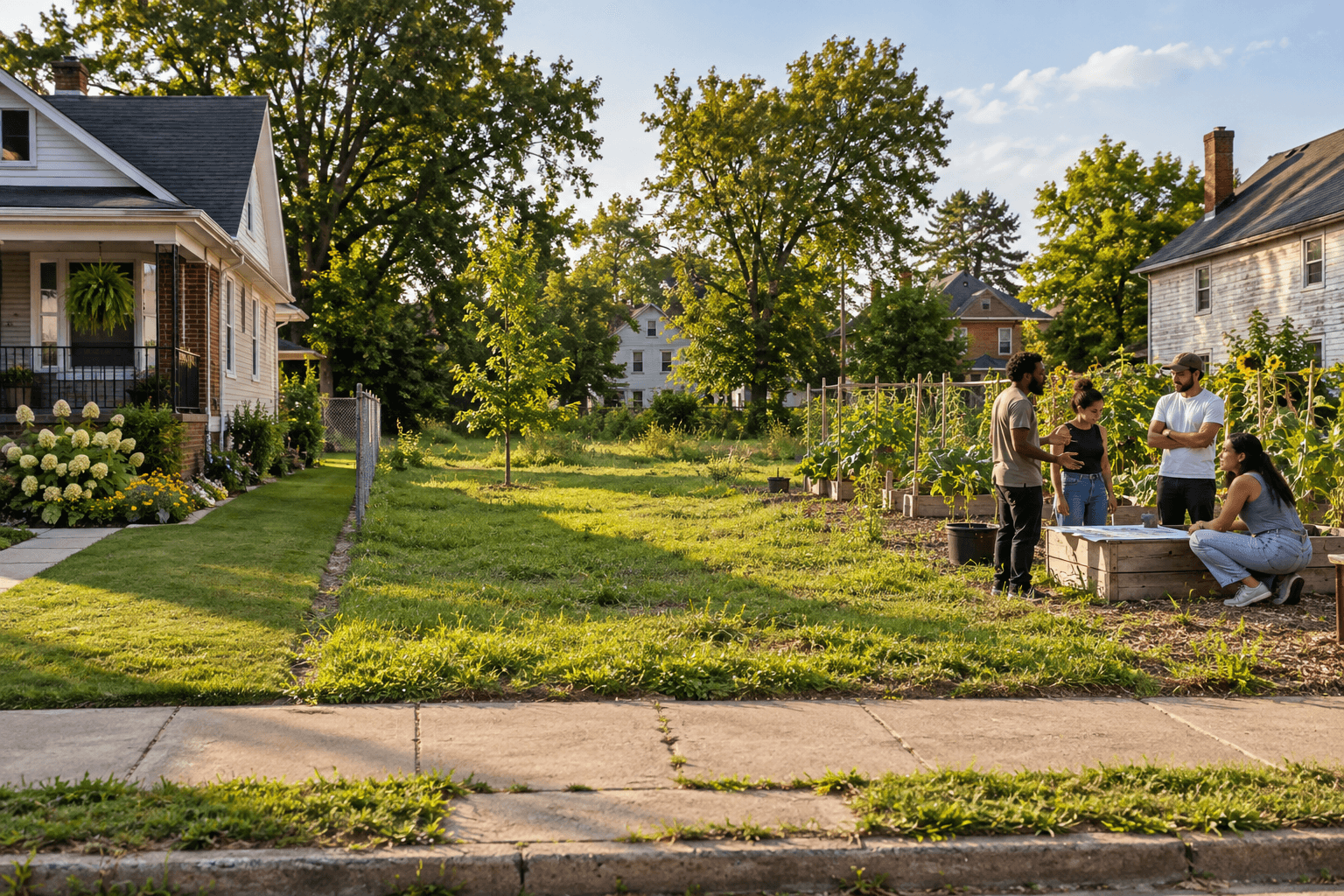
Detroit Side Lots, Neighborhood Lots, and Community Projects: Which Path Fits?
Compare Detroit Side Lots, Neighborhood Lots, and group project routes, then prepare the parcel, ownership, budget, and maintenance plan.