Built By DAO
Working With Neighborhood Organizations
How local priorities, skill communities and scoped project work fit together before a planned hub becomes a physical place.
You got here from an email from Marquis. Reply to it and he'll walk you through this himself.

Start With the Place and the People Who Know It
A church, community development corporation, chamber, school or local group may know a neighborhood through years of everyday relationships. Built By DAO's planned hubs have to make sense in those places. A useful conversation begins with local priorities: what people need, what skills already exist and which shared spaces or services are missing.
The Foundry is planned, and no site has been chosen. Local knowledge can help make its purpose concrete before a physical place is selected.
Turn a Broad Priority Into a Clear Question
A need for training, useful workspace or better material recovery is a starting point for planning. Before it becomes a project, people need to understand the result they are trying to reach. Who would use it? What skills, resources and operating conditions would it require? What information is still missing?
The value of the early work is making those questions specific enough to examine. A planning document can distinguish a local need from a proposed response and a proposed response from something ready to operate. That keeps the conversation attached to the place without presenting a possible project as an approved commitment.
Local Priorities
Describe the need and the people it affects. Keep what is known separate from questions that still need investigation.
Skills and Learning
Identify relevant experience and learning needs. Connect training ideas to the skills the proposed work would actually use.
A Defined Result
Give a planning task a scope, deliverable and review point. Make clear what completing that task would establish.
Training Relationships Need Their Own Details
Guilds are skill communities across trades, technical work and operations. Their purpose includes practice, learning and mentoring. A local organization with experience in education or workforce development may recognize a useful connection between those skills and the people it serves.
The Foundry's planned programs include safety and site readiness, trade practice, material recovery, fabrication, community workshops and mentorship. Those are program families, not a published class schedule. A particular session needs its own location, instructor, eligibility, safety requirements, dates and operating terms before people make arrangements.
Attendance, course completion and a contribution record are different things. Learning does not automatically create credit or change membership rank. Any qualifying project work still follows its own terms and review.
Working Groups Give Planning Work a Shape
A working group forms around a defined project or ongoing responsibility. It can bring together people with different skills while keeping a shared result in view. Guilds help develop the practice; the group coordinates the work that draws on it.
For a possible local project, early tasks might document a need, organize requirements or prepare a plan for review. These are examples of scoped planning work, not assignments being announced here. The task needs a responsible team, a deliverable, evidence and an approval path before someone can judge what completion means.
The project preview shows how milestones and a deliverable awaiting review can sit in the same record. It uses sample data.
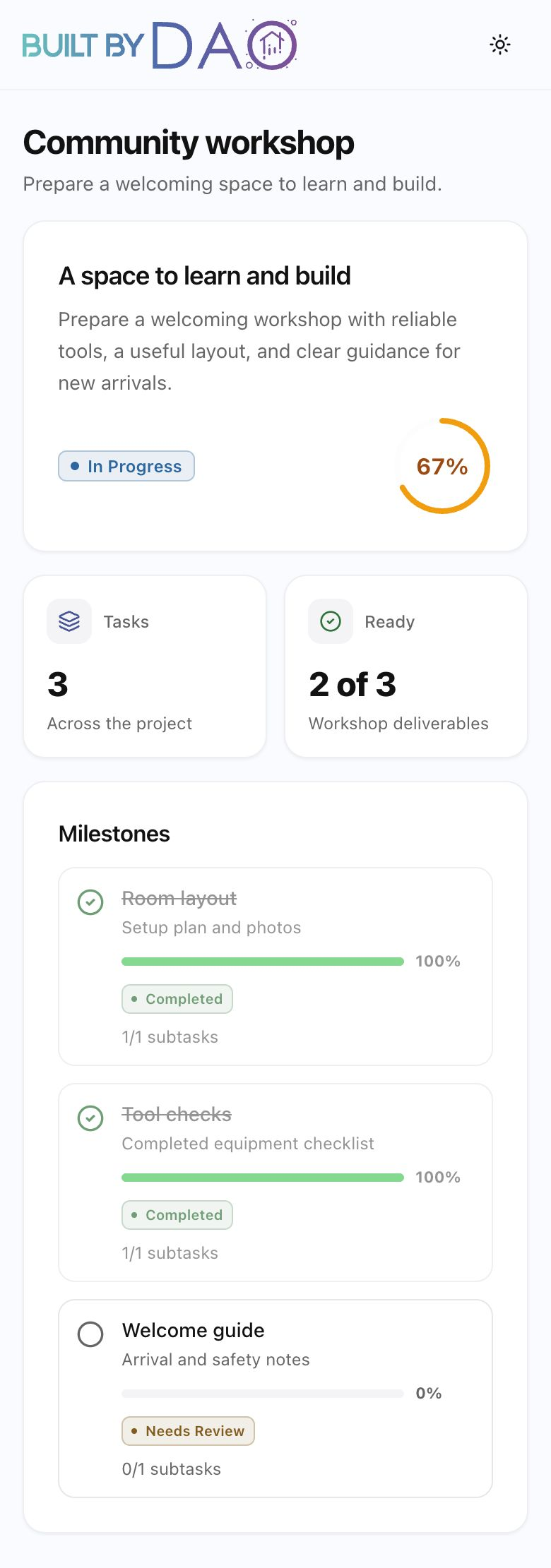
Community Workshop
Project milestones and deliverables in the dashboard preview.View Full PreviewKeep the Evidence With the Work
A meeting can identify a question; the follow-through needs a record. A scoped task can hold the agreed result, the material submitted and the review state. That makes it possible to see whether a planning step has been completed and whether its evidence has been accepted.
Reviewed work and confirmed credit remain separate. Credit requires eligible work, accepted evidence, a member in current good standing, an authorized funded project release and confirmation. It isn't pay and it isn't a share of a building. It can't be bought or sold. An institution's involvement doesn't replace those conditions for an individual member's work.
The Hub Is Still a Plan
The planned Foundry connects material recovery, training, fabrication and community use. The Hall is intended for gathering and learning; the Workshop supports hands-on practice. Together with the other zones, they describe how a future hub could serve work that needs a physical place.
Detroit and Chicago are the likely first two hub cities. Local planning can clarify how a future space would be used, which skills its programs would need and how training, materials and project work would connect. Those details give decisions about a place something practical to work from.
A Useful Basis for the Next Conversation
Working together begins with understanding the local priority and the current stage of the organization. From there, a possible training relationship or planning task can be described in terms people can examine: purpose, scope, skills, evidence and the result that would be reviewed.
The first cohort begins by invitation on November 1, 2026, a few people at a time. The dashboard provides the record as people come in. The physical work has to follow with the neighborhoods, with the details made clear as each project becomes real.
You got here from an email from Marquis. Reply to it and he'll walk you through this himself.
Keep Exploring
For questions, email Marquis.