Built By DAO
The Trades Behind Community-Owned Places
The planned work of recovering materials, developing craft skills and building shared places—and how reviewed contribution gives that work a voice.

Practical Building Skills at the Center
Carpentry, electrical, plumbing, HVAC, masonry, finishing and heavy equipment are the trade guilds in Built By DAO’s model. They represent the practical skills needed to construct and care for homes, workspaces and shared places.
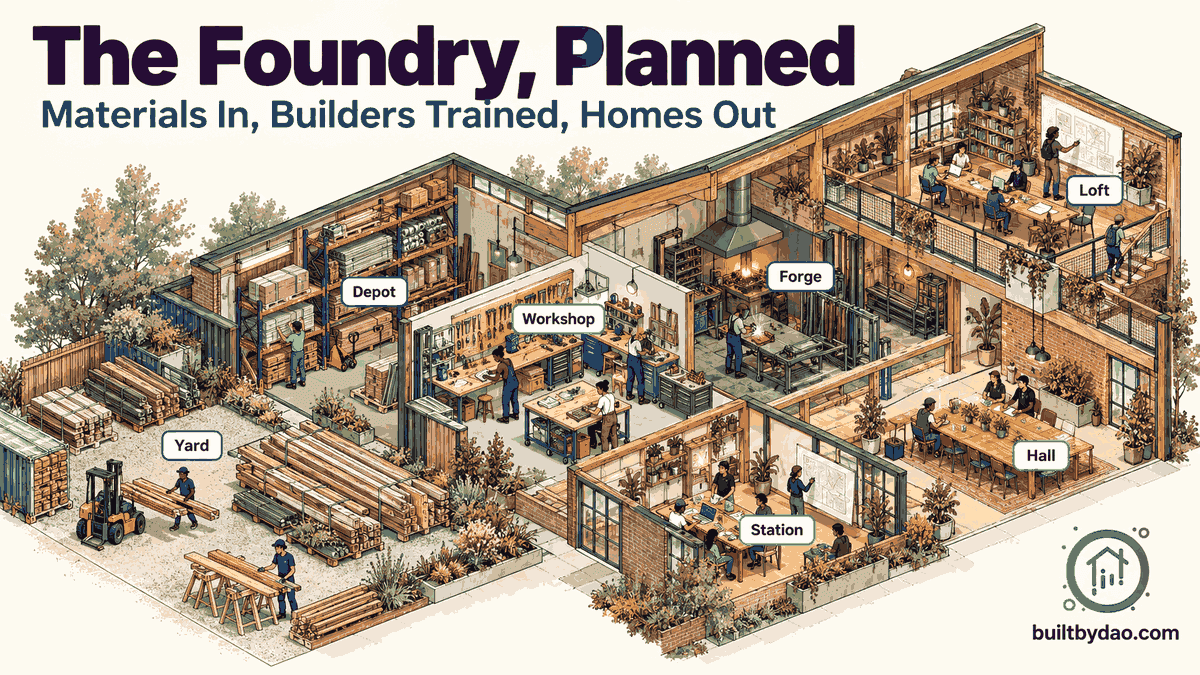
The planned Foundry would bring those skills together with recovered materials and hands-on learning. Its purpose is to prepare both the materials a project needs and the people who can use them. No site has been chosen; the physical work remains planned.
Dashboard Previews
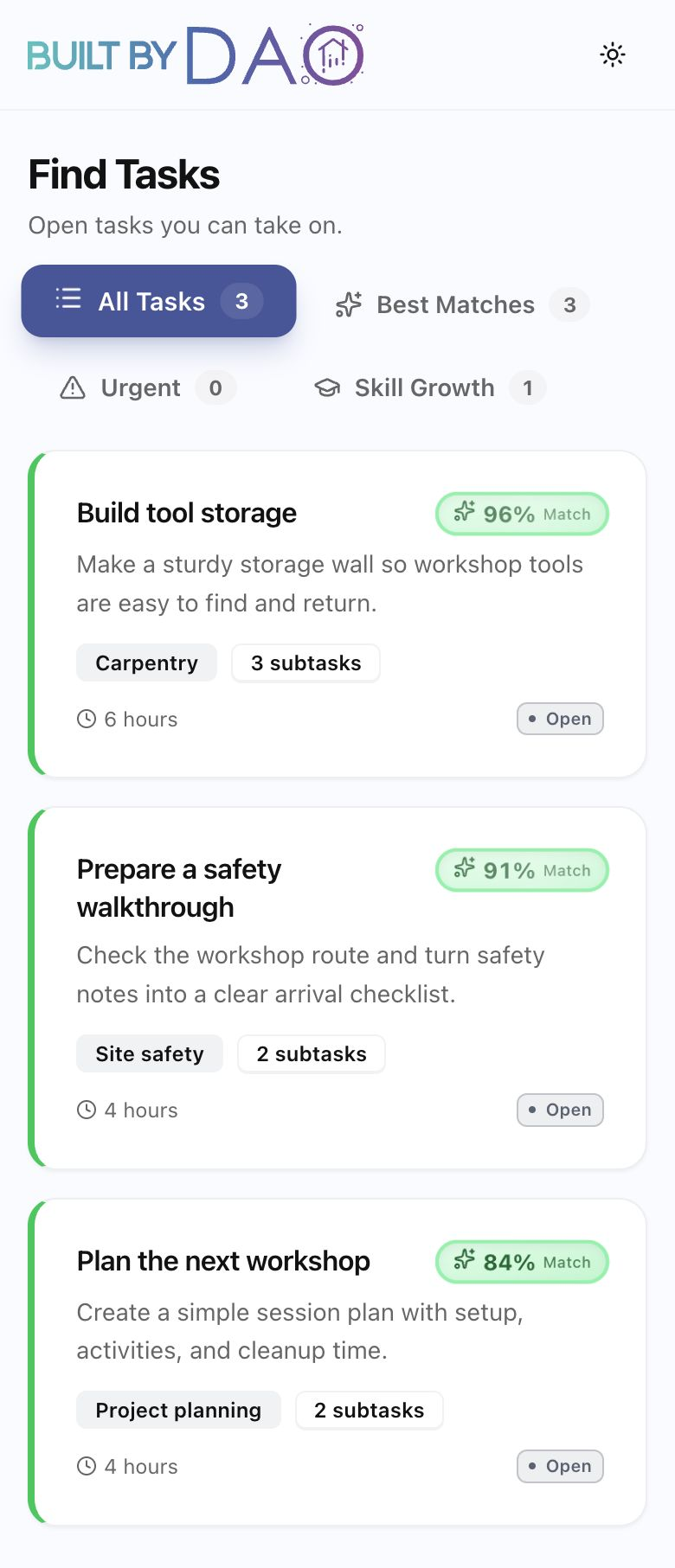
Find Tasks
Task discovery, skill matches and estimated hours in the dashboard preview.View Full PreviewFrom Recovered Material to Construction Inventory
Recovered lumber, brick and metal would pass through assessment and preparation before use in construction. The Foundry’s five-stage material path explains how salvage would become inventory a project could use.
Recover
Deconstruction would recover useful lumber, brick and metal for another use.
Inspect and Grade
The Yard would assess condition, sort and grade the recovered material.
Store and Track
The Depot would manage inventory and the logistics of moving materials.
Repair and Fabricate
The Workshop would support repair and refurbishment; the Forge would handle heavier fabrication.
Use in Construction
Prepared material would supply construction projects for the planned homes and shared places.
Guilds, Mentoring and Hands-On Training
A trade guild provides a continuing craft community. Proficiency runs from Novice to Master, with experienced members mentoring others. Working groups form the project teams, bringing trades together with the design, coordination and documentation the work needs.
Organizational rank is separate from craft proficiency. A task can require both a skill and a rank, identifying the experience and responsibility it calls for. The planned training path would begin with orientation in the Hall, continue in the Workshop and reach construction sites, so practical learning would lead toward the work it prepares people to do.
A Clear Scope and a Reviewed Result
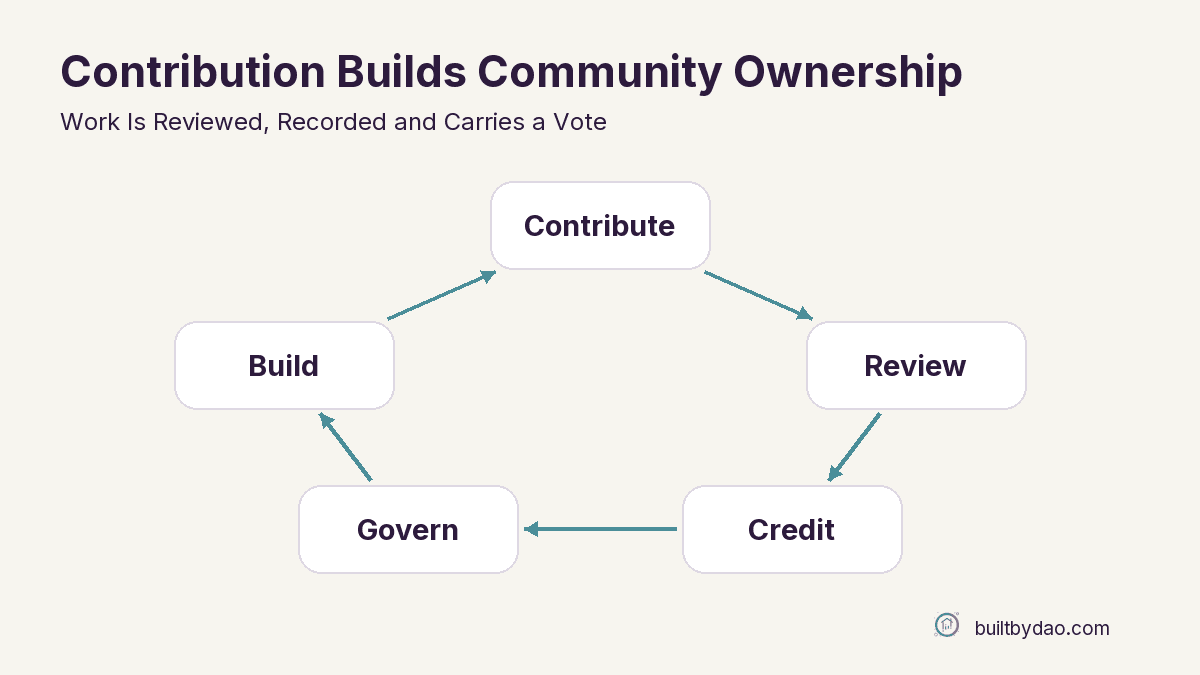
A task sets out the work, expected result, deadline, required skills and rank before it begins. Those terms give the person doing it and the reviewer a shared basis for judging completion. Review checks the result and the evidence that supports it.
Approval of the work is one condition for credit. Funding, good standing and confirmation requirements also apply. That means a completed, accepted result can be further along than the credit it earns. The contribution process keeps the task, its review and the credit outcome identifiable.
The People Doing the Work Have a Role in Decisions
Eligible, reviewed contribution gives members weight in Contributor decisions. Capital does not become Contributor power. The trades therefore have a place in the organization’s decisions through the work their members do, alongside the other eligible contributors.
The contribution credit is earned, cannot be bought, sold or transferred, and has no member cash-out. It is not pay, legal equity or a direct property share, and it does not create a job or a property deed. Its purpose is recognition and an earned voice in the organization behind the planned places.