Built By DAO
Organizing Community Life
The role of communications, facilitation and documentation in project work, shared decisions and the planned Hall.

Welcoming People and Preparing the Conversation
Welcoming people, running a useful meeting and keeping a clear record of a decision all take work. Built By DAO includes organizing alongside technical work and the trades. People need to understand the project, the subject being decided and what happens after the conversation.
Communications, facilitation and documentation sit within the operations guilds, alongside project management and finance. Working groups bring those skills into projects. The planned Hall would provide a physical place for orientation, meetings, education and community gatherings.
Dashboard Previews
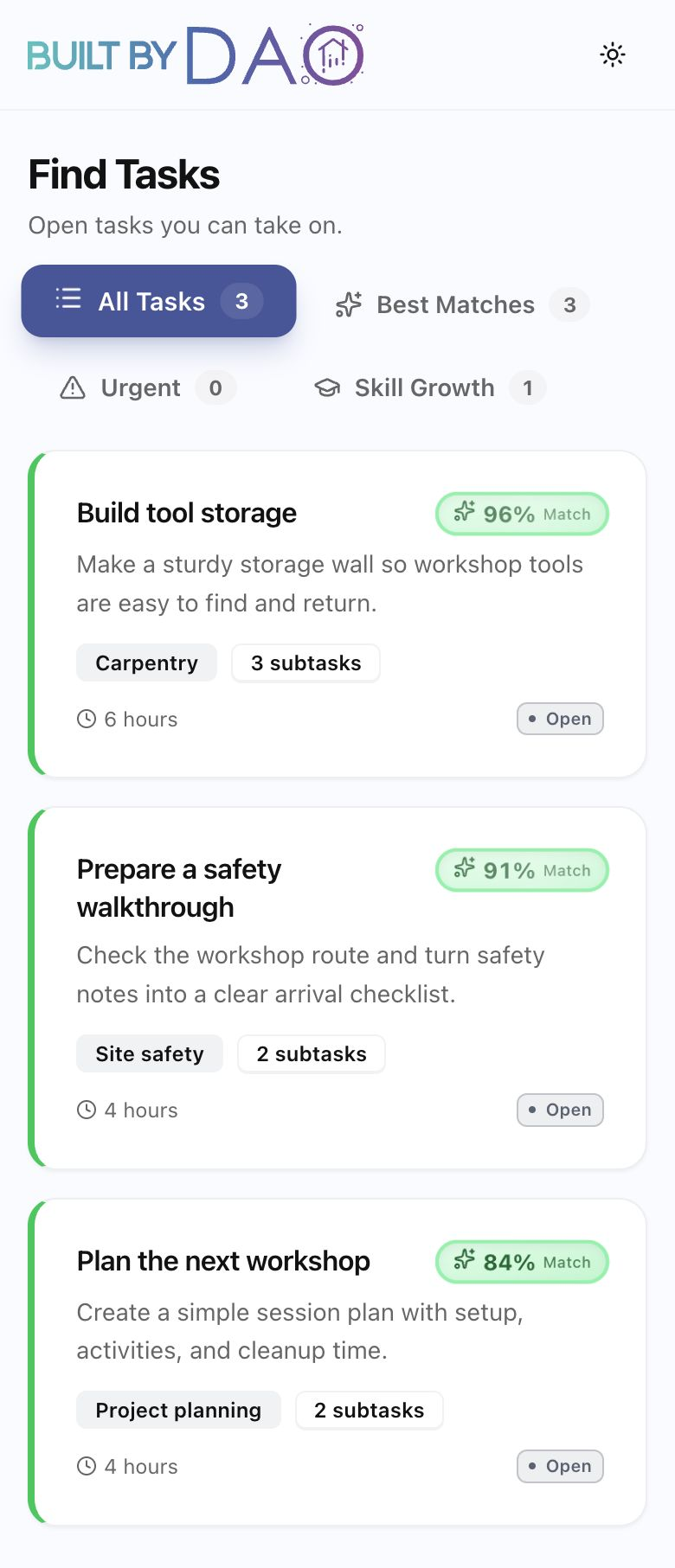
Find Tasks
Task discovery, skill matches and estimated hours in the dashboard preview.View Full Preview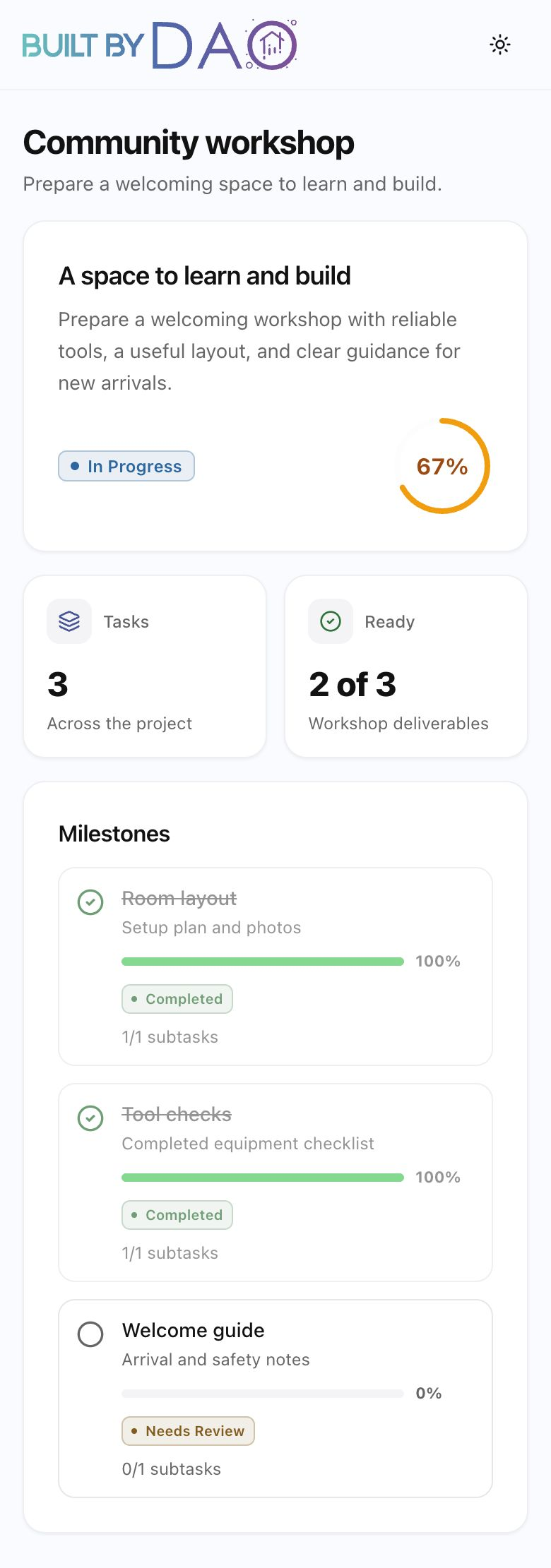
Community Workshop
Project milestones and deliverables in the dashboard preview.View Full Preview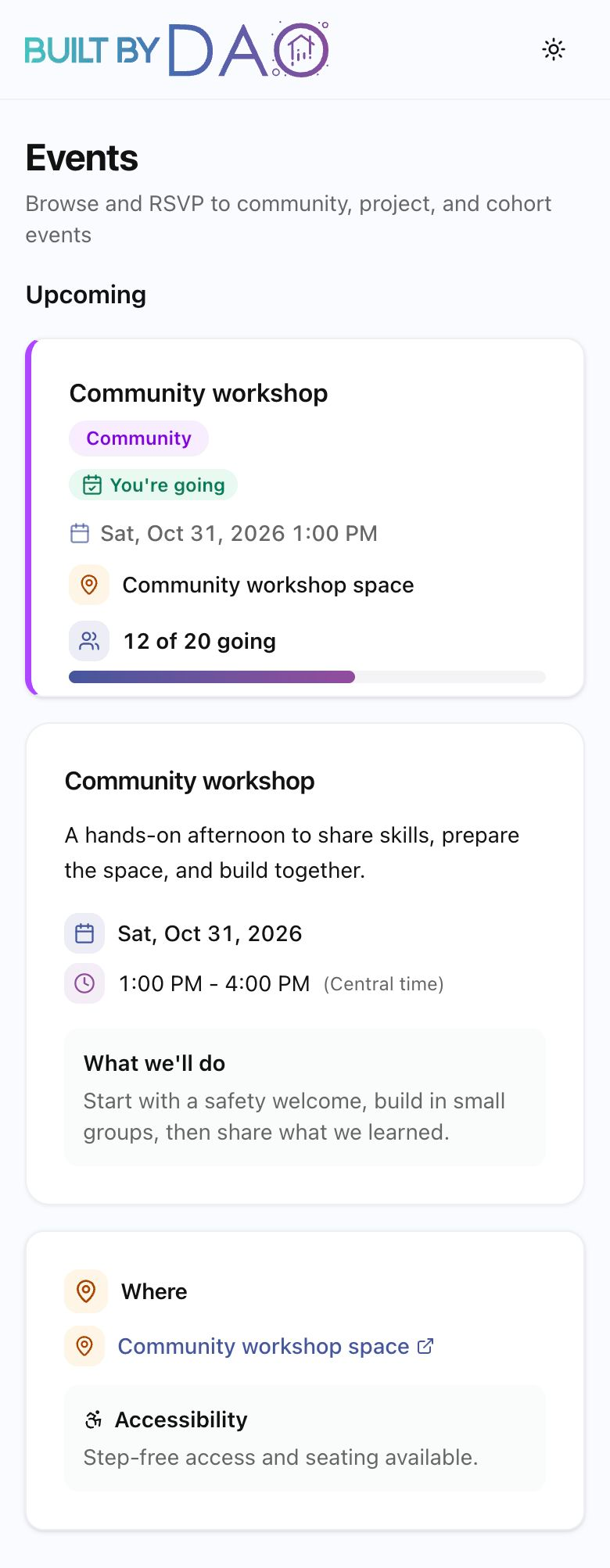
Events
Event details and attendance in the dashboard preview.View Full PreviewThree Parts of Organizing Work
Clear information, a useful discussion and an understandable outcome each need attention. The operations guilds give these skills a continuing community, with learning and mentoring across projects.
Communications
Explain the project’s purpose and the work involved so people can understand what they are taking part in.
Facilitation
Help people hear one another and work through the subject of a meeting or decision.
Documentation
Preserve what happened and what was decided so the team can follow the work afterward.
Review Applies to Organizing Too
A defined task makes the expected result and deadline clear before work begins. Review checks that result and its supporting evidence. For communications and documentation, this gives the team a basis for assessing what the work accomplished.
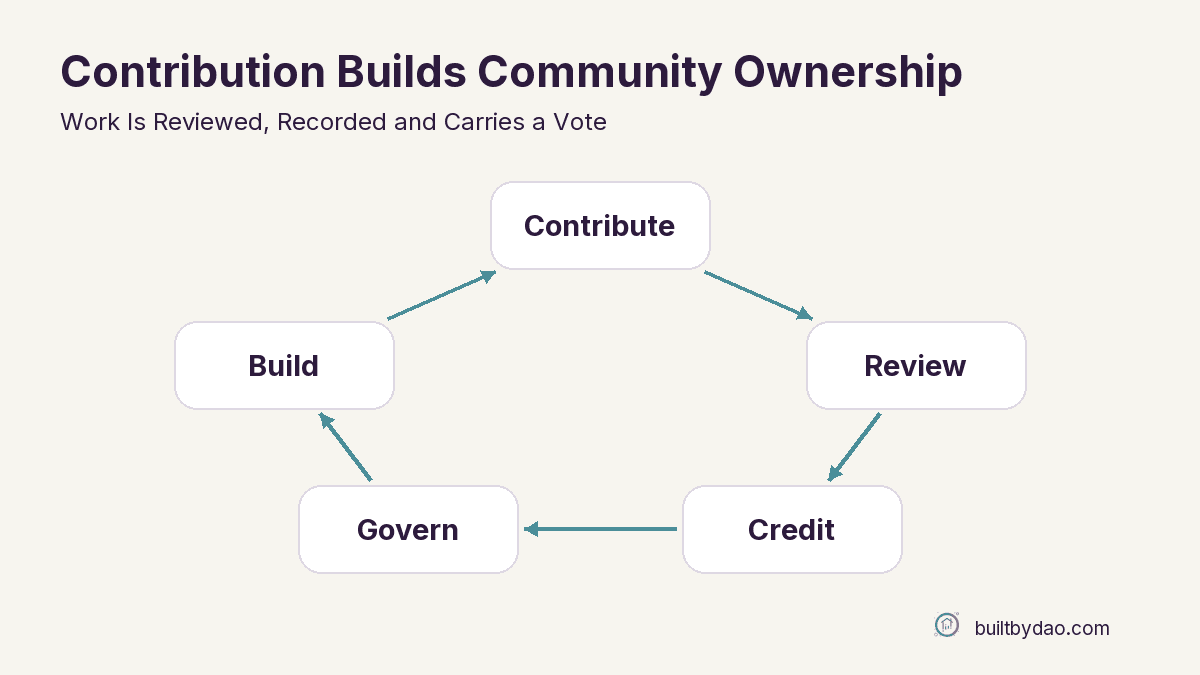
Eligible, reviewed organizing work can earn contribution credit and Contributor voting weight. The credit is earned, cannot be bought, sold or transferred, and has no member cash-out. It is not pay, legal equity or a property share, and recording contribution does not create a job.
What the Hall Would Provide
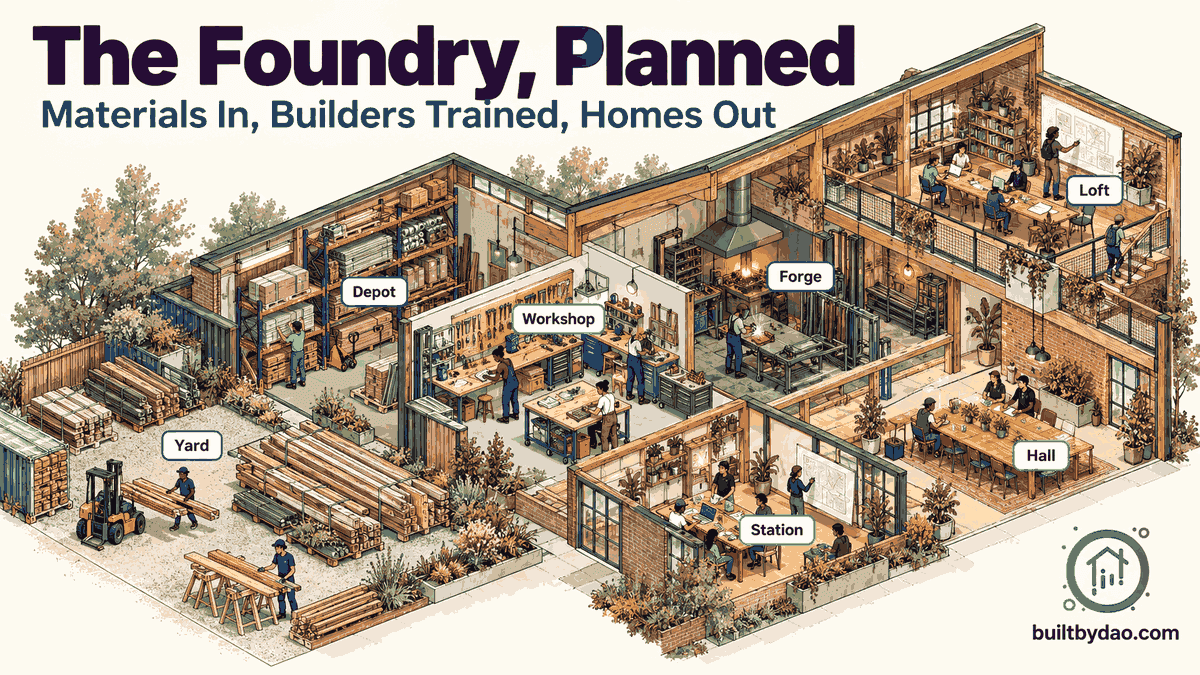
The Hall is planned for community gatherings, events, meetings and education. It would also begin the Foundry’s training path: orientation in the Hall, hands-on learning in the Workshop and experience on construction sites. No Hall is open yet.
The Foundry plan includes gatherings for members and neighbors as well as practical training. That gives the Hall a neighborhood role: people could meet, learn and discuss the organization’s work within the same hub that prepares materials and builders.
From a Decision to Follow-Through
Major decisions use the proposal system; ordinary project work happens through operating teams. Organizing helps people understand the subject and preserves the outcome, while project working groups coordinate the work that follows.
A decision needs to remain understandable after the meeting ends. Its record gives the next piece of work context: what was agreed and why the team is doing it. Guilds keep communications, facilitation and documentation as continuing practices, so those skills support a project from preparation through follow-through.