Community Real Estate Project Management: From Site Control to Opening
How to manage a neighborhood property project across decisions, schedule, budget, funding, construction changes, and handover to a long-term operator.

A community real-estate project needs more than a compelling site and a good design. Somebody has to turn a purchase path, community commitments, professional drawings, financing conditions, construction work, and long-term operations into one sequence. That is project management: keeping the right decision in front of the right person before delay or cost makes the choice for everyone.
This guide follows a small neighborhood building from site control to opening. It is a management framework, not a report on a completed Built By DAO property. The exact permits, contracts, financing, and responsibilities depend on the deal and local law.
Put one person in charge of the whole picture
Each specialty knows its own work. The architect designs, the lender underwrites, the contractor builds, and community participants help define what the place should do. The project lead must see the connections between them. If a ground-floor use changes, the architect may need to redraw, the code path may change, the construction estimate may rise, and the operating forecast may shift. No one specialty can manage that chain alone.
Start with a responsibility map. Name the person who can authorize spending and scope changes, the person who keeps the schedule, the owner of each approval, the community decision forum, and who speaks for the future operator. Define how disagreements are resolved. The EPA's reuse implementation guidance stresses clear leadership, committed partners, assigned responsibilities, and deadlines for revitalization projects. Small projects need that discipline just as much as large ones.
Plan backward from the decisions that cannot be missed
Write the few dates that truly control the project: option or contract expiration, inspection period, funding applications, financing commitment, permit submission, construction start, substantial completion, and opening. Then work backward. A lender may need a final budget before commitment; a final budget may need drawings; drawings may need a survey and a decision about use. Put those dependencies in one visible schedule, not separate calendars owned by different teams.
For each milestone, record the required evidence, decision maker, and fallback if it slips. “Finish design in May” is vague. “Approve schematic plan and cost range after accessibility and code review; project sponsor decides whether to advance to detailed drawings” gives the team a gate it can actually manage.
Keep four core records current
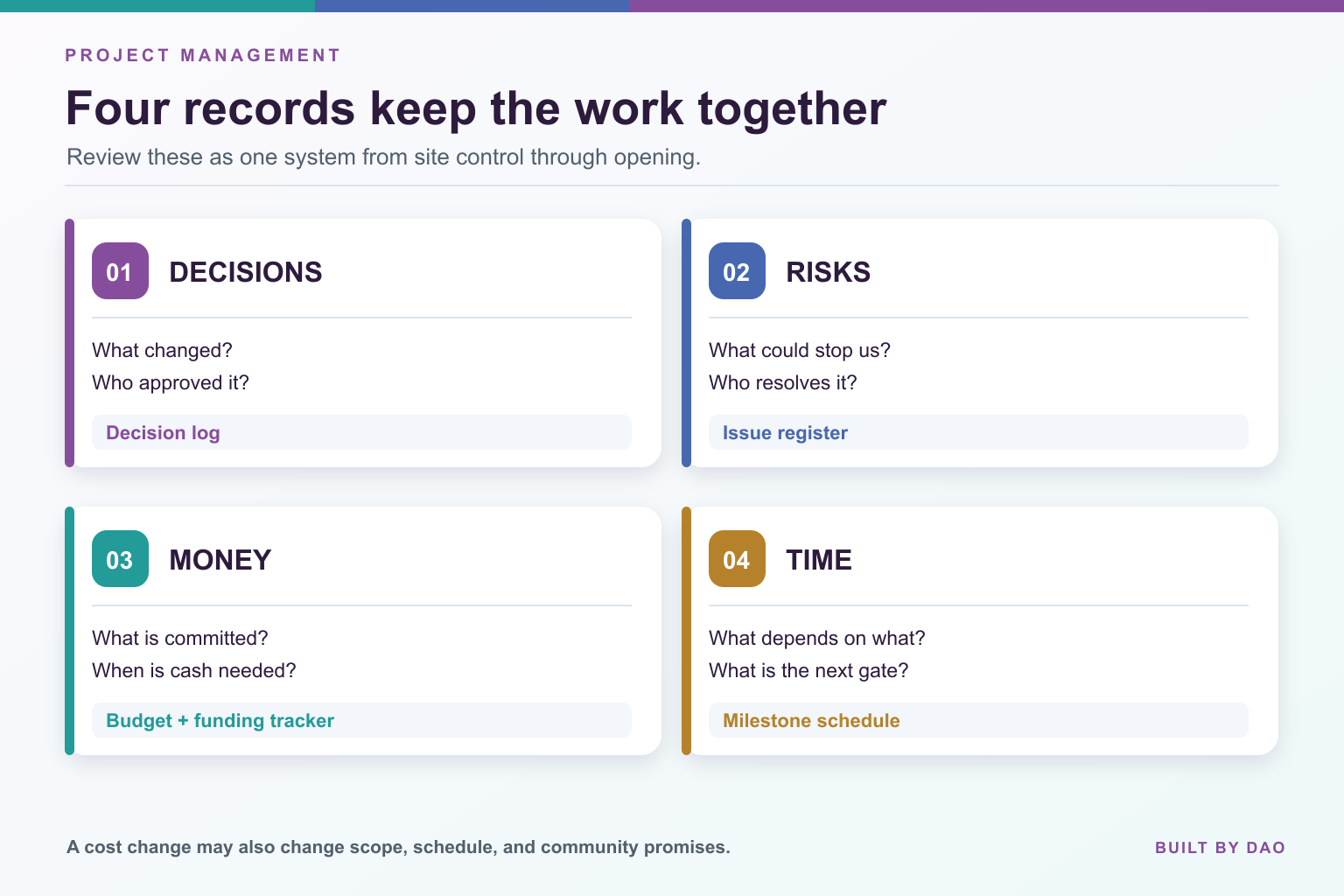
The project does not need a complicated software stack to be accountable. It does need four records that people trust:
- Decision log: decision, options considered, who decided, date, reason, and commitments affected.
- Risk and issue register: problem, evidence, impact on cost or time, owner, deadline, and resolution.
- Budget and funding tracker: approved uses, committed sources, forecast to finish, actual spending, and cash available by month.
- Schedule: milestones, dependencies, responsible party, current forecast, and changes since the last review.
Review them together. A new roof issue is not just a construction item; it may affect contingency, the funding gap, schedule, and whether the building can open when promised.
Budget the entire project, then map the money to time
A purchase price is not a development budget. The uses side should include acquisition, title and legal work, survey and environmental review, design and engineering, permits, site work, construction or rehabilitation, equipment, financing costs, contingency, opening costs, and initial operating reserves. A housing project may require additional lease-up or compliance costs. HUD's development budget guidance includes predevelopment, construction, carrying costs, and contingencies in its sample sources-and-uses framework.
The sources side identifies committed or plausible cash, debt, grants, project-level investment, seller terms, or other deal-specific support. Label them separately. A potential grant should not appear as cash in hand. The EPA's resource-roadmap approach breaks redevelopment into fundable phases, then matches each phase to the sources that could pay for it. That matters because a project can have enough total financing on paper and still run out of cash before reimbursement arrives.
For Built By DAO, there is no universal stack. One property might use a negotiated acquisition and ordinary project-level financing; another might qualify for a public program, a mission-aligned investor, or a tax-advantaged structure. The investor overview explains ways to engage. The management task is to test eligibility, timing, conditions, security, and the effect on long-term community benefit for each deal—not to force every project into the same financing diagram.
Control scope changes without freezing the design
Changes are normal. Hidden conditions appear, community feedback improves a plan, or a code review finds a requirement. What is dangerous is a change made without seeing its full effect. Require a short change record before approval: what changed; why; who requested it; cost and schedule effect; effect on operating expense, accessibility, and prior community commitments; funding source; and who can authorize it.
Some changes are urgent safety work. The process should allow immediate protective action and then document the decision. For everything else, compare the change with the approved brief. A small finish upgrade and a new building use are not the same kind of decision.
The HUD preservation workbook distinguishes cost overruns from change-order risk. Both deserve explicit space in the budget and review process rather than being treated as surprises that will somehow disappear.
Make the handoff part of the project, not an afterthought
Before construction finishes, name the long-term operator or steward and the information they need: warranties, equipment manuals, inspection records, keys and access, vendor contacts, insurance, maintenance calendar, reserve plan, and rules for residents or other users. Check that the finished space matches the uses that were promised and can be afforded to operate. A beautiful building without a realistic operating model is an unfinished project.
Opening also begins measurement. Did intended users get access? Are operating costs in line with the plan? Are repairs and complaints resolved? Did the community design commitments survive construction? The project lead should hand over a clear baseline so the operator can answer those questions, not reconstruct the story from old emails.
A practical first project meeting
For a new candidate, bring the property record, the community design brief, and the current budget. In one hour, decide: What is the next irreversible commitment? What must be verified before it? Who owns each answer? When is the next go/no-go decision? If no one can answer those four questions, the immediate task is to make the project legible before spending more.
Built By DAO is building relationships with people who can source, shape, finance, build, and steward neighborhood assets. Partner with us if you bring one of those capabilities and want to work from a real project brief rather than an abstract pitch.
Related Posts
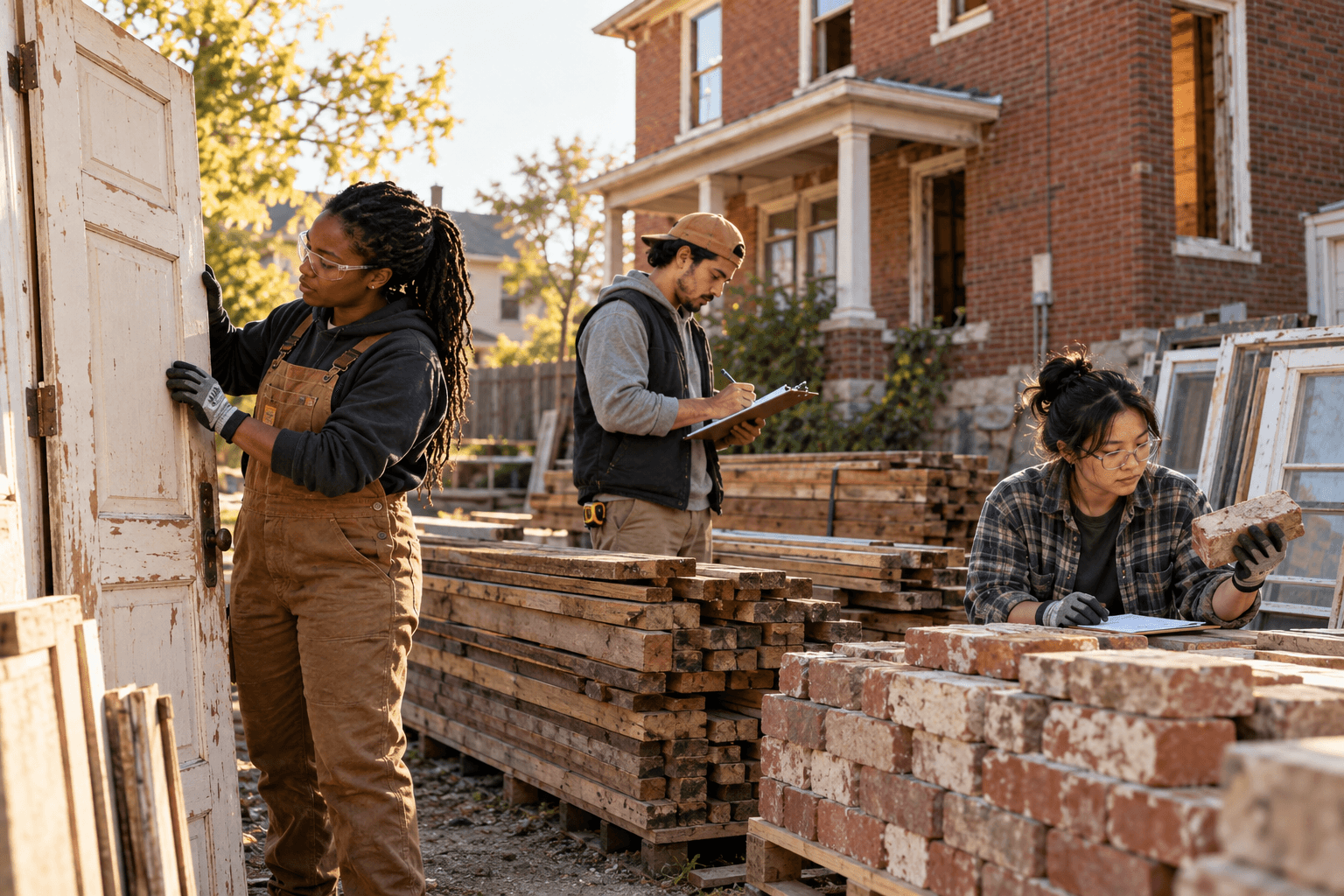
Deconstruction vs. Demolition: What Should Happen Before a Building Comes Down?
Compare deconstruction, selective salvage, and demolition through a practical building assessment: safety, recoverable materials, local buyers, cost, and schedule.
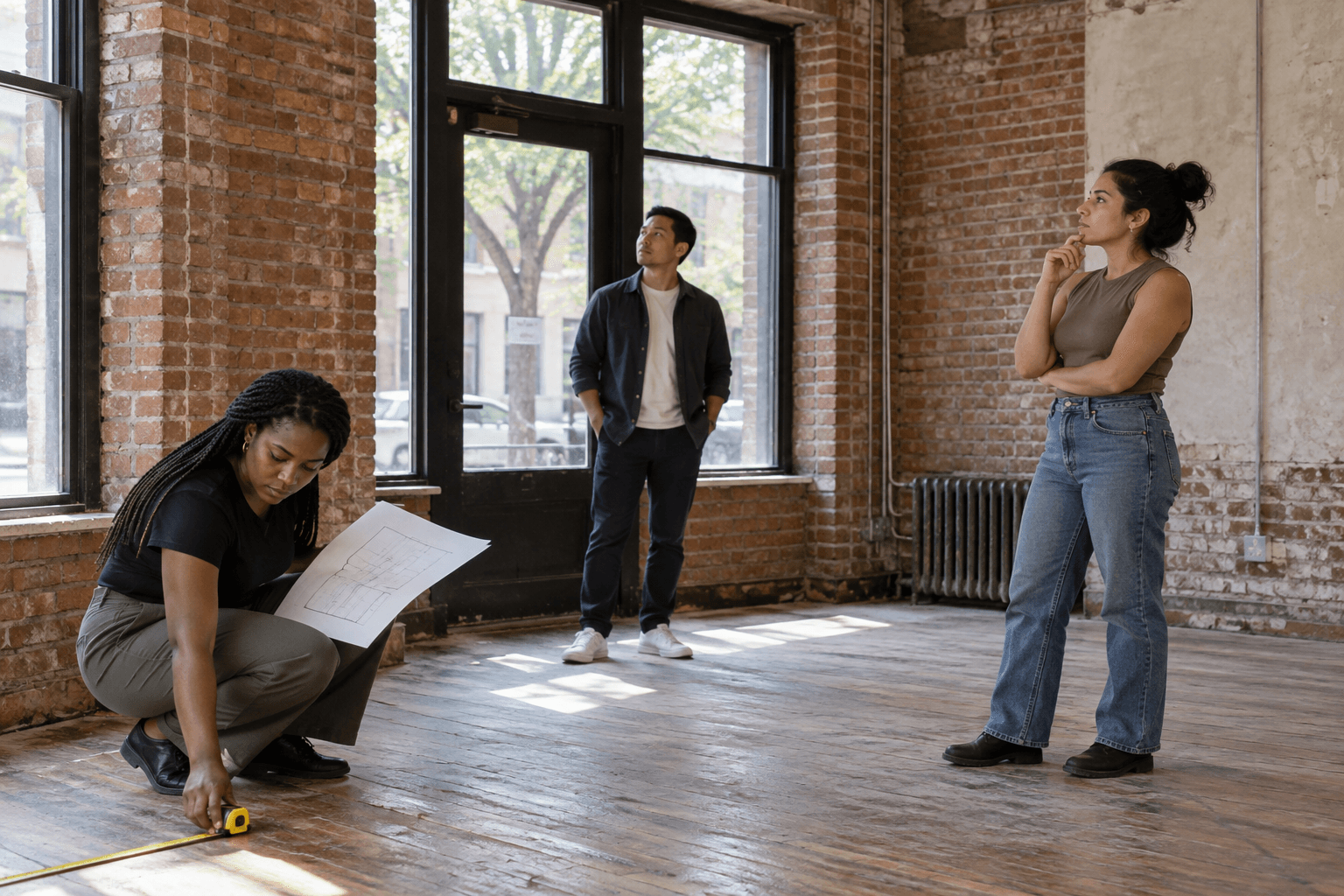
The Feasibility Checklist for a Community Building
Screen property control, permitted use, building condition, community demand, economics, and team capacity before committing to a neighborhood building.

From Community Input to a Buildable Design Brief
A practical guide to turning neighborhood needs into space requirements, honest tradeoffs, documented decisions, and a brief that a project team can use.