Built By DAO
Membership
How Built By DAO membership works: invitation and review, a verified credential, ranks, good standing, guilds, reviewed contribution and shared decisions.

What It Means to Be a Member
Built By DAO membership is a verified participation record held as a credential. It identifies a member and records their current rank and good-standing status. Work, skills and governance have defined requirements, so participation can be recognized as the organization develops community-owned neighborhoods.
Membership opens by invitation and application review. The first cohort begins coming in from November 1, 2026, a few people at a time. Application and onboarding come before approval; an approved member starts at Seeker.
Membership is not employment, pay or a property share. It establishes a person’s membership in the organization, rather than a job, wage or place to live.
Dashboard Previews
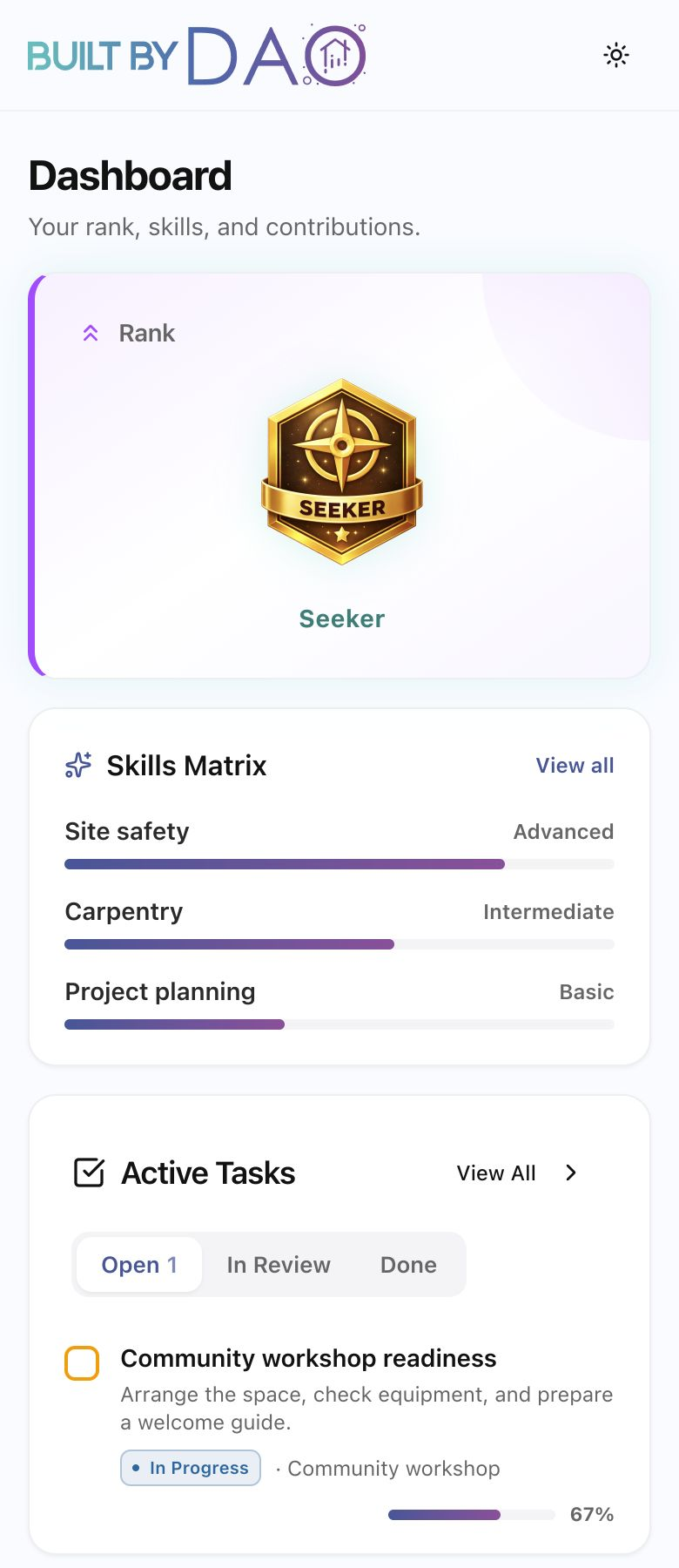
Membership
Membership, skills and active tasks in the dashboard preview.View Full PreviewRank and Good Standing Are Separate
A rank describes organizational responsibility. Good standing is a current eligibility check. A member can hold a rank and still need to meet the standing and other requirements for a particular action. The credential does not make every member a project lead or give permission to carry out every decision.
Membership Rank
Fourteen ranks run from Seeker to Steward. A change in rank requires evidence-backed review and separate authorization; it does not happen simply because someone joined.
Good Standing
Current good standing is a separate gate for earning credit and participating in governance. A member’s identity and history can remain recorded even when good standing is suspended.
Guild Merit
Guild merit recognizes skill from Novice to Master. It records craft proficiency, which is different from membership rank and organizational authority.
Guilds Develop Skills, Working Groups Organize Projects
Members bring trade, technical and operations skills. Trade guilds include carpentry, electrical and plumbing. Technical guilds include development, design and security. Operations includes project management, finance, communications, facilitation and documentation. Guilds provide a continuing community for practice, learning and mentoring.
A working group brings people together for a project. Its tasks define the result, deadline and skills the work needs. A member’s guild concerns their craft; the working group concerns the project they are helping carry out. Organizing, documentation and member support can be scoped and reviewed alongside technical and trade work.
Contribution Requires Work and Review
Members complete scoped work and submit evidence of the result. A reviewer checks that evidence against the task. An accepted result establishes what the member contributed; confirmed credit records the authorized release for that contribution.
Credit requires accepted evidence, current good standing, an authorized funded project release and confirmation. Joining does not automatically create credit. The resulting contribution record is earned, cannot be bought, sold or transferred, and has no member cash-out. It is not wages or a direct ownership interest in a building.
Reviewed contribution can support rank progression and eligible participation in decisions. Rank changes still require their own review and authorization.
Members Take Part in Shared Decisions
Governance uses three houses: Contributor, Investor and Council. Eligible reviewed contribution provides Contributor voting power. Capital and housing credit do not add Contributor voting power.
A membership credential alone does not give everyone the same vote. Current good standing, eligible contribution and the proposal’s requirements determine participation. This lets the organization recognize the people doing the work while keeping the authority for a particular decision explicit.
The dashboard is live; the Foundry and member housing remain planned. Joining the first cohort would begin membership in the organization, without guaranteeing a job or a place to live. The four questions explain project budgets, contribution credit, housing credit and what exists today.