Built By DAO
Examining the Built By DAO Model
The claims, contribution rules, housing terms and recovery targets a writer or researcher can examine—and the outcomes that still need physical operations.

Published Rules and Future Outcomes
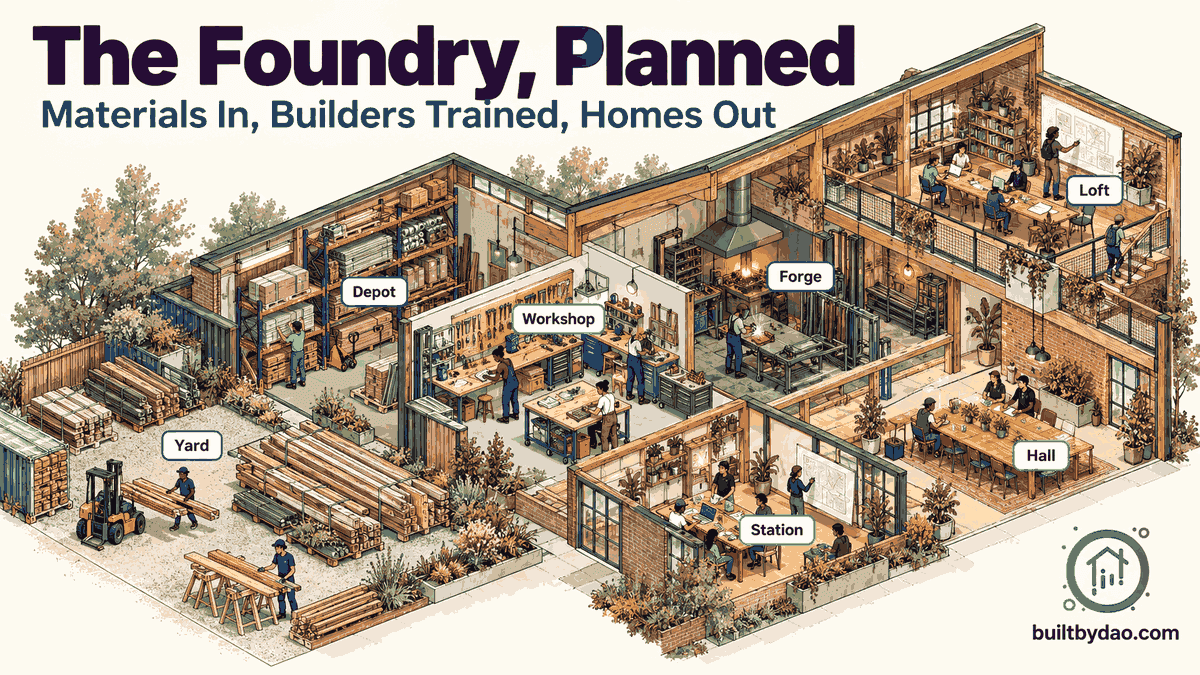
Built By DAO proposes community-owned neighborhoods organized around reviewed contribution, shared decisions and a planned Foundry. Examining that proposal means understanding both how the rules work and what the physical plan is intended to accomplish.
The dashboard is live, but no hub or member property is open. Detroit and Chicago are the likely first two hub cities; no site has been chosen. The contribution and governance rules can be examined now. Claims about material recovery, practical learning and construction will need evidence from physical operations.
Dashboard Previews
My Skills
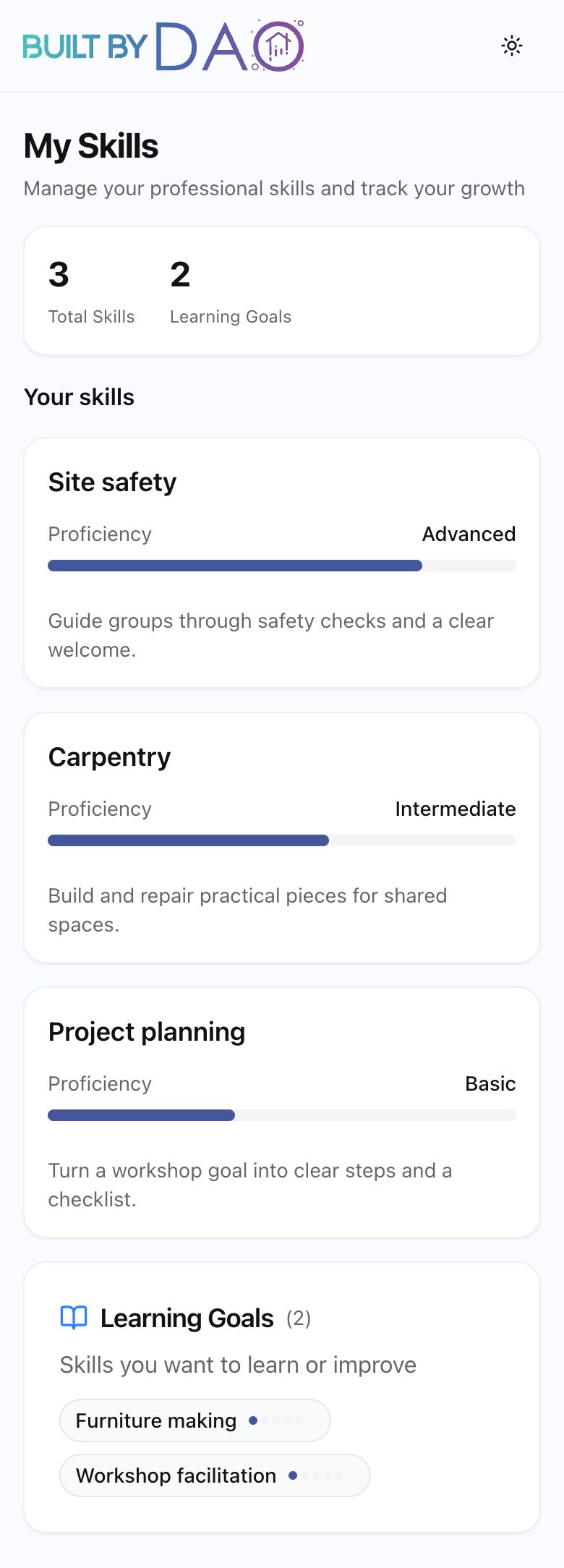
Skills, proficiency and learning goals in the dashboard preview.View Full PreviewThe Problem the Thesis Identifies
The thesis identifies a gap between creating value in a neighborhood and having a share in its future. People can do useful local work while wealth flows elsewhere. Property prices can outpace wages, absentee owners can make local decisions, and individual wealth-building can leave shared infrastructure unfunded.
The proposed response combines homes, productive spaces, local businesses, training and shared places. The Foundry is intended to develop the skills and material resources that support building. The question is how those arrangements would affect the people doing the work and the neighborhood around a hub.
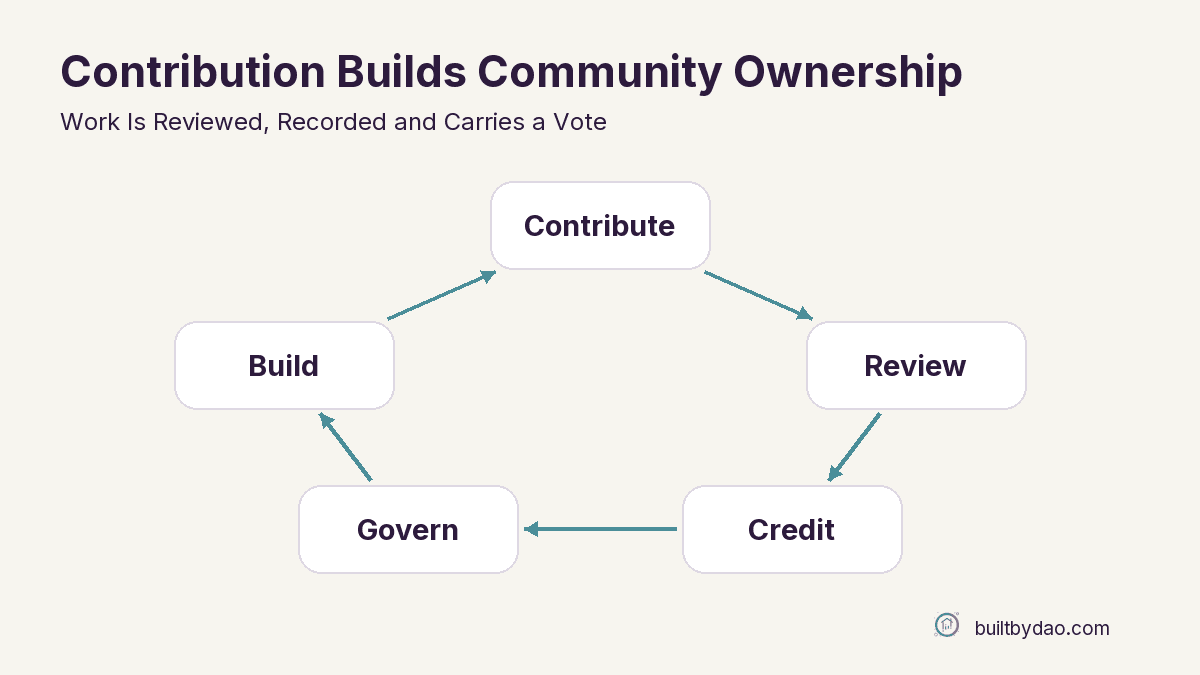
Reviewed Work as a Basis for Influence
Eligible, reviewed work earns contribution credit carrying standing and governance weight. It cannot be bought, sold or transferred and has no member cash-out. It is not pay, legal equity or a direct property share. The model’s claim is about recognition and participation in the organization, not ownership created by a credit balance.
Contributor power uses eligible contribution on a square-root curve with bounded rank and tenure factors. Contributor, Investor and Council houses participate according to proposal category; capital does not become Contributor power. How are comparable contributions assessed across projects? How does influence develop as members’ work histories grow?
Rent Credit and Property Rights
When a qualifying member property opens, Housing Loyalty would record credit from verified base rent once per period. A lease-term rate, normally 5 to 15 percent with 10 percent standard, determines that credit.
Rent remains due in cash. The credit gives no title or future rent reduction, does not satisfy underwriting or guarantee admission to another property, and creates no fixed cash right. It adds no Contributor voting weight. Within those limits, how would residents understand the credit alongside their tenancy and their role in shared decisions?
The Foundry’s Recovery Targets
The circular plan names four recovery and diversion targets. They are intended outcomes, not measured results. The material path would run from deconstruction through assessment, inventory and repair or fabrication into construction.
How much recovered material would become usable inventory? How much would be used in construction? How would practical learning support that work? Answering those questions would require evidence from an operating hub.
Lumber Recovery
85 percent target.
Brick Recovery
80 percent target.
Metals Recovery
98 percent target.
Construction Diversion
At least 80 percent target.