Built By DAO
Local Member Groups in Other Cities
How future local member groups would organize projects within Built By DAO, and why expansion to other cities follows the first Foundry hub.
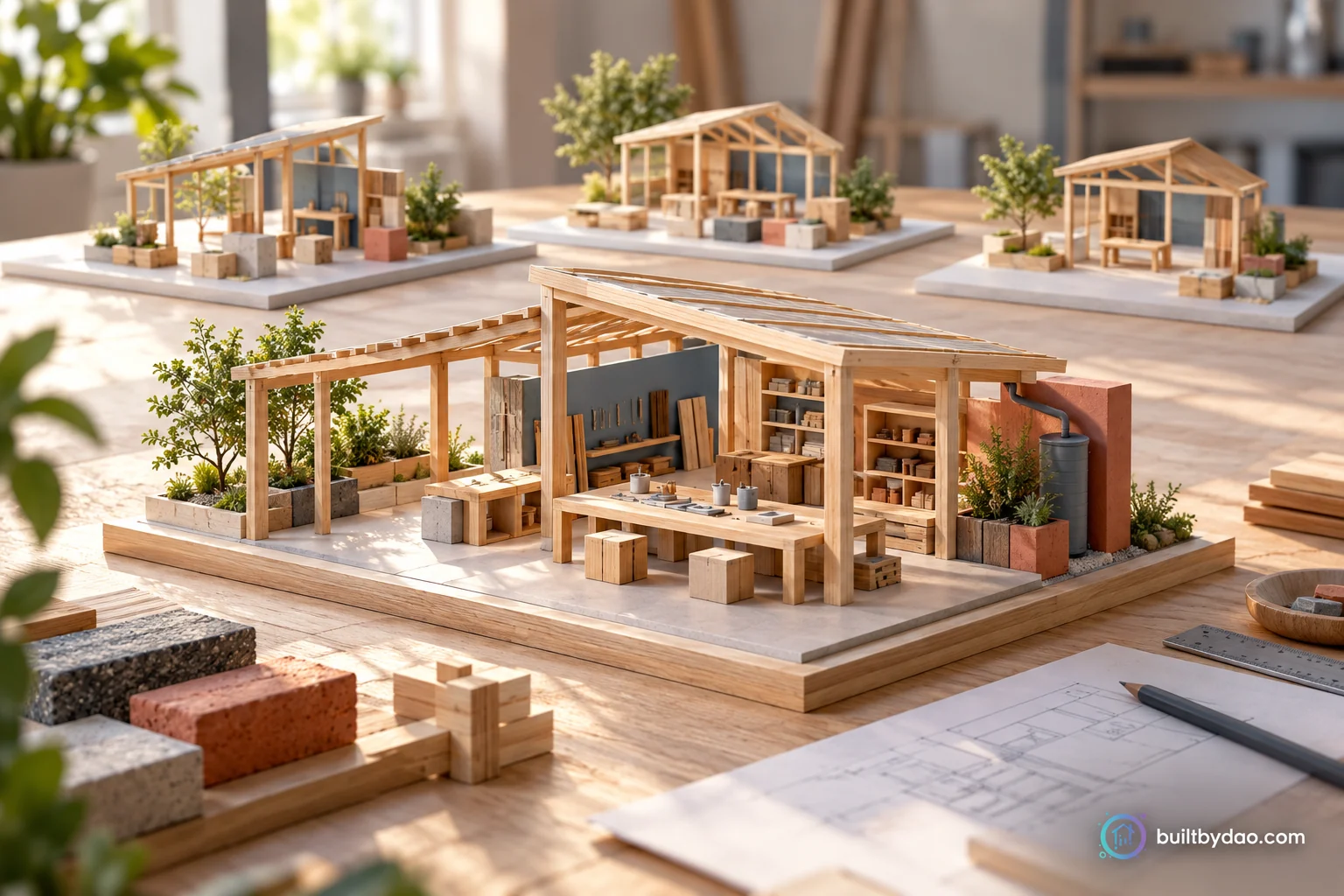
A Member Group Is More Than a Location
A future Built By DAO node would be a group of members organizing work in a city. The group would have local projects and project teams, while using the same membership, contribution and governance rules as the rest of Built By DAO. A node would not, by itself, mean a building had opened.
The distinction matters for anyone imagining this in their own city. People need a way to define work, bring the right skills together and review the result. A physical hub would add places for material recovery, learning and construction support. Organizing people and establishing those facilities are related work, but they are not the same milestone.
Dashboard Previews
Membership
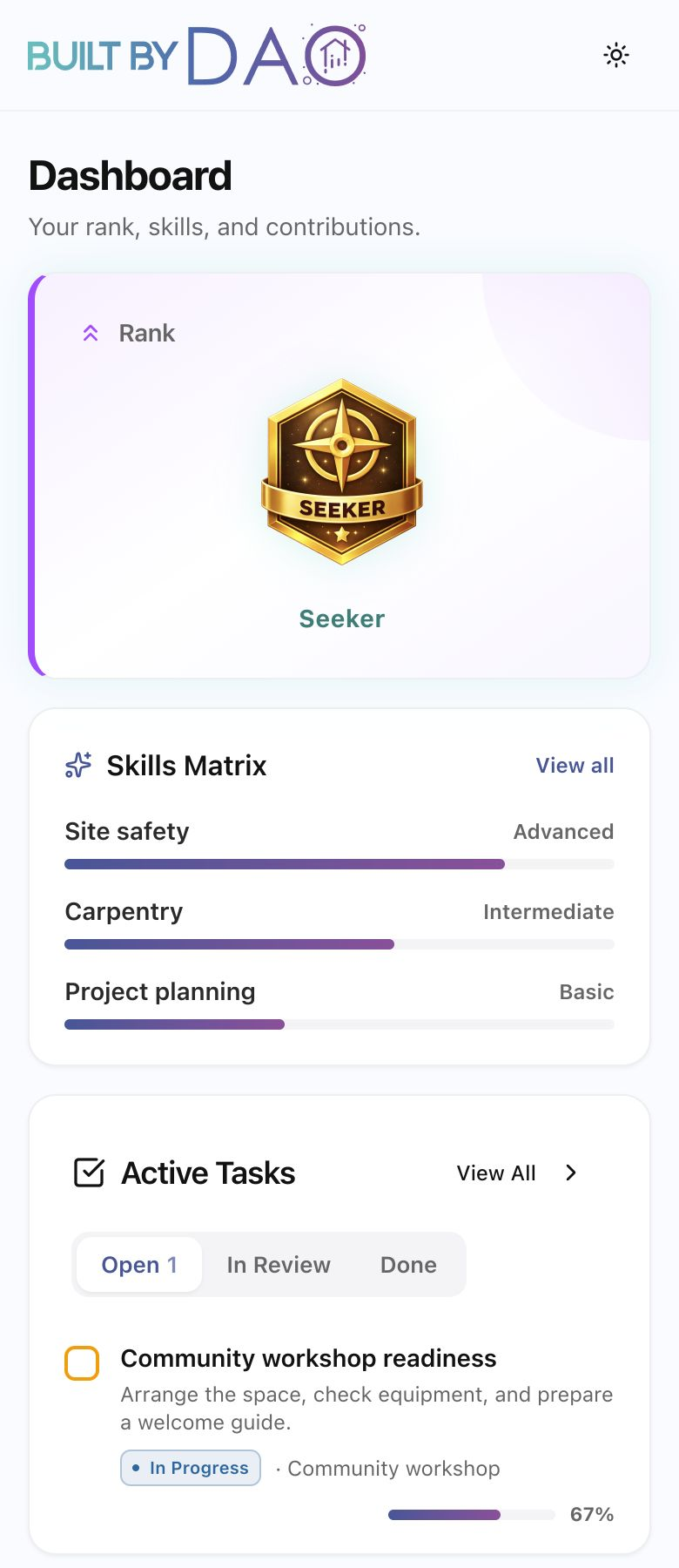
Membership, skills and active tasks in the dashboard preview.View Full PreviewLocal Projects, Shared Skills
A local member group would bring together the people involved in a place. Working groups would organize particular projects. Guilds would support the skills that people bring to those projects. These roles let a project team draw on trade, technical and operations experience without making every skill community into a separate local organization.
Working Groups Around Projects
A working group brings people together around a defined result. Its tasks identify the scope, expected outcome, deadline and required skills and rank.
Guilds Around Practice
Trade, technical and operations guilds support craft, learning and mentoring across projects. Guild proficiency runs from Novice to Master.
A Shared Membership Record
Members keep their organizational rank and current good-standing status within Built By DAO. A city group would use those common records and rules.
Local Work Would Use the Same Review Rules
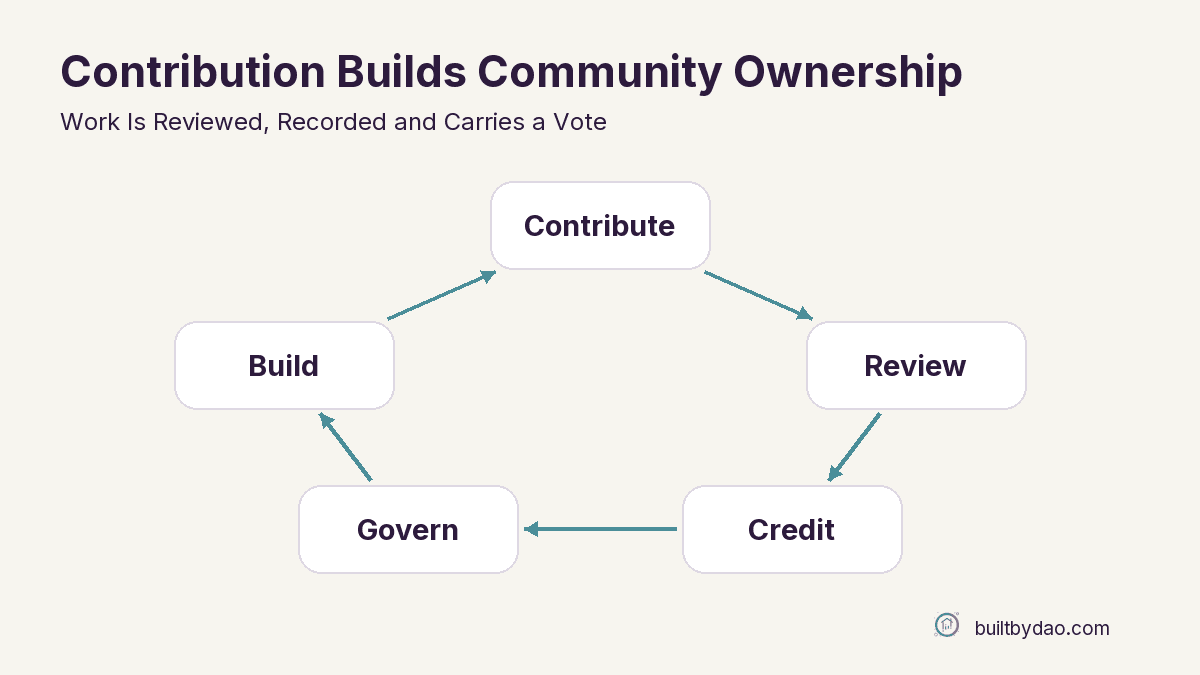
A local project’s contribution record would need to show what was done and what evidence a reviewer accepted. Location would not replace review or make credit automatic. Good standing, an authorized funded release and confirmation would still be required for credit.
Eligible contribution provides Contributor voting power within the shared governance framework. A local group would not create a separate route for buying that power. Contribution credit cannot be bought, sold or transferred; it is not pay or a property share. The common rules would keep work in different cities recognizable without treating all projects as identical.
The First Hub Comes Before Expansion
Nodes are planned as a second ring after the first hub. Detroit and Chicago are the likely first two hub cities, with no site chosen. Fort Wayne, Raleigh, Minneapolis and Milwaukee are examples of other cities where future member groups could fit; they are not announced or operating nodes.
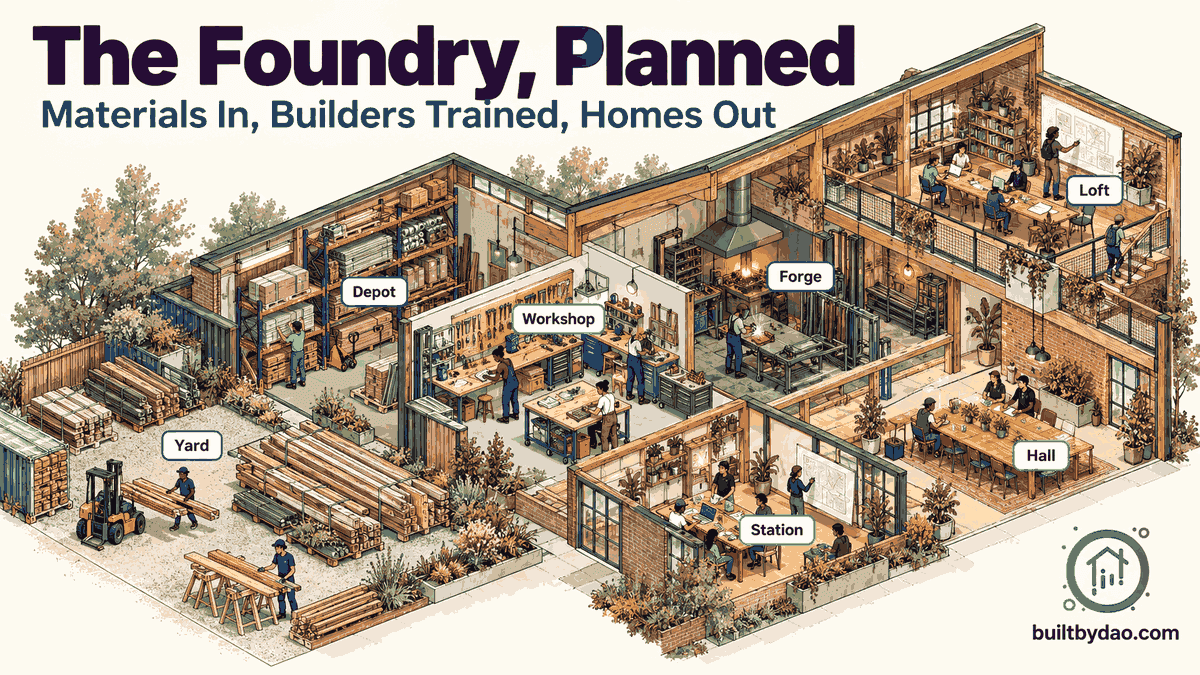
The planned Foundry would bring material recovery, inventory, repair, fabrication and training into one physical operation. Orientation in the Hall would lead to hands-on learning in the Workshop and experience on construction sites. That is the capability the first hub is intended to establish before expansion.
For a future local group, the practical questions would be about its place: which projects matter, which skills those projects require and how people and materials could be coordinated. Those questions would need local answers within the shared rules.