The skills network
Know what we can build together.
A community holds more knowledge than any one person can see. Built By DAO is building a shared skills inventory so the network can understand the abilities its members bring and put them to work on things that matter.
Someone knows how to repair a machine. Someone understands a neighborhood, organizes a team or makes a complicated process easier to follow. When those abilities become part of a shared picture, more possibilities for collaboration come into view.
See the iPhone development preview
Actual native iPhone screens from the development build, captured with fictional sample data. The iPhone companion is in development.
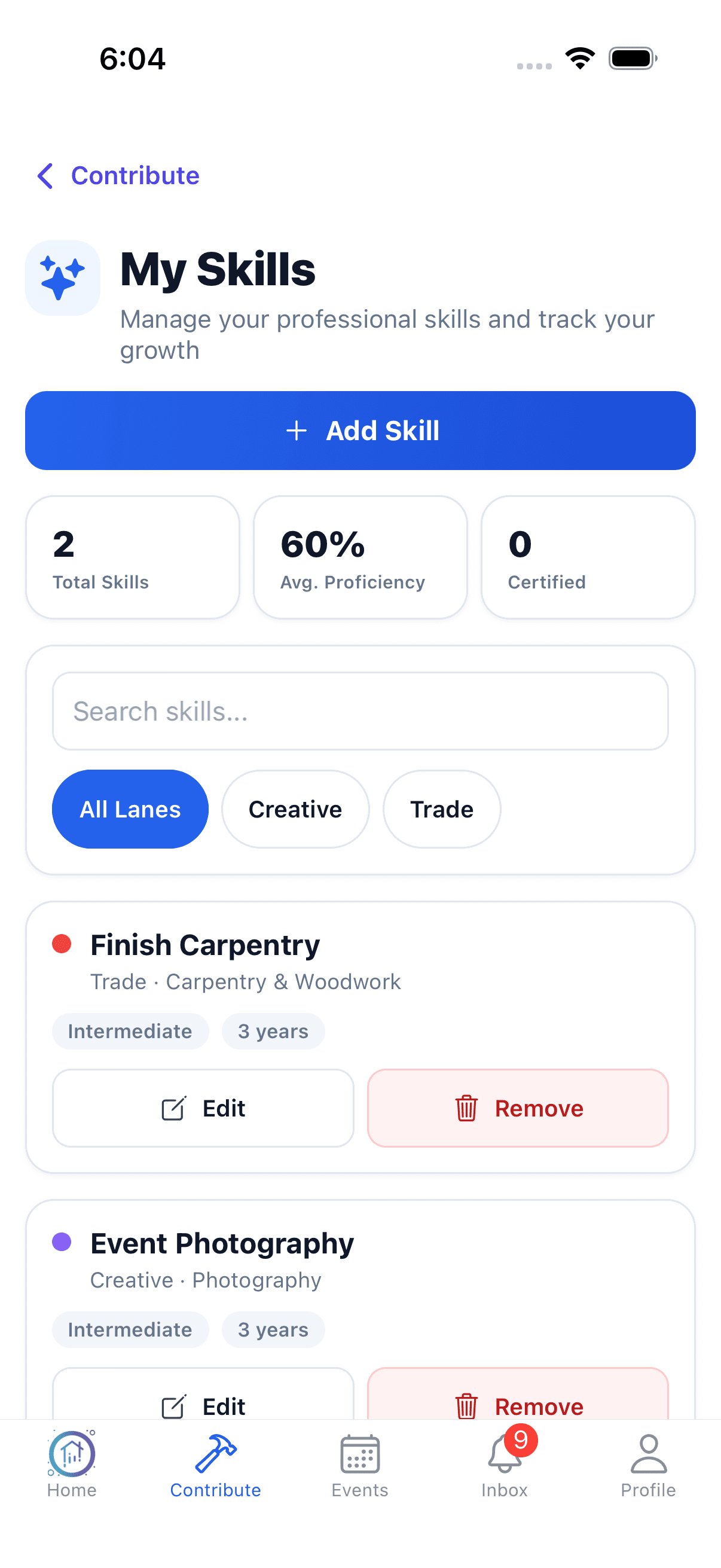
Bring your skills into view
Maintain the abilities and experience you bring to the community.
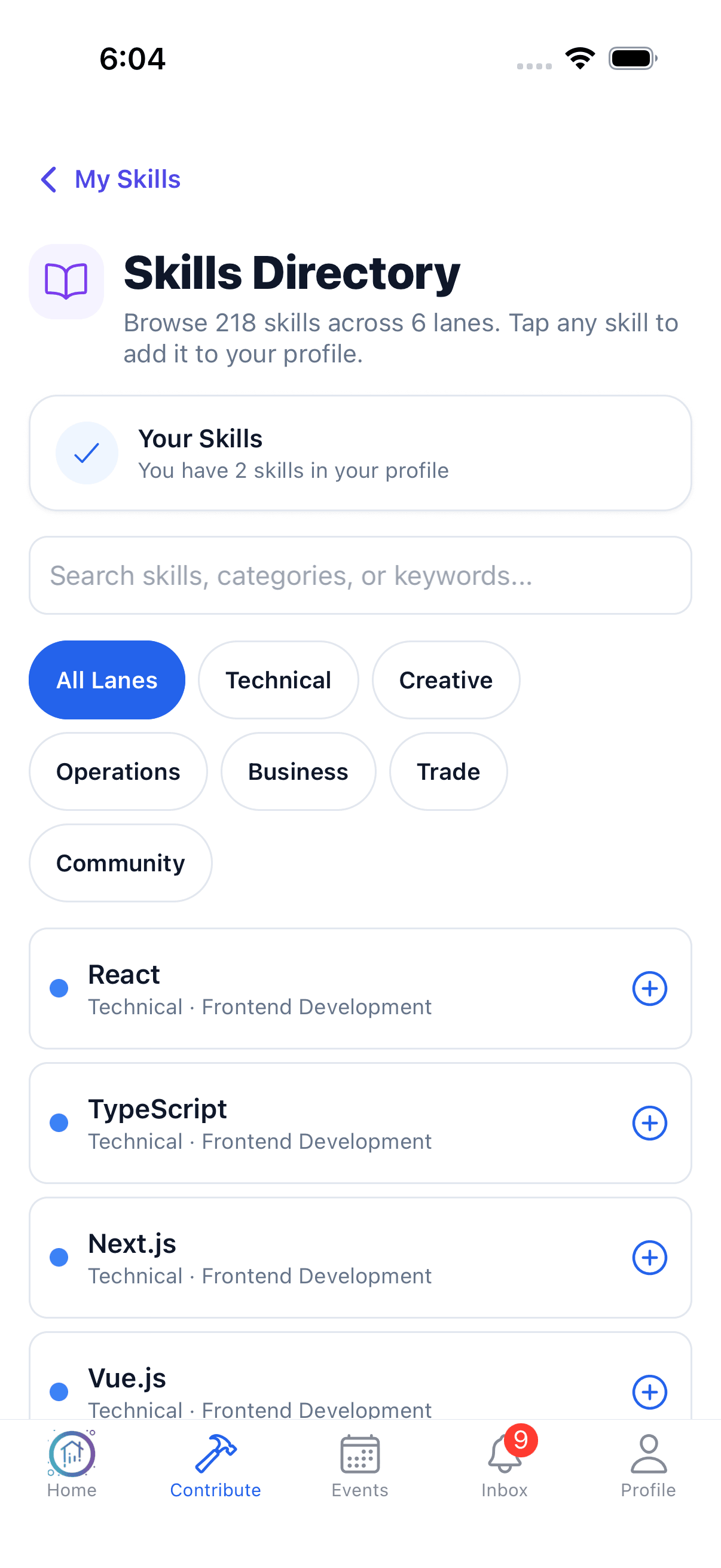
Explore the shared skills catalog
Find skills in a common catalog and add them to your inventory.
Your skills help describe the capacity of the whole community.
Members record their skills using a common catalog across areas such as trades, technology, creative work, operations, business and community. A shared vocabulary makes individual experience easier to relate to the skills a project needs.
Proficiency adds context, from novice through expert. Learning goals show where a member wants to grow. Together, these records help distinguish the abilities available today from the abilities members want to develop next.
The purpose reaches beyond completing a profile. Each useful record contributes to a clearer understanding of the network: where experience is concentrated, which needs call for more support and where people could learn alongside others.
Turn knowledge about people into better project choices.
Discover capacity already here
A member may have useful experience outside their usual role. Recording it creates a path for that ability to connect with a task, instead of depending on the right person remembering the right conversation.
Understand what needs support
Skills coverage and gap analysis compare recorded abilities with requirements. That gives the community a basis for discussing training, recruitment, partnerships and the mix of experience a project needs.
Connect growth with useful work
Learning interests help reveal where members want to develop. When suitable work and support exist, a project can become a place to practice a skill while contributing to a shared outcome.
An illustrative project
A repair project needs more than the repair itself.
Imagine a project preparing equipment for a community workshop. It needs someone with repair experience, someone to document the process and someone to coordinate the work. A member who usually helps with events may also have relevant mechanical experience. Another member may want to learn maintenance while contributing the documentation skills they already have.
A shared inventory helps those possibilities become visible. The project can name the skills it needs, members can discover work that fits and the lead can discuss who has the experience and time to help. If a critical skill is missing, the team has a clearer reason to seek support before committing to the work.
The larger ambition is a network that gets better at recognizing its own resources. Knowing what people can do changes how a community approaches the question, “Can we take this on?”
Keep the inventory connected to real people.
Skills change through practice. Members can update proficiency and experience as they grow, and keep learning goals current. Task matching uses recorded skills to suggest connections; conversations about interest, availability and the actual requirements turn a suggestion into a workable commitment.
The Skills Directory lets members search the shared catalog and add skills to their own inventory. The app also supports skills coverage, gaps and task matching. Member information and project access follow the relevant visibility rules, so a network-wide understanding of capacity can coexist with appropriate access to individual details.
An accurate self-description makes the inventory more useful. A recorded proficiency, learning interest or certification detail carries its own meaning; project leads still need to understand the experience and qualifications relevant to the work. Reviewed contributions provide additional context through the work itself.
Put your abilities into a shared purpose.
The skills inventory helps the community understand what it has. Choosing your own tasks gives members a way to act on that knowledge. The equipment and materials registry connects the physical resources those projects need.