Built By DAO
How Housing Loyalty Would Work
Which rent payments would qualify for Housing Loyalty, how the lease fixes the rate, and what a resident’s credit would mean.

Recognizing Qualifying Rent
Housing Loyalty is Built By DAO’s planned way to recognize rent paid in qualifying member properties. After a base-rent payment is verified, the resident would receive credit at the rate set for their lease term. The credit would stay attached to the member, with its source identified as qualifying rent.
For a resident, the useful details are specific: which rent period qualified, what rate applied and whether that period’s credit was confirmed. Housing Loyalty would preserve that history across the Built By DAO network. It would not turn rent into the purchase of a home.
No member property is open yet. The program describes how qualifying rent would be recognized in future community-owned homes; the membership cohort’s opening is not a housing availability date.
The Lease Sets the Rate
Each qualifying property would publish a Housing Loyalty rate, normally 5 to 15 percent, with 10 percent standard. The property schedule and signed lease would fix the rate for the term.
That matters because a resident should be able to identify the rule that applied when they paid rent. Later policy changes would apply to future periods, rather than rewrite credit for earlier ones. The dashboard is designed to show the property schedule, lease-term rate and qualifying rent together.
Which Payments Would Qualify
The calculation would use verified base rent for a qualifying lease period. Deposits, late fees, damages, utilities and unrelated charges would not earn Housing Loyalty. A resident’s total housing payment could therefore include charges that do not count toward credit.
Authorized rental operations would record the qualifying period after verifying payment. Each lease period could receive credit only once. Payment, verification and confirmed credit are separate parts of the process, so a rent payment should remain identifiable all the way through.
What the Credit Would Mean
Housing Loyalty would recognize qualifying rent history. It would sit alongside the lease, with clear limits on what that recognition provides.
Rent and Cash
Rent would remain due in cash. Housing credit would not reduce future rent or create a fixed cash redemption right.
A Home and Its Requirements
The credit would not give title, satisfy underwriting requirements or guarantee admission to another property.
A Voice Through Work
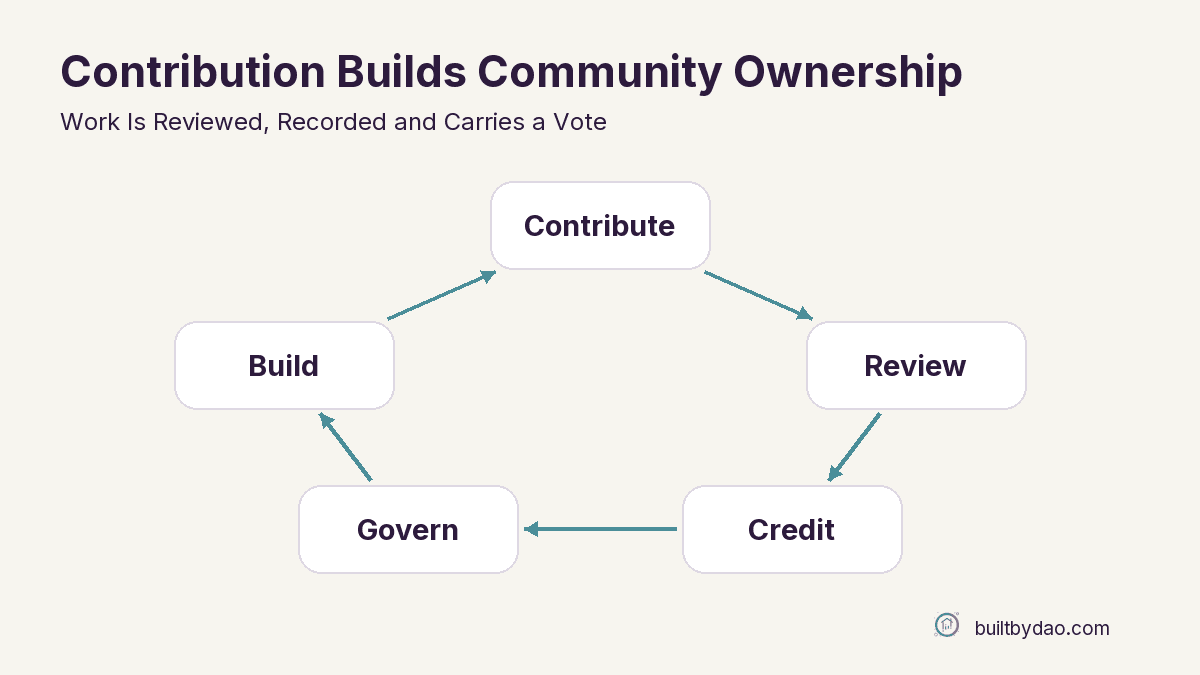
Housing credit would not add Contributor voting weight. That power comes from eligible reviewed contribution, not rent payments.
Housing Within a Community-Owned Neighborhood
Built By DAO’s housing plan sits within a neighborhood of homes, workspaces, local businesses, training and shared infrastructure. The planned Foundry would support physical development through material recovery, fabrication and practical learning. Housing Loyalty concerns the resident’s qualifying rent within that future setting.
A resident could also contribute reviewed work, but that work would have its own evidence, review and contribution record. Housing and work would remain identifiable by their source. Renting would not itself create the rank or voting power earned through eligible contribution.