Built By DAO
The Operating Structure Behind Built By DAO
How project budgets, work review, contribution credit and spending authority are organized before physical development.

The Controls Behind Community-Owned Development
Built By DAO aims to build community-owned neighborhoods. Its operating rules tie contribution credit to funded project budgets and reviewed work, while governance and treasury rules define who can authorize decisions and spending.
The dashboard is built to coordinate that work. The physical facilities remain planned. Assessing the structure means following a project’s resources, the evidence supporting its work and the authority behind the actions it takes.
Membership
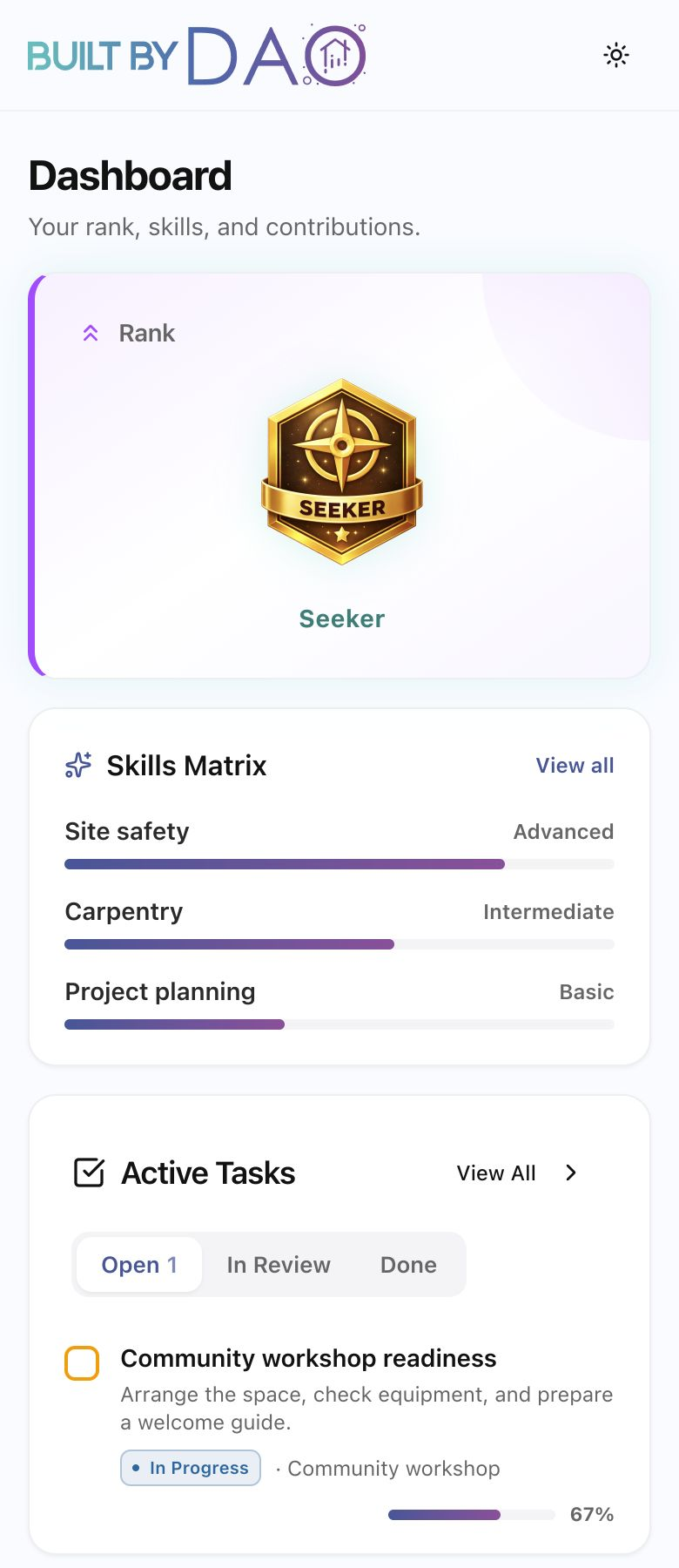
Membership, skills and active tasks in the dashboard preview.View Full PreviewCredit Requires Both Funding and Accepted Work
A project needs an authorized, funded budget before contribution credit is issued. Its tasks define the expected result, deadline, required skills and rank. Review checks the work against those expectations and accepts the supporting evidence.
Issuance also requires good standing, the authorized funded project release and a confirmed transaction. Approving work accepts its result; issuing credit completes a separate action against the project’s funded resources. An accepted result can therefore remain pending credit without changing the outcome of its review.
Contribution Creates Standing, Not a Property Share
Eligible contribution credit is earned, cannot be bought, sold or transferred, and has no member cash-out. It is not pay, legal equity or a direct property share. Its purpose is to recognize work and carry standing and governance weight.
That distinction defines the role of contribution in community ownership. The record helps determine who has earned Contributor influence. It does not turn a credit balance into an ownership agreement or give capital the same power as reviewed work.
Approval Follows the Type of Decision
The proposal category determines which governing houses must approve. Each represents a different basis for participation. The decision process fixes eligibility before voting, then separates finalization, cooling-off and execution.
Contributor
Eligible work supplies voting power on a square-root curve, with bounded rank and tenure factors.
Investor
Capital participation has weight inside the Investor house. It does not become Contributor power.
Council
Council members participate through consent or a reasoned objection.
Business Activity and Treasury Authority Stay Separate
Business units keep their own receipts and balances, while revenue moves to the treasury. Operating and project budgets receive explicit allocations. That makes it possible to follow resources from business activity into the purposes they are authorized to support.
Treasury spending still depends on policy limits and the authority required for the action. Allocating a budget, releasing resources and recalling them are separately authorized actions. Access to dashboard administration does not itself grant treasury authority. The model therefore separates running the application from permission to direct its resources.
The First Hub Is Still Planned
The Foundry would put these arrangements to use in material recovery, fabrication, training and construction. Materials would need to be prepared for building, people would need the relevant skills and project work would need resources, coordination and review.
Detroit and Chicago are the likely first two hub cities; no site has been chosen and no building or hub is open.