Help build a neighborhood we can own together.
Homes to put down roots in. Space to earn a living. More say in what happens where you live.
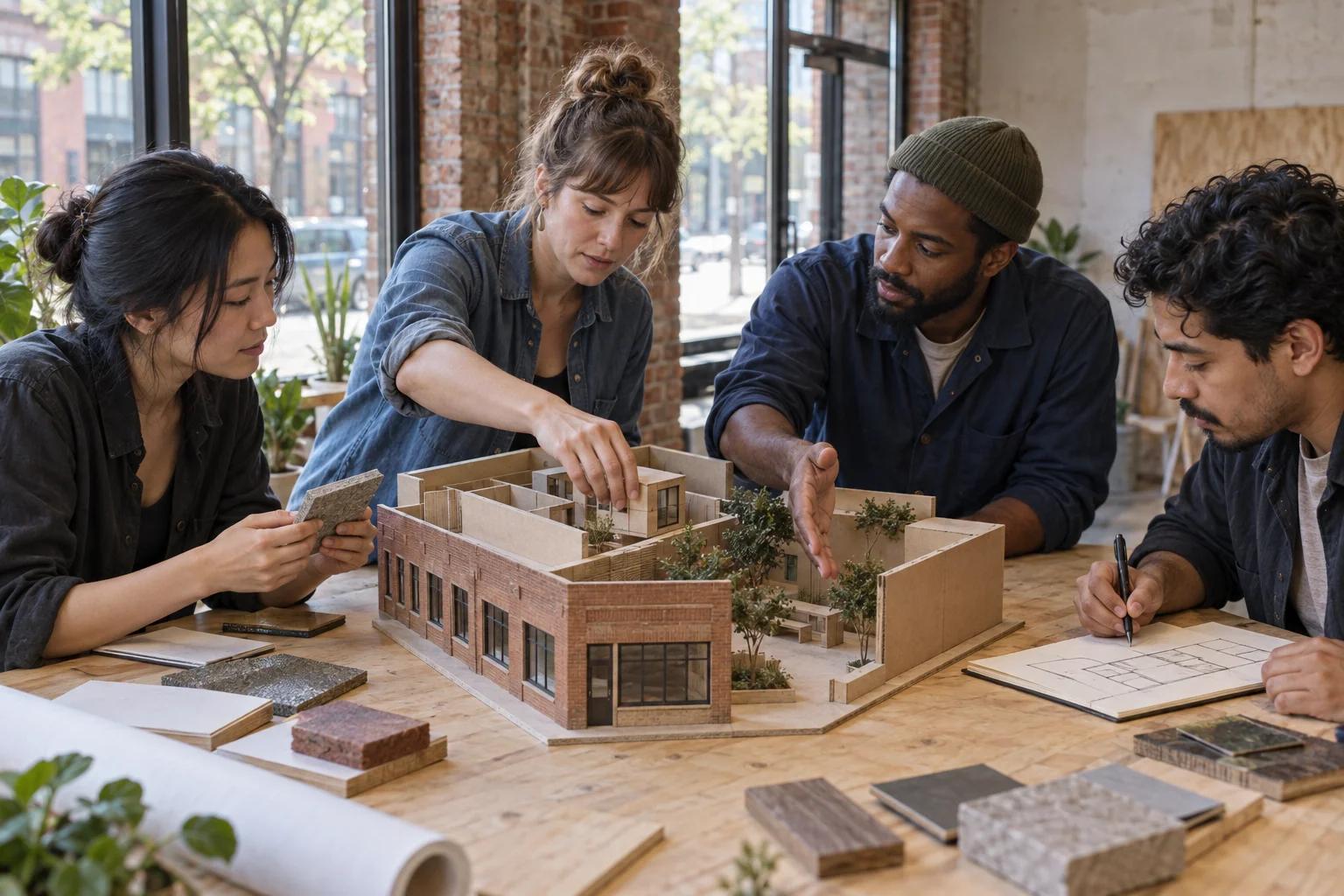
AI-generated editorial scene. A shared design decision, not a photograph of a BBD project.
Find your roleA home you can afford. Somewhere to make a living. People you can count on. When you are trying to build a life, those things belong together.
But finding them can mean fitting your future into decisions someone else has already made: what gets built, what the space costs, which businesses can afford to stay. Having something to contribute rarely gives you a place in those decisions.
Built By DAO is organizing around a different possibility. Bring the people who need a place together with the people who can design it, finance it, build it, and keep it working. Make community ownership part of the plan from the beginning.
We want the effort that makes a neighborhood valuable to help build a lasting position for the people doing that work. That means connecting practical skills and local knowledge to productive spaces, clear participation terms, and the ability to shape what happens next.
This is an invitation to help make that model real. You can enter with a useful skill, knowledge of your block, a property lead, a partnership, or capital. The first thing we need to build is the team that can turn those contributions into a project.
Give people a reason—and a way—to put down roots.
Imagine a neighborhood with a workshop where people learn to repair and make things, room for small businesses to get established, and homes connected to that local life. A place where the next person with a good idea has people and resources to turn to.
That is the kind of neighborhood BBD is working toward. A shared workshop could put equipment within reach of people who could not justify buying it alone. Training could connect someone to useful project work. Materials recovered from one building could help supply another.
The economic ambition goes further: build ownership and operating arrangements that let the people connected to these places participate in their value and direction. Decide how the asset will be held, how its costs will be covered, and how members can benefit over time.
Those arrangements have to be worked out for each project. The test is whether they give people something concrete to build on: usable space, recognized work, defined rights, and responsibilities they understand.
Find a building the neighborhood can actually use.
Take one possible starting point: an unused building that might become a workshop and a base for future neighborhood projects. This is an illustration of the work ahead, not a property BBD is claiming to have acquired.
Before drawing its future, establish its present. Who owns it? Is anyone using it? Will the owner sell or consider another arrangement? Can the team secure access and a path to control the site?
Then test the fit. A workshop may need loading access, power, ventilation, and permission for activities a residential building cannot accommodate. A low asking price means little if the roof, environmental conditions, or renovation costs make the plan unworkable.
This is already work people can contribute to: finding leads, researching records, making introductions, and bringing qualified professionals into the assessment. Knowing which property to leave behind can matter as much as finding one to pursue.
Give neighbors a say while there is still something to decide.
The people around a building know things a listing cannot tell you. Which spaces are missing. When the street gets busy. What has already been tried. Who might use a workshop, and who would be affected by its deliveries or opening hours.
Invite that knowledge into the design before the layout is settled. Put choices in front of people, with their consequences attached. A larger shared work area might mean fewer private units. Evening access might require another staffing plan. An inviting entrance still has to work for someone using a wheelchair.
Make the decision process visible, too. Identify what neighbors and future users can shape, what the project team is responsible for, and what the owner, lender, or permitting authority must approve. Show how local input changes the proposal.
That is an early exercise in shared power: people influencing a plan while their contribution can still change the result.
Work out who pays—and who benefits.
A viable project has to pay for more than the building. It needs a budget for professional work, approvals, construction, equipment, unexpected costs, and the first months of operation. It also needs a plan for the years after that.
Different people can help meet those needs. A property partner might create a route to the site. Eligible grants could support a particular activity. Financing and aligned investment could fund other parts of the project. Materials and expertise may reduce what has to be purchased. Each contribution needs a clear value, purpose, and commitment.
At the same time, settle the participation terms. What entity will hold the asset? How will work be compensated? What ownership or use rights can the project actually provide? How will income cover upkeep and reserves? Which decisions belong to members, and what obligations come with them?
BBD’s investment conversations can take different forms, including property-level participation, qualifying fund structures, or negotiated partnerships. The right arrangement depends on the project. The investor’s position, a resident’s housing agreement, and a contributor’s work terms each need to be clear.
This is where the ambition earns its substance. Put the budget and the proposed community benefits next to each other. Keep working until the project can explain how both will be supported.
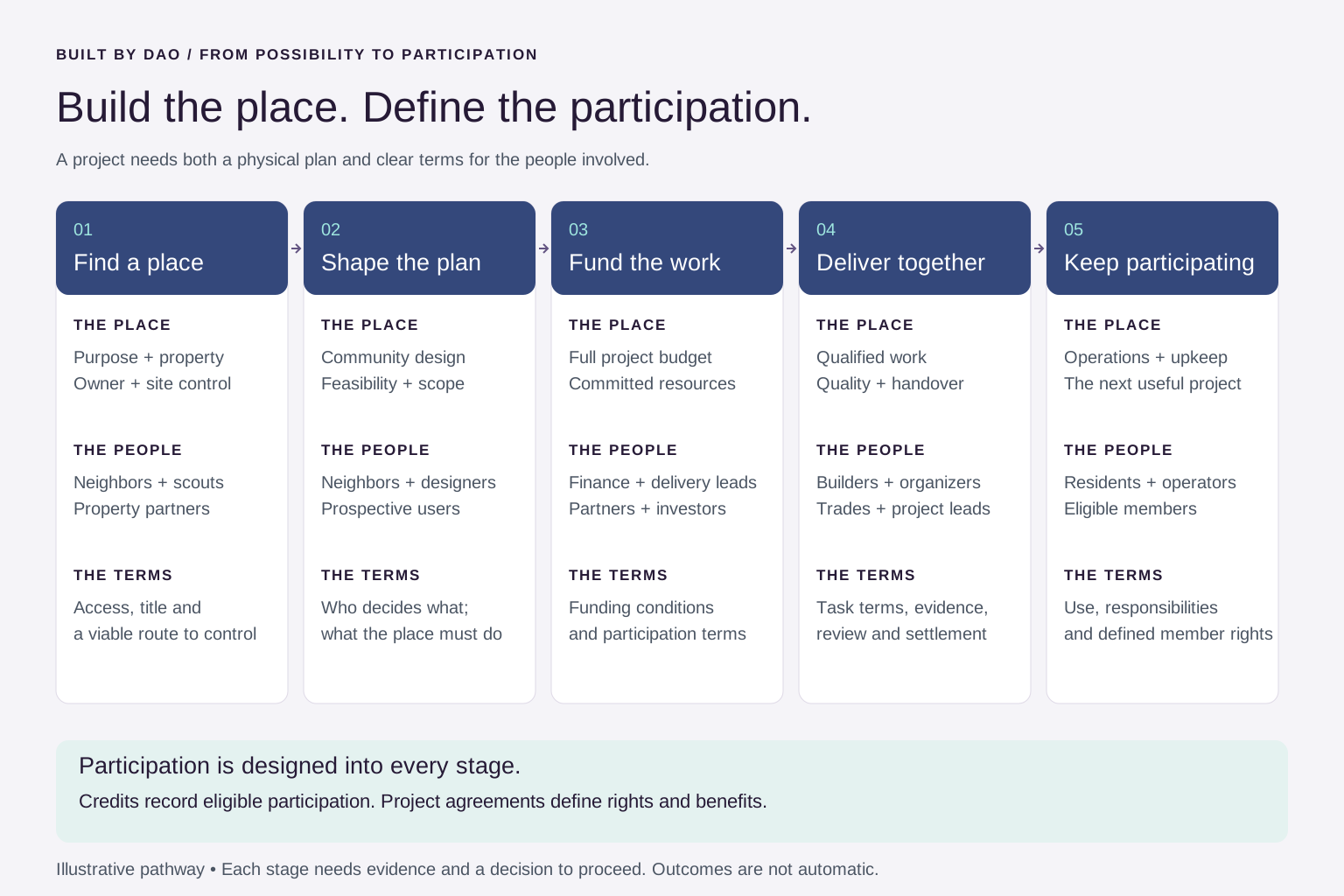
Read the pathway, stage by stage
Find a place
The place: Purpose, property and a route to site control.
The people: Neighbors, scouts and property partners.
The terms: Access, title and a viable route to control.
Shape the plan
The place: Community design, feasibility and scope.
The people: Neighbors, designers and prospective users.
The terms: Who decides what; what the place must do.
Fund the work
The place: A full project budget and committed resources.
The people: Finance and delivery leads, partners and investors.
The terms: Funding conditions and participation terms.
Deliver together
The place: Qualified work, quality checks and handover.
The people: Builders, organizers, trades and project leads.
The terms: Task terms, evidence, review and settlement.
Keep participating
The place: Operations, upkeep and the next useful project.
The people: Residents, operators and eligible members.
The terms: Use, responsibilities and defined member rights.
Build the skills along with the place.
Once the team has the site, funding, permissions, and agreements to proceed, the work gets specific. Schedules, purchases, qualified crews, supervision, inspections, and a handover someone can stand behind.
BBD’s Foundry concept connects that work to a shared base for tools, material recovery, making, and training. The aim is to develop people and resources that remain useful after any one job is finished. A person who learns a skill can carry it to the next project. A well-maintained tool can serve many builders.
Some of the work happens far from a workbench. Organizing a design session, coordinating deliveries, documenting decisions, building software, and keeping the accounts understandable can all help a project move. The task should say what is needed, who can do it, how it will be reviewed, and what the terms are before someone takes it on.
The platform supports records of work and its review. Eligible contribution credits have a separate authorization and settlement process. People should be able to tell the difference between work they have submitted, work that has been accepted, and a reward that has actually been received.
That clarity is part of building a team people want to stay with.
Make the value last beyond opening day.
An open workshop needs an operator, customers, maintenance, and enough income to keep its doors open. A home needs care. Shared space needs rules that people can use when they disagree.
Community ownership has to work through these ordinary decisions. Who can use the space? What can it afford? Which repair comes first? How much should be held in reserve, and what could support another useful project?
The goal is to build more capacity with each round of work: people who can maintain the assets, institutions that can organize the next project, and ownership arrangements that give members a durable role. Success would mean a neighborhood better able to meet its own needs and decide how to use what it has created.
BBD’s EQTBLT credits record eligible contribution and Housing Loyalty activity. Their benefits depend on the relevant programs and agreements; a balance alone does not confer property title, guaranteed cash, housing, or investment returns. The project’s written terms must explain the actual rights and benefits people are being asked to work toward.
That is the standard the movement has to meet: a clear connection between the effort people put in and the participation the project can deliver.
There is work to do before there is a building.
A neighborhood project starts with people deciding to do something together. Research comes before an acquisition. Organizing comes before a design session. A realistic budget comes before funding. You can help develop that capacity now by telling us where you are and how you want to take part.
Bring your skills. If you build, repair, design, teach, organize, write, manage projects, or develop software, explore the contributor path. Your first step is an introduction; any work that follows needs its own scope and terms. See where contributors fit · Register your interest.
Bring your knowledge of the neighborhood. If you want a say in the places around you or are interested in future housing, start with the neighbor path. Tell us where you would like to be involved. Housing interest does not reserve a home. Explore the housing model · Register housing interest.
Bring a property or a partnership. Owners, local organizations, educators, material suppliers, and delivery partners can help make a project possible. Introduce your organization or share a specific opportunity. Explore partnering · Make an introduction · Share a property.
Bring capital with a purpose. If you want to help finance this work, start a conversation about the kind of project, time horizon, and investment relationship you have in mind. Each opportunity has its own terms and risks. Talk with BBD about investing.
These are starting conversations. App membership currently requires an invitation and an application process; projects and programs have their own requirements. Investors and stewards have distinct roles.
We are bringing people together to put community ownership to work. If you want more of your neighborhood’s future to be shaped by the people who live and work there, help us build the team that can do it.
Explore the work behind the idea.
The next project starts with people.
Tell us where you are and what you could bring. Help form the team that turns a neighborhood idea into a workable project.