Blockchain for Housing, Explained
Blockchain in housing is about transparency and trust, not crypto speculation. Here's how Built By DAO uses it — and what it does not mean.
Let's Clear the Air
When most people hear "blockchain," they think of cryptocurrency, volatile markets, and speculative tokens. That is a fair association given the industry's history. But blockchain technology and crypto speculation are not the same thing, and understanding the difference is essential to understanding how Built By DAO works.
Built By DAO uses blockchain as a record-keeping and governance tool — not as a vehicle for financial speculation. We are not launching a coin. We are not asking you to trade tokens on an exchange. We are using a specific technology to solve a specific problem: making housing ownership transparent, verifiable, and resistant to manipulation.
What Blockchain Actually Does
At its core, a blockchain is a database with three unusual properties:
1. Immutability
Once data is written to a blockchain, it cannot be changed or deleted. In traditional databases, an administrator can alter records — sometimes intentionally, sometimes accidentally. On a blockchain, every entry is permanent and tamper-proof.
For housing, this matters because your equity records, governance votes, and financial transactions cannot be retroactively edited by anyone. What is recorded stays recorded.
2. Transparency
Every transaction on a blockchain is visible to anyone who wants to look. There is no hidden ledger, no private books, no "trust us" accounting. If Built By DAO credits your account with $150 in equity, that transaction is verifiable by you, by other members, and by any third-party auditor.
Traditional property management is the opposite. Tenants rarely see building financials, maintenance budgets, or ownership structures. Blockchain makes that information available by default.
3. Decentralization
No single entity controls the data. In a traditional system, the landlord or property management company holds all the records and can modify them at will. On a blockchain, the records are distributed across multiple nodes, and changing them requires consensus.
This means Built By DAO cannot unilaterally alter your equity balance, reverse a governance vote, or modify financial records without the change being visible to everyone.
How Built By DAO Uses Blockchain Specifically
We use blockchain for four specific functions. Each one solves a real problem in traditional housing.
Equity Tracking (EQT Credits)
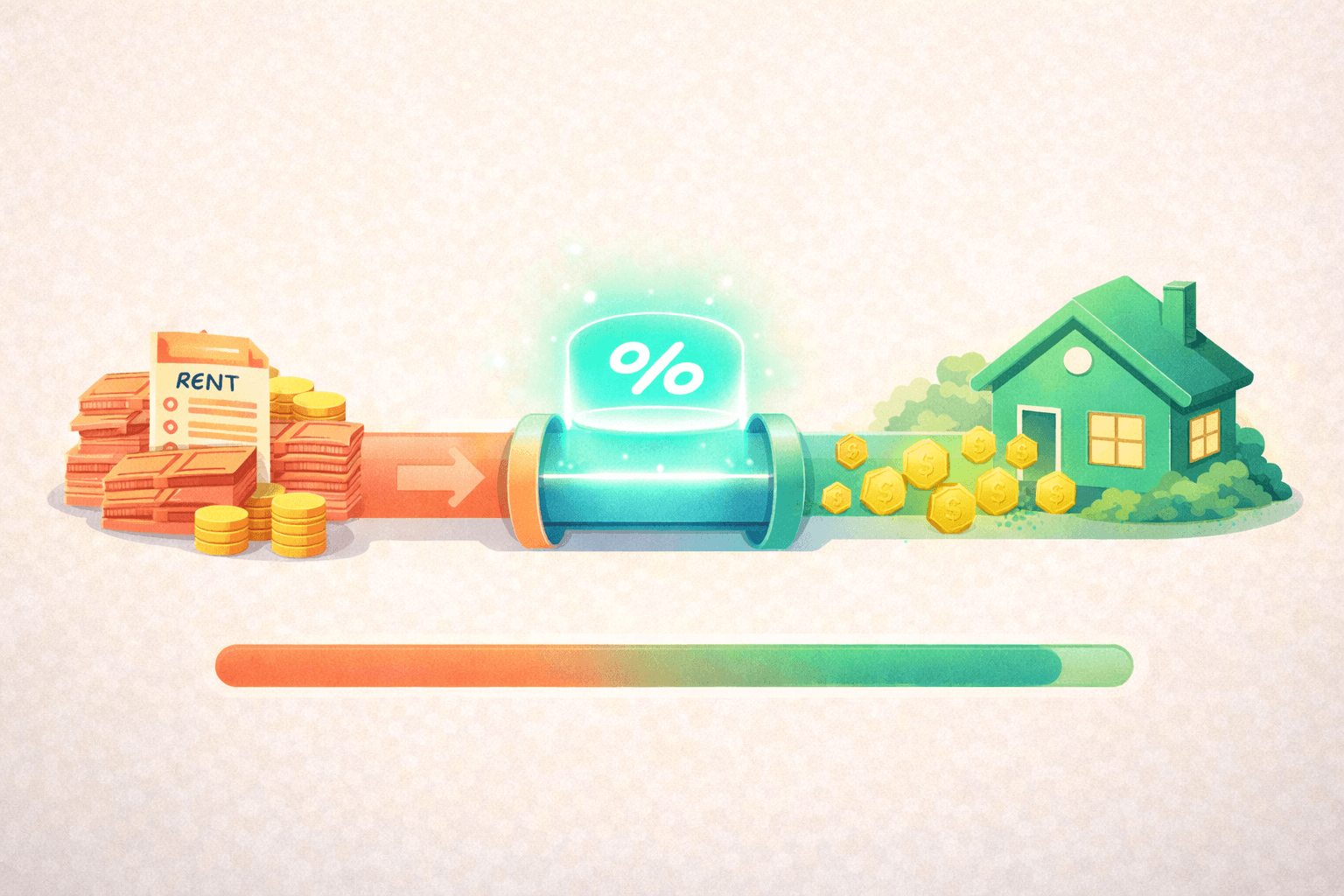
Every month, 10% of your rent payment is recorded as an EQT credit on-chain. Your running equity balance is visible in your member portal and independently verifiable on the blockchain.
What this solves: In traditional equity-sharing arrangements, tenants must trust the landlord's spreadsheet. Disputes over equity balances are common and difficult to resolve. On-chain records eliminate this entirely — the math is transparent and permanent.
Governance Voting
When the community votes on a proposal — whether to approve a maintenance project, change a building rule, or allocate reserve funds — every vote is recorded on-chain with the voter's identity (pseudonymous) and their voting weight.
What this solves: Traditional HOA and co-op elections are frequently disputed. Votes can be miscounted, proxies can be mishandled, and outcomes can be influenced by whoever runs the meeting. On-chain voting removes human error and makes results verifiable by any member.
Financial Transparency
Major financial transactions — contractor payments, reserve fund allocations, capital expenditures — are recorded on-chain and linked to the governance proposals that authorized them.
What this solves: Renters in traditional buildings have no visibility into how their money is spent. Building owners may defer maintenance, overcharge for management fees, or extract equity through refinancing. On-chain financial records make this impossible to hide.
Multi-Signature Treasury Controls
Funds held by the DAO are managed through multi-signature wallets that require approval from multiple elected signers before any transaction can execute.
What this solves: Embezzlement and mismanagement of building funds is not uncommon in traditional property management. Multi-sig wallets make it structurally impossible for a single person to move funds unilaterally.
What Blockchain Does NOT Mean
It is just as important to understand what we are not doing:
Not crypto speculation
EQT credits are not traded on cryptocurrency exchanges. Their value is tied to the appraised value of the physical property, not to market sentiment or trading volume. There is no "EQT price" on CoinMarketCap.
Not volatile
Because EQT is backed by real estate, its value moves with the property market — which is dramatically less volatile than cryptocurrency markets. Property values can decline, but they do not drop 80% overnight.
Not complicated for residents
You do not need to own a crypto wallet, understand gas fees, or manage private keys. Built By DAO handles the technical infrastructure. Your interaction is through a straightforward member portal that shows your equity balance, active proposals, and vote history. The blockchain operates in the background.
Not energy-wasteful
Built By DAO does not use proof-of-work mining (the energy-intensive process associated with Bitcoin). We use energy-efficient blockchain infrastructure that processes transactions with minimal environmental impact.
Not anonymous
While some blockchain systems emphasize anonymity, Built By DAO requires identity verification for membership. Your equity and governance rights are tied to your verified identity. This is a housing community, not a anonymous trading platform.
Why Not Just Use a Normal Database?
A reasonable question. If Built By DAO manages the system anyway, why not just use a regular database and promise to keep accurate records?
The answer is trust architecture. A normal database requires you to trust the organization running it. That trust may be well-placed — but history shows that property managers, landlords, and housing organizations sometimes fail to honor their commitments.
Blockchain removes the need for trust by making verification possible. You do not have to take Built By DAO's word that your equity balance is accurate. You can check it yourself. You do not have to trust that governance votes were counted correctly. You can verify the on-chain record.
This is not about suspecting bad faith. It is about building a system that works correctly even if someone acts in bad faith. That is a higher standard, and blockchain makes it achievable.
The Technology Should Be Invisible
The best technology disappears into the experience. You do not think about TCP/IP when you browse the internet. You should not have to think about blockchain when you pay rent and accumulate equity.
At Built By DAO, the blockchain layer handles the verification, the transparency, and the security. What you experience is a member portal where your equity grows, your votes count, and your housing community operates in the open.
Transparent Housing, Powered by Technology
Built By DAO uses blockchain to make equity tracking, governance, and financial management transparent and verifiable. No speculation, no complexity — just a better way to run community-owned housing.
Join the waitlist to see the system in action, or learn how equity works.
Related Posts

Real Estate Is Still the Gold Standard. Blockchain Just Makes It Smarter.
Real estate remains one of the most trusted investment vehicles. Blockchain technology adds new layers of security, transparency, and liquidity without disrupting what already works.

How Built By DAO Brings a Building Into Use
Follow the BBD development sequence: property fit, a usable first phase, contribution, capital and the handoff to operations.
Revolutionizing Real Estate with Blockchain Technology
From tokenizing properties to automating transactions with smart contracts, blockchain is creating new possibilities for how real estate assets are traded and managed.