Community collaboration
Choose work that helps build your community.
You know the skills you can offer, the time you have and the work you care about. Built By DAO gives members a way to choose their own tasks and connect that choice to a shared project.
Our ambition is a community where people can see what needs doing, find a meaningful place in it and help move it forward. Making that possible means giving individual initiative a structure other people can rely on.
See how a task becomes a clear choice
Actual native iPhone screens from the development build, captured with fictional sample data. The iPhone companion is in development.
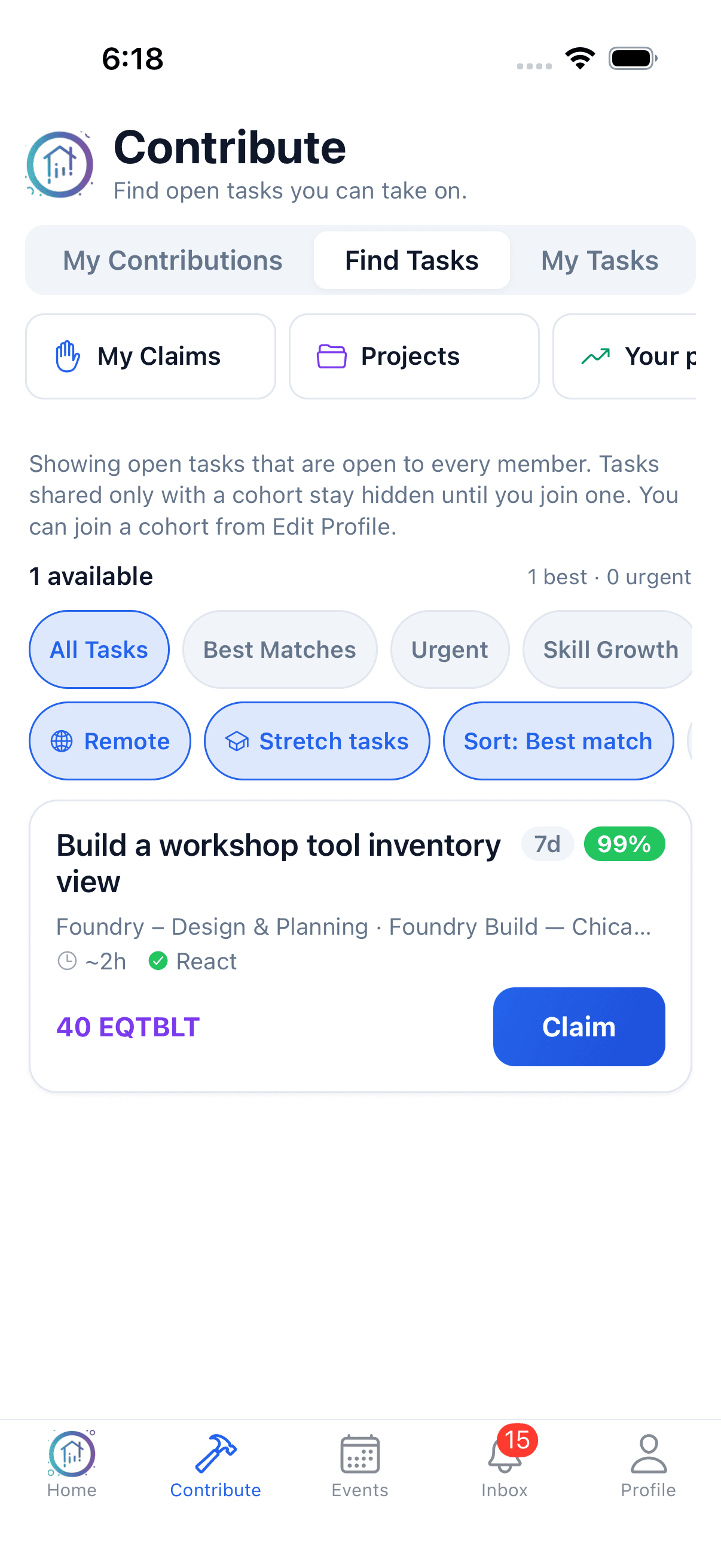
Find work that fits
Explore an open task with its skill fit and effort. The displayed match and 40 EQTBLT quote are sample task terms, not earned rewards or a standard rate.
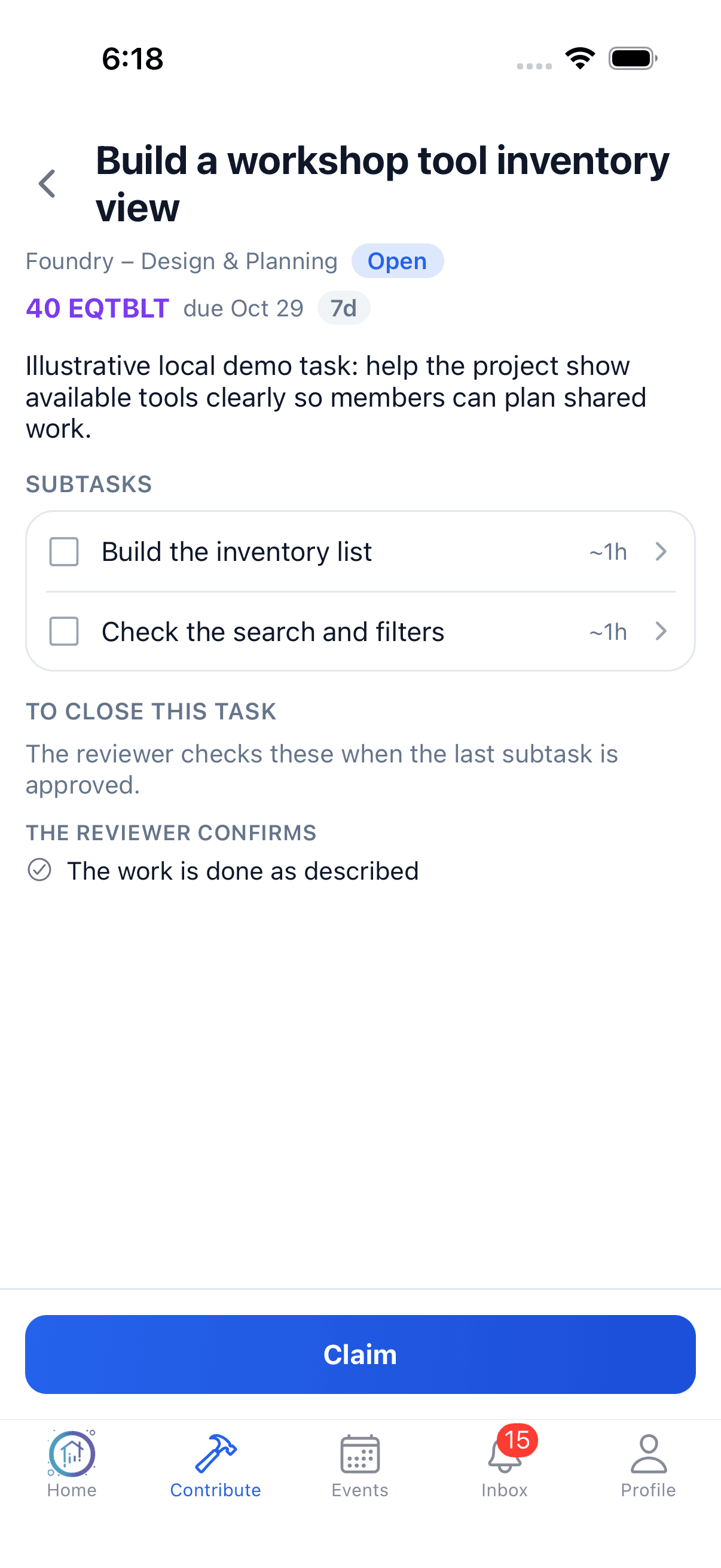
Understand the commitment
Review the subtasks and closing requirements before claiming. This sample task has not been claimed or paid.
A real choice starts with understanding the work.
A useful opportunity tells you more than its title. You need to know what the project is trying to achieve, what this task contributes, when it is needed and what a good result looks like. With that context, you can choose a commitment you understand.
Your recorded skills help surface relevant work. You can also look for tasks you could learn on, explore work across the community where available and weigh the effort against your own schedule. Recommendations support your judgment; you still choose where to contribute.
The tasks you can take depend on their audience and requirements, your membership standing and available places. Choosing a task means working within its agreed scope and review process. A good match helps you find the opportunity; the claim process confirms your place.
From personal initiative to a shared result
Find Tasks and My Tasks bring this journey together in the member dashboard. Each step gives both the member and the project a clearer picture of what happens next.
- 01
Find a contribution that fits
Explore open tasks, understand the project behind them and compare the skills, effort and deadline. Skill matches help you find familiar work; learning opportunities help you explore a new direction. You decide what fits the time and ability you can bring.
- 02
Choose a clear commitment
Read the expected outcome and what you will need to hand in before claiming. Some claims let an eligible member start immediately; others go to a project lead for approval. The confirmation explains which applies, so you know whether the work is yours or your request is waiting.
- 03
Work as part of the project
Follow the task and its subtasks, share progress and raise blockers with the people involved. Add the requested files, links or other evidence so the next person can understand what you completed. Your contribution stays connected to the larger effort.
- 04
Make the handoff useful
Submit your work for review against the stated requirements. A reviewer can approve it or ask for changes, giving you a clear next step. Reviewed work gives the project a dependable basis for the next task and a record of the contribution behind it.
An illustrative project
Many ways to help reopen one shared space
Imagine a community preparing a shared workspace for use. One member chooses a task to research replacement materials. Another, with a free afternoon and the right experience, claims a preparation task. A third chooses to organize the instructions people will need when the space opens.
Their contributions meet through the project. The research gives the lead a documented basis for a materials decision. The preparation work records what is ready and what still needs attention. The instructions turn those decisions into something the next group can use. Each person has chosen a distinct responsibility, with an outcome someone else can build on.
This is the collaboration we want to make ordinary: different abilities and different amounts of time working toward the same community asset. The shared task record helps those efforts connect, even when everyone cannot be present together.
Build a community people can help shape.
People bring useful abilities that a single job title rarely captures. Making community needs visible gives a member a way to put those abilities forward. A person who cannot take on an entire project can still choose a defined piece of it; someone ready to deepen their involvement can look for a more demanding contribution.
For the community, the opportunity is to turn that willingness into coordinated capacity. Clear responsibilities, evidence and review help project leads see what is moving, where support is needed and what is ready for the next person. Members can understand how their effort belongs to the whole.
Over time, our aim is for participation to become a practical way to help shape the places and services members share. Self-directed work gives people a starting point: choose a real need, take responsibility for a useful outcome and build alongside others.
Keep the contribution and its settlement clear
When an approved task includes Contribution EQTBLT, accepted work moves into a separate, authorized settlement process backed by project funding. Claiming a task, submitting evidence or receiving approval does not itself issue EQTBLT. The confirmed settlement establishes what has been received.
The shared skills inventory helps the network understand the abilities members bring. Shared work also needs shared resources. Explore how the equipment and materials registry connects available resources with community projects.