Built By DAO
Why the Dashboard Came First
Why Built By DAO developed membership, task review and shared decision-making before its first physical hub.

Recognize the Work Before a Building Opens
A neighborhood depends on work that begins well before anyone moves in: design, planning, coordination, communications and the preparation for construction. If that contribution is meant to give people a voice in the organization, there needs to be a clear way to recognize it from the beginning.
That is why Built By DAO built the dashboard before a physical hub. Membership establishes who is participating. Tasks define the work. Review checks the result. Governance defines how eligible contribution matters in decisions. The first cohort can begin within that structure, with its work recorded from day one.
Dashboard Previews
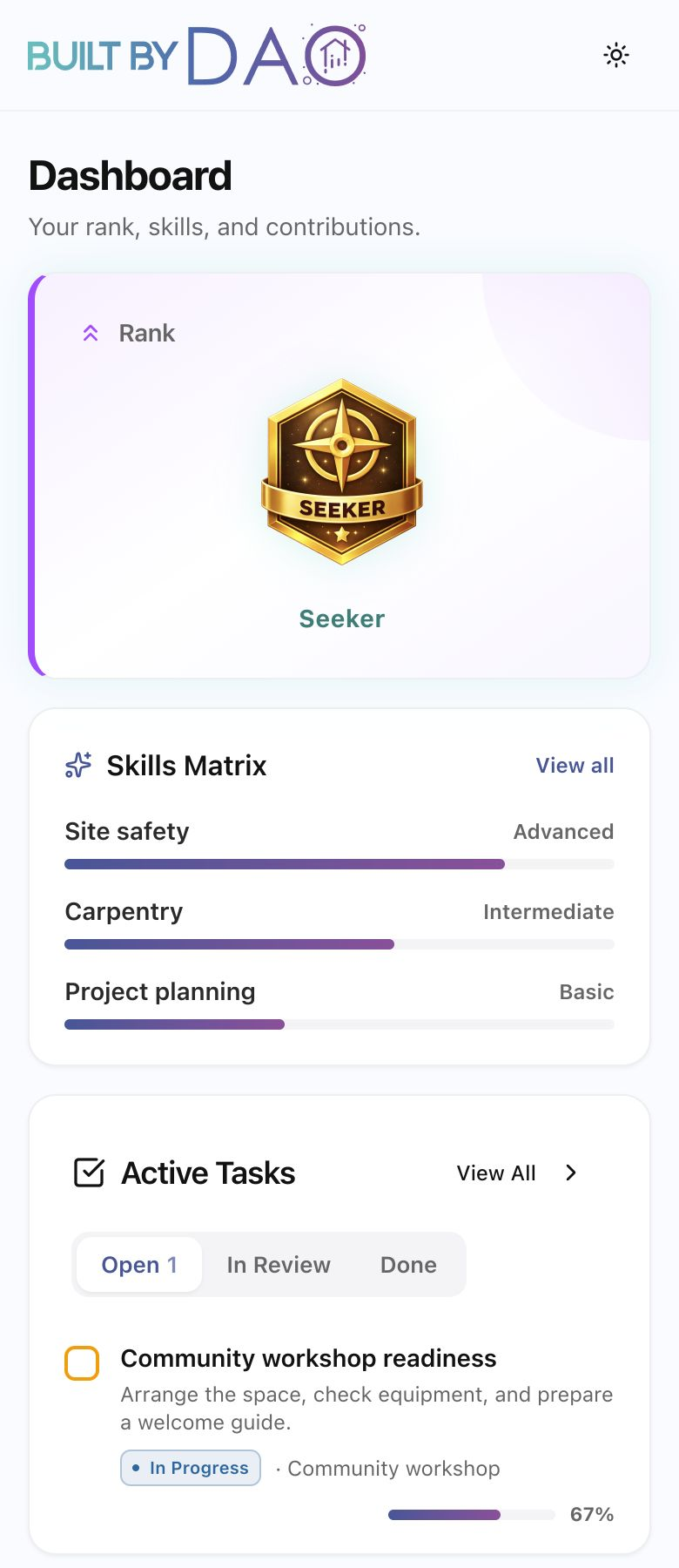
Membership
Membership, skills and active tasks in the dashboard preview.View Full PreviewKeep the People Creating Value in the Picture
The sequence follows the problem Built By DAO is trying to address. Its thesis identifies three ways people can create value in a neighborhood without sharing in its future.
Wealth Leaves
The people doing useful local work can see the wealth it creates flow elsewhere.
Decisions Happen Elsewhere
Absentee owners can decide for a place they do not live in, while property prices rise faster than wages.
Shared Places Disappear
Individual wealth-building does not provide all the gathering spaces and shared infrastructure a neighborhood needs.
Make Recognition Depend on Review
Contribution is meant to carry responsibility and governance weight. That makes review important before the first tasks accumulate. A task states what is expected, and the reviewer checks the result and evidence against that scope. Recognition has an explanation that can be traced to the work.
The record cannot be bought or sold. It is not pay, legal equity or a direct property share. Its role is to recognize eligible contribution and give it weight in the organization. Establishing the review process early makes that meaning clear to the people whose work will be counted.
Define Authority Before Committing Resources
Physical development brings decisions about people, materials and resources. The governance design establishes who can take part, which houses must approve and when an approved decision can be carried out. Contributor voting power comes from eligible work, not capital.
Treasury rules also establish spending limits and the authority required to act. These arrangements belong in the organization’s starting structure. They give members a defined process for making decisions while plans for the first hub are still taking shape.
Give the First Hub an Organization to Work With
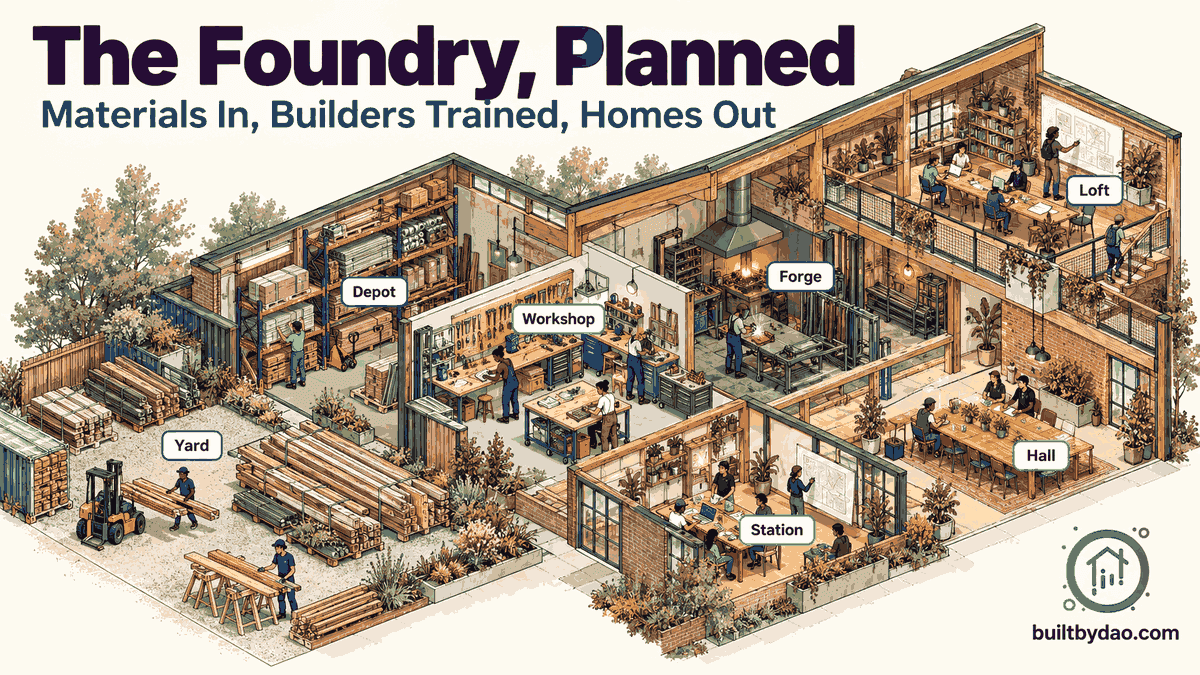
The planned Foundry would recover materials, prepare them for construction and train members from orientation through hands-on learning to construction sites. Those activities need coordinated tasks, people with the relevant skills and review of the work completed.
The dashboard provides the organizational starting point for those activities. Detroit and Chicago are the likely first two hub cities; no site has been chosen and no hub is open. Before a physical facility opens, the first cohort can begin using the membership, work and review processes the hub is intended to build on.