Built By DAO
How Built By DAO Works
How membership, reviewed work and shared decisions support Built By DAO’s plan for homes, workshops, local businesses and shared spaces.

What Built By DAO Aims to Build
Built By DAO aims to build community-owned neighborhoods: homes alongside workspaces, local businesses, training and places to gather. That takes construction skills, software, project management, organizing and the everyday work of keeping a place useful.
People can create value in a neighborhood while having little say in its future. Built By DAO’s response is to give reviewed contribution a role in how the organization is run. The dashboard establishes membership, work and decision records before the first physical hub opens.
Dashboard Previews
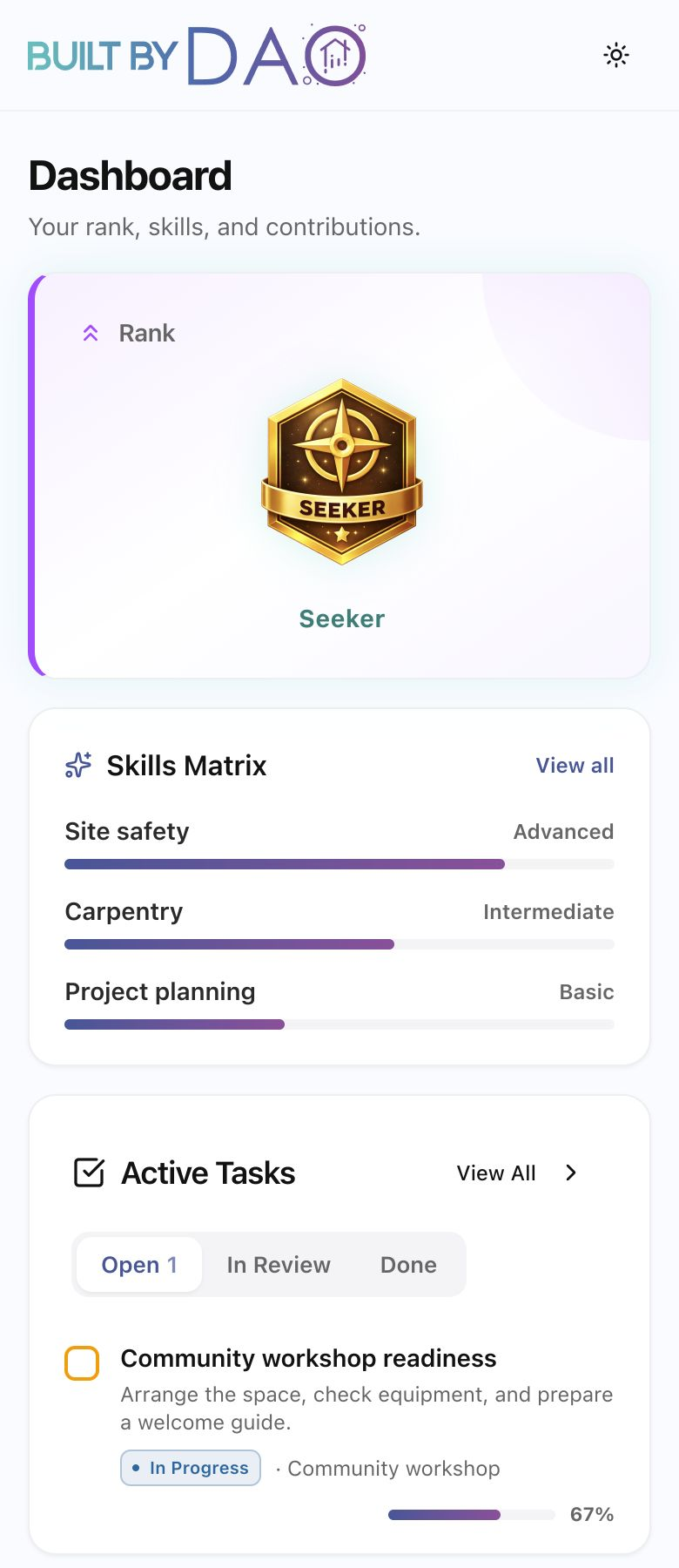
Membership
Membership, skills and active tasks in the dashboard preview.View Full PreviewHow Members Organize the Work
Membership begins by invitation and application review. An approved member receives a credential at Seeker, the first rank in a path toward Steward. Rank concerns responsibility within the organization; it is separate from proficiency in a craft.
Guilds bring together people who share skills, including trades, technical work and operations. A carpenter has a craft community, as do a developer and a project coordinator. Experienced members mentor others. Working groups bring those different skills together around a project, giving members both a community to learn with and a team to carry out the work.
How Contribution Becomes a Voice
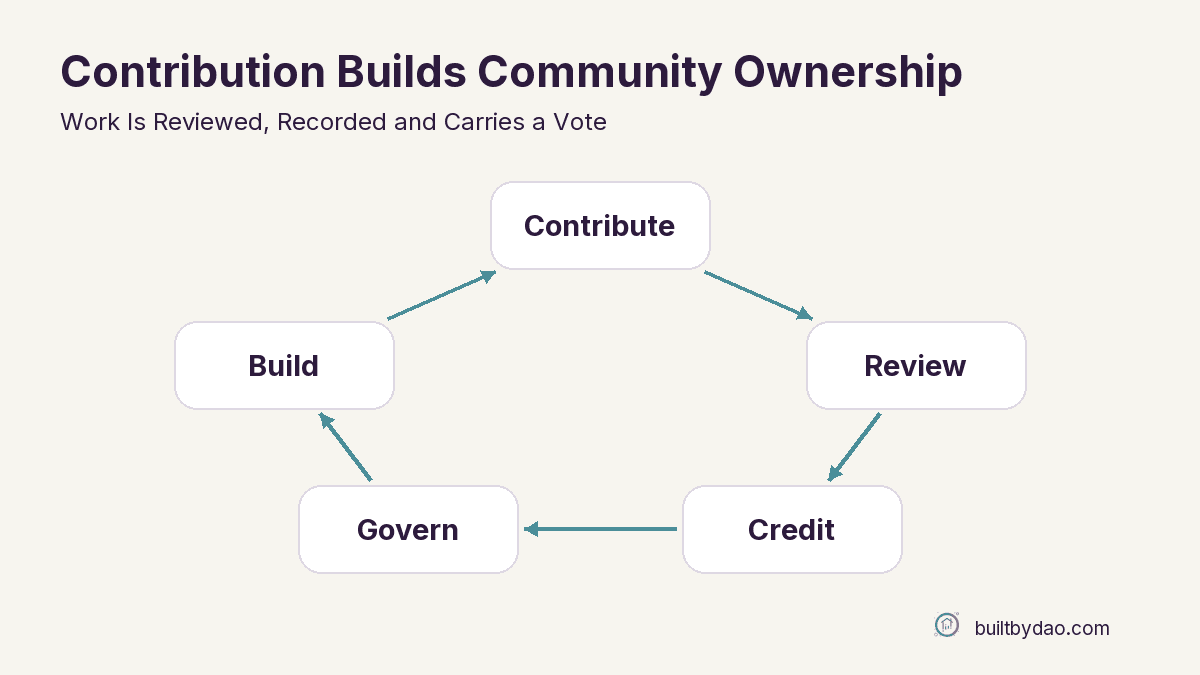
Members contribute through defined tasks. The task makes the expected result clear, and review establishes whether the work meets that standard. Eligible work can then earn contribution credit, which carries standing and governance weight.
Contribution credit is not pay, legal equity or a direct property share. It cannot be bought, sold or transferred and has no member cash-out. It recognizes reviewed work and gives eligible contributors a defined voice in the organization.
Define the Task
Set the scope, expected result, deadline, required skills and rank before the work begins.
Review the Result
A reviewer checks the completed work and its supporting evidence against those expectations.
Record the Contribution
Credit requires accepted evidence, good standing, an authorized funded project release and confirmation.
Take Part in Decisions
Governance separates Contributor, Investor and Council houses. Contributor voting power comes from eligible work; capital does not become that power.
Build Shared Places
The planned Foundry would bring practical skills and recovered materials into construction of community-owned homes and shared infrastructure.
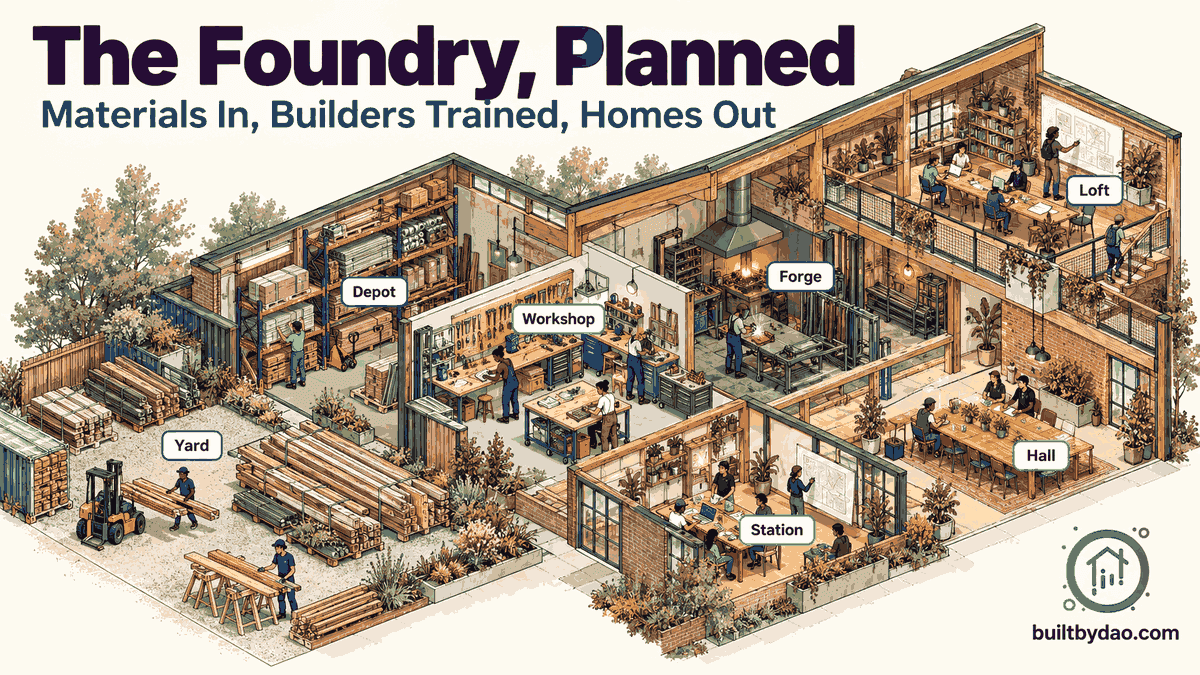
What the Foundry Would Do
The Foundry is the planned physical hub. Recovered lumber, brick and metal would be sorted, graded and prepared for construction. Training would begin with orientation in the Hall, continue with hands-on learning in the Workshop and reach construction sites.
The point of bringing those activities together is practical: materials need a useful next purpose, and people learning a trade need work where they can apply it. The hub would support both. Detroit and Chicago are the likely first two hub cities; no site has been chosen.
What Qualifying Rent Would Earn
When a qualifying member property opens, Housing Loyalty would give residents credit for verified base rent. Each lease sets a rate for its term, normally 5 to 15 percent, with 10 percent standard. A qualifying period receives credit once.
Housing credit records rent, while contribution credit records reviewed work. The two have different meanings. Rent remains due in cash; housing credit does not give title, reduce future rent, create a fixed cash right or add Contributor voting power.
The public learning path explores how housing, contribution and shared decisions fit into the homes, workspaces and shared places Built By DAO plans to build.