Built By DAO
Planning a Foundry Hub in Chicago
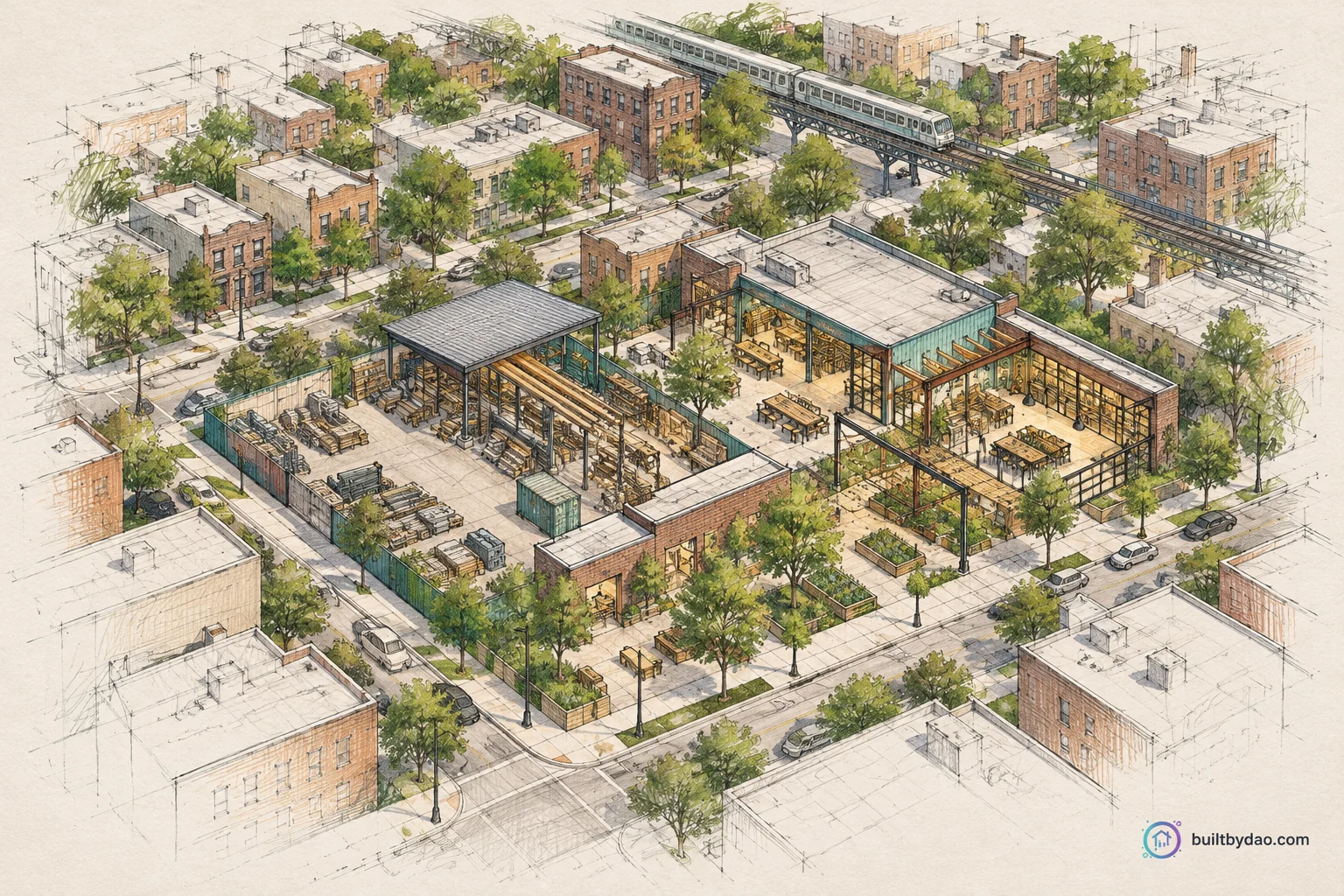
The planned neighborhood roles of a Chicago Foundry: recovering useful materials, teaching practical skills and making room for community life.
A Hub Planned With the Neighborhood
Chicago is one of the likely first two Foundry cities, alongside Detroit. No site has been chosen. The first hub is to be sited with the neighborhoods, with material recovery, training and community gathering serving the work of building community-owned places.
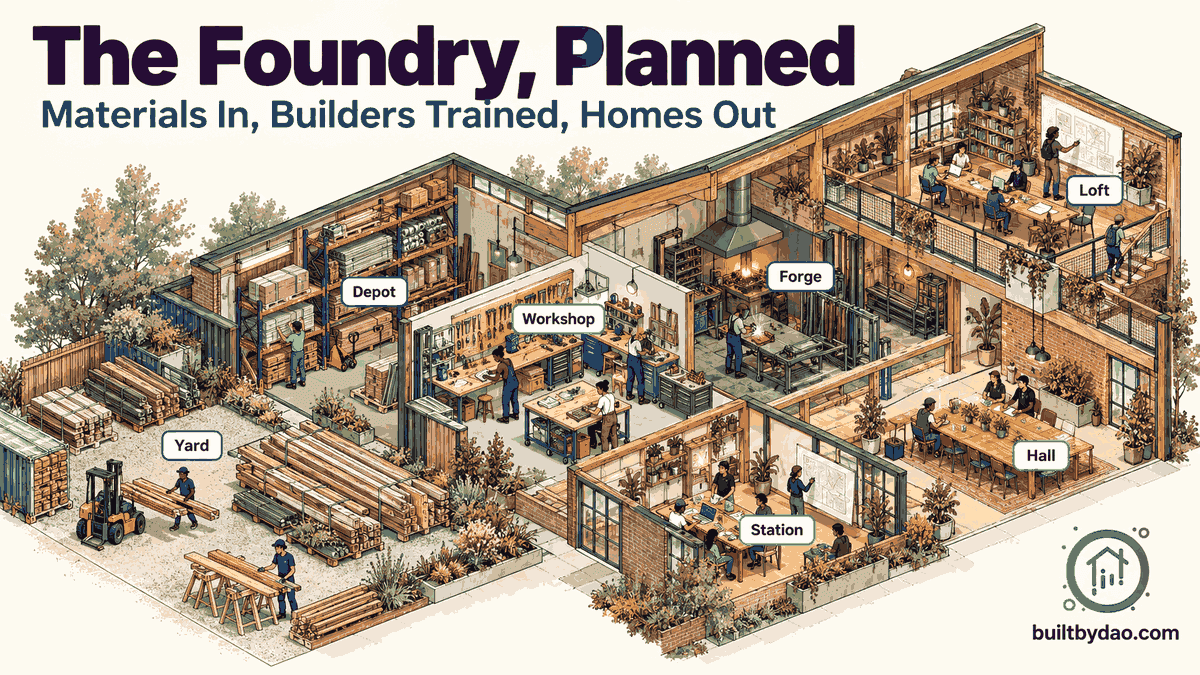
The plan gives those activities a shared physical center. Useful materials would be prepared for construction, people would learn skills they can apply to building, and the Hall would provide space for orientation, meetings and education.
Three Uses for the Planned Hub
The Foundry’s spaces are organized around practical uses. Each has a role in preparing people, materials or the work itself.
Materials for Construction
The Yard, Depot and Forge would support sorting, inventory and fabrication of recovered materials.
Hands-On Learning
The Workshop would put repair, material preparation and practical training together.
Community Gathering
The Hall would provide room for orientation, education, meetings and events.
Recover Materials for Their Next Use
Deconstruction would supply recovered lumber, brick and metal. Those materials would be assessed, sorted, cataloged and stored, then repaired or fabricated for construction. The path gives recovery an intended use in the homes and shared infrastructure the organization plans to build.
The circular plan sets recovery targets of 85 percent for lumber, 80 percent for brick and 98 percent for metals, with at least 80 percent construction diversion. These are planning targets, not measured results from a Chicago facility.
Train People Alongside the Work
The planned training path begins with orientation in the Hall, continues with hands-on learning in the Workshop and reaches construction sites. Guilds would support the craft community around that learning, with experienced members mentoring others in fields such as carpentry, electrical and plumbing.
Project working groups would bring trades together with design, coordination and documentation. The point is to develop the people who can carry out the work, alongside the materials and space it needs.
A Hall for the Community Around the Hub
The Hall’s planned role extends beyond training orientation. It would also hold meetings, education, events and community gatherings. That makes it part of the Foundry’s neighborhood purpose as well as its construction program.
Gathering space belongs alongside the workshops and materials areas because a shared place takes discussion, learning and coordination too. No Hall is open yet; these uses describe the room the hub is intended to provide.
Local Work and Shared Decisions
Eligible, reviewed work earns recognition and Contributor voting weight. That includes the practical and organizing work behind a place. Capital does not become Contributor power. The contribution record is not pay, legal equity or a direct property share.
The larger aim is homes alongside workspaces, local businesses, training and shared infrastructure. For Chicago, the Foundry plan is a way to bring the materials, skills and community space needed for that work together.