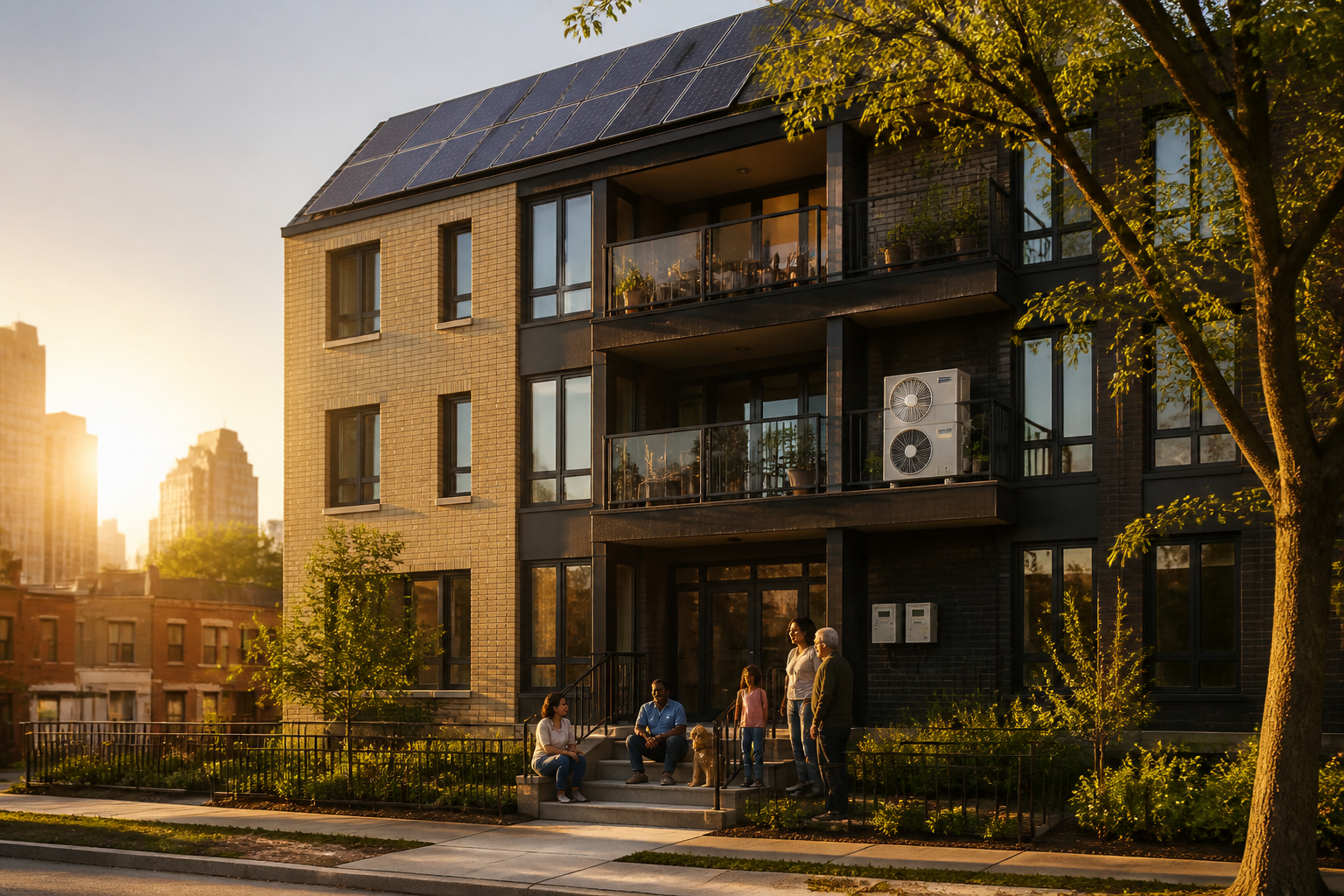
A green affordable housing cooperative is a building or set of buildings that residents collectively own and govern, designed or retrofitted to use dramatically less energy. The model brings together two goals that are usually pursued separately: keeping housing permanently affordable, and making homes efficient enough that low energy bills stay low for decades. When residents own the asset, the incentives to invest in efficiency, electrification, and weatherization line up in a way that rental ownership rarely achieves.
This page explains how the two ideas reinforce each other, what energy upgrades matter most for affordable co-ops, how the work gets financed, and how the policy landscape changed in 2026.
What a Housing Cooperative Actually Is
In a housing cooperative, residents do not individually own their units the way condo owners do. Instead, each household holds a share in a cooperative corporation that owns the entire property. That share comes with the right to occupy a specific home and a vote in how the cooperative is run. Residents pay a monthly "carrying charge" rather than rent. The carrying charge covers the cooperative's operating costs: the underlying mortgage, property taxes, insurance, maintenance, reserves, and utilities where they are paid in common.
Two features make co-ops distinctive for affordability. First, in a limited-equity cooperative, resale prices on shares are capped by formula, so the housing stays affordable to the next household instead of being priced to the market. Second, because residents collectively control operating costs, every dollar saved on energy or maintenance can flow back into lower carrying charges rather than to an outside landlord.
That second feature is the hinge on which green retrofits turn.
Why Resident Ownership Aligns Incentives for Efficiency
Energy efficiency in rental housing suffers from a well-known structural problem often called the split incentive. The landlord pays for the new heat pump, the new windows, or the added insulation, but the tenant pockets the lower utility bill. Because the party paying for the upgrade is not the party who benefits, efficiency investments that would pay for themselves often never happen. The reverse split also exists: where the landlord pays the utilities, tenants have little reason to conserve.
Cooperative ownership collapses that gap. The people who approve and finance an efficiency project are the same people who live with the results and pay the bills. When a co-op weatherizes its envelope or swaps gas boilers for electric heat pumps, the savings show up directly in the carrying charge that members pay each month. A board considering a retrofit is not weighing a tenant's comfort against an owner's return; it is weighing the membership's upfront cost against the membership's own long-term savings.
This alignment has practical consequences:
- Longer payback horizons are acceptable. A co-op intends to own its building indefinitely, so an upgrade that pays back over ten or fifteen years still makes sense. A landlord planning to sell in five may pass on the same project.
- Maintenance is treated as stewardship. Members maintaining their own asset tend to catch small problems before they become expensive ones, which keeps efficiency equipment performing as designed.
- Decisions are transparent. Carrying charges are set in the open, so members can see how an efficiency investment changes their monthly cost, which builds support for doing the work.
None of this is automatic. Co-ops still need capital, technical expertise, and a plan. But the ownership structure removes the single biggest reason efficiency upgrades stall in affordable housing.
The Energy Work That Matters Most
Green affordable housing breaks into two broad categories: retrofitting existing buildings and constructing new ones. Most of the near-term opportunity is in retrofits, because the affordable stock that already exists is large, often old, and frequently leaky.
Weatherization: the foundation
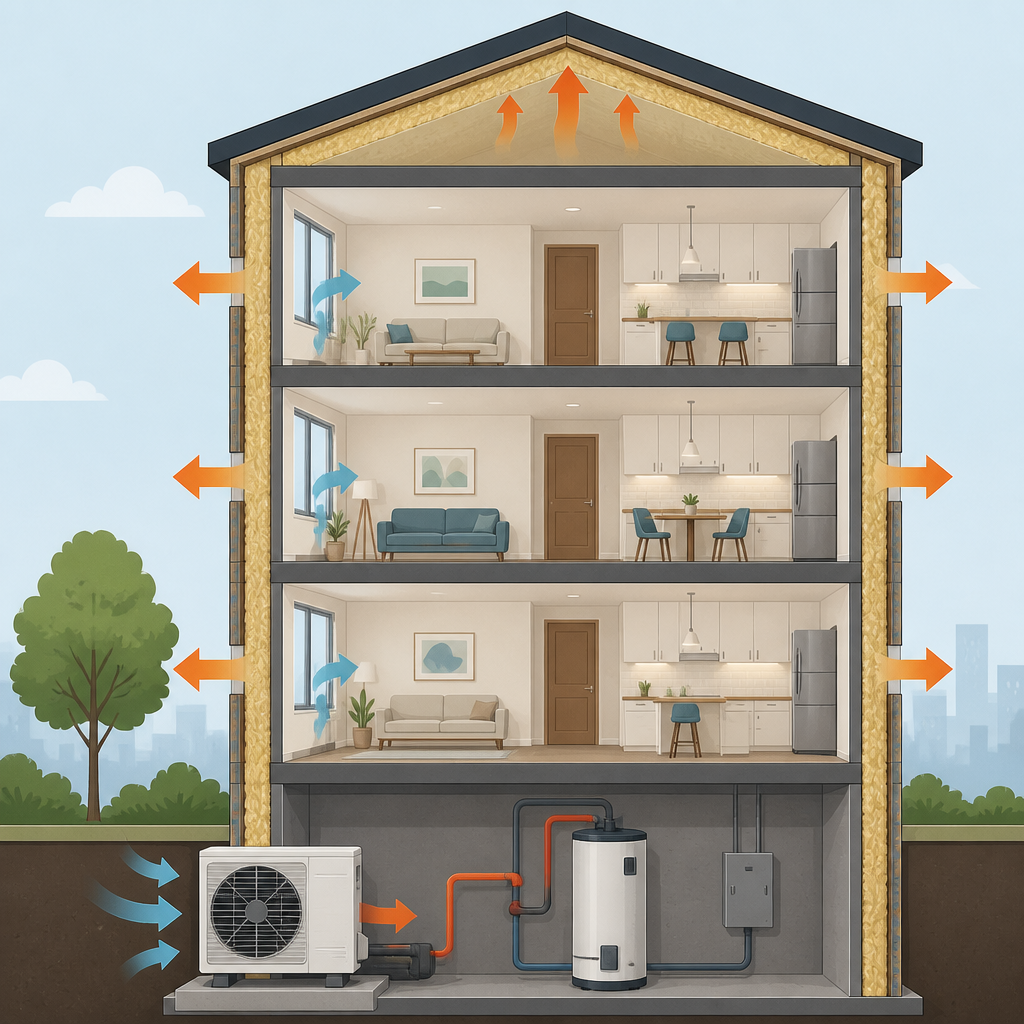
Weatherization is the unglamorous work that produces the most reliable savings: air sealing, insulation in walls and attics, duct sealing, and upgraded windows and doors. A tighter, better-insulated building loses less conditioned air, which means smaller heating and cooling loads year-round. Weatherization is usually the first step in any serious retrofit because it shrinks the equipment a building needs. There is little point installing a large heat pump to fight heat loss you could have sealed off for less money.
For older co-op buildings, weatherization also improves comfort and health — fewer drafts, more stable indoor temperatures, and reduced moisture problems — which matters to members who live there full time.
Electrification: heat pumps and induction
Electrification replaces fossil-fuel equipment with efficient electric alternatives, chiefly air-source or ground-source heat pumps for space heating and cooling, and heat-pump water heaters for hot water. Modern cold-climate heat pumps move heat rather than generate it, delivering several units of heating for each unit of electricity, which is why they outperform resistance heat and, in many cases, gas on operating cost.
Electrification does more than cut emissions. It often adds air conditioning to buildings that never had it, which is increasingly a health necessity. It removes combustion appliances and their indoor air-quality risks. And it positions a cooperative to benefit as the electric grid itself gets cleaner over time, without any further work at the building.
Pairing electrification with rooftop or community solar, where feasible, can push operating costs lower still and reduce a co-op's exposure to volatile utility rates.
New construction built tight from the start
When a cooperative builds new, efficiency is far cheaper to achieve because it is designed in rather than bolted on. High-performance envelopes, all-electric systems, efficient ventilation with heat recovery, and solar-ready roofs add modest cost at construction but lock in low operating expenses for the life of the building. For a limited-equity co-op meant to stay affordable for generations, that lifetime view is exactly the right one.
How the Money Works
Efficiency upgrades cost money upfront and save money over time. The financing challenge for affordable co-ops is bridging that gap without raising carrying charges so much that the housing stops being affordable in the meantime. Several tools make that possible.
Green loans and efficiency financing
Green loans are debt products underwritten in part on the energy savings a project is expected to produce. Lenders and some public programs offer favorable terms — lower rates, longer amortization, or higher loan amounts — when a building commits to verified efficiency improvements. Because a successful retrofit lowers operating costs, the building can carry the additional debt service out of the savings rather than out of members' pockets. Some programs also provide grants or rebates that reduce the principal that needs to be borrowed at all, particularly for weatherization and heat-pump installations.
Turning utility savings into carrying-charge relief
The mechanism that makes green co-ops financially coherent is the link between utility savings and carrying charges. When a co-op pays utilities in common, every dollar cut from the energy line is a dollar that no longer needs to be collected from members. A retrofit financed with a green loan can be structured so the new debt payment is smaller than the utility savings it produces — a cash-flow-positive upgrade from day one. Where the numbers do not net positive immediately, the savings still blunt the carrying-charge increase that the financing would otherwise require, and the position improves every year as energy prices rise.
This is the practical payoff of aligned ownership: the cooperative captures the savings, applies them where members feel them, and uses the predictable monthly cost reduction to support the financing that paid for the work.
Layering sources
Most green affordable projects stack several funding sources: a green or conventional first mortgage, utility rebates, weatherization grants, energy tax incentives, and any state or local affordable-housing subsidy the project qualifies for. Modeling how these layers interact — and how the resulting debt and savings land in the carrying charge — is detailed, deal-specific work. Getting it wrong can sink an otherwise sound project; getting it right is what turns a green retrofit from an aspiration into a closed deal.
The 2026 Policy Shift
The federal landscape for cooperative housing changed meaningfully in June 2026. The 21st Century ROAD to Housing Act (H.R. 6644) was passed by Congress. The legislation includes provisions, championed by Representative Nydia Velázquez, that authorize cooperatives within federal housing programs — explicitly recognizing the co-op model in programs where it had historically been overlooked or excluded.
The significance is structural. When federal housing programs recognize and accommodate cooperatives, the model gains access to financing channels, program eligibility, and institutional support that make new co-ops easier to start and existing ones easier to sustain. The Velázquez provisions are aimed at a cooperative sector already home to roughly 1.5 million families. For green affordable co-ops specifically, broader federal recognition strengthens the foundation on which efficiency financing and long-term affordability can be built.
How Built By DAO + Blueprint Fit In
Built By DAO is a venture studio focused on community-owned development. Across our brands — Urban Array, and Running Start Digital — and under founder Marquis Davis, we build the tools and structures that let communities own what gets built where they live.
Our flagship product, Blueprint, is software that helps groups plan, finance, and launch affordable housing cooperatives. The hardest parts of a green co-op are exactly the parts Blueprint is built to handle: structuring the cooperative, modeling how a financing stack lands in members' carrying charges, projecting how utility savings from weatherization and electrification offset debt service, and turning all of it into a plan a group can actually execute and a lender can actually underwrite.
If you are working to launch or green a cooperative — whether you are retrofitting an existing building or planning new construction — Blueprint is designed to take you from idea to financed project.
Explore Blueprint and start planning your cooperative →
Frequently Asked Questions
What is a green affordable housing cooperative?
It is a resident-owned housing cooperative — where members collectively own and govern the property and pay carrying charges instead of rent — that is built or retrofitted to use significantly less energy. Combining ownership with efficiency keeps both the housing and the operating costs affordable over the long term.
Why are cooperatives better suited to energy efficiency than rentals?
Rental housing suffers from the split-incentive problem: whoever pays for an efficiency upgrade often is not the one who benefits from the lower bill. In a cooperative, the members who approve and finance a retrofit are the same people who live in the building and pay its utilities, so the savings flow directly back to them through lower carrying charges.
How do energy savings reduce what members pay each month?
When a co-op pays utilities in common, money saved on energy is money it no longer needs to collect from members. A retrofit financed with a green loan can be structured so the loan payment is smaller than the utility savings, making the upgrade cash-flow positive — or, at minimum, reducing the carrying-charge increase the financing would otherwise require.
What energy upgrades have the biggest impact?
Weatherization — air sealing and insulation — usually delivers the most reliable savings and should come first because it shrinks the heating and cooling equipment a building needs. Electrification with heat pumps then cuts operating costs further and removes on-site combustion. New construction can build these features in from the start at lower cost.
How are green retrofits for affordable co-ops financed?
Most projects layer several sources: a green or conventional mortgage underwritten in part on expected energy savings, utility rebates, weatherization grants, energy tax incentives, and any applicable affordable-housing subsidy. The savings from the retrofit help the building carry the financing without pushing carrying charges out of affordable range.
What changed for cooperatives in federal policy in 2026?
The 21st Century ROAD to Housing Act (H.R. 6644) was passed by Congress in June 2026 (now law as of July 2026). Its Velázquez provisions authorize cooperatives within federal housing programs and are aimed at a cooperative sector already home to roughly 1.5 million families, giving the co-op model broader recognition and access to federal financing and program support.