
Here is the 2026 housing bill explained in plain terms: in June 2026, Congress passed the 21st Century ROAD to Housing Act (H.R.6644), now law as of July 2026 — the largest piece of housing affordability legislation since the 1990 Cranston-Gonzalez National Affordable Housing Act. It cleared the House 396-13 and the Senate 85-5 on final passage. For a policy area defined by gridlock, a margin like that is the headline. This explainer walks through what the law actually does, why it moved now, what it means for affordability broadly, and what it means for one specific and often-overlooked tool: cooperative homeownership.
We will keep this grounded. Where a detail is confirmed in the bill text or reputable reporting, we say so. Where the long-term effect is uncertain, we say that too. Housing policy rewards realism over hype.
What the ROAD to Housing Act actually is
The "21st Century ROAD to Housing Act" is a combined package. It pulls together the House-passed housing bill and the Senate's Renewing Opportunity in the American Dream (ROAD) to Housing Act, stitching together roughly 18 sections drawn directly from the two chambers' bills plus more than two dozen additional sections that incorporate previously introduced bipartisan legislation. In other words, it is less a single new idea than a consolidation of years of smaller, agreed-upon reforms that finally rode through together.
That structure matters for understanding why it passed. Each individual piece had already built its own coalition. Bundled into one vehicle, the package carried enough mutual buy-in to clear both chambers by wide margins. The ROAD acronym — Renewing Opportunity in the American Dream — signals the framing lawmakers chose: ownership and opportunity, not just rental assistance.
It is worth noting one wrinkle in the timeline. The bill passed Congress in late June 2026 and went to the President's desk, where the White House declined to sign it. Under the Constitution's ten-day rule, the bill became law in July 2026 without a presidential signature — the legislative outcome is the same, and the law is in effect.
What the bill does: the core provisions
The law works along a few main tracks. Taken together they aim at the two levers that move housing costs: supply and access.
Boosting supply through regulatory streamlining
A large share of the bill is about reducing the friction that slows new housing from getting built. The streamlining provisions are designed to cut delay and duplication in how federally connected housing projects move from plan to permit to occupancy. The economic logic is straightforward: when the cost and time of building fall, more units get built, and more supply eases price pressure over the medium term. This is the part of the bill with the broadest cross-ideological appeal, because both supply-side reformers and tenant advocates can point to undersupply as a root cause of unaffordability.
Protecting starter homes from institutional buyers
The package includes new restrictions on large institutional investors purchasing single-family homes. The concern this addresses is well documented: when private equity and large corporate buyers absorb entry-level housing stock, they compete directly with first-time buyers and can convert ownership inventory into rentals. Limiting that activity is meant to keep more of the starter-home market available to households trying to buy.
Updating mortgage and program definitions
The bill also modernizes definitions inside federal housing programs — for example, clarifying what counts as a "covered mortgage loan" to explicitly include individual units of condominiums and housing cooperatives. Definitional changes sound dull, but they are where eligibility lives. If a program's definition does not name your housing type, you are effectively locked out of it. Naming co-op and condo units explicitly closes that kind of gap.
Other notable measures
The package folds in a range of additional bipartisan provisions, including a temporary prohibition on the Federal Reserve establishing a digital dollar. Provisions like this are part of how omnibus packages get assembled — unrelated agreed-upon items ride along — and they are part of why the vote count was so lopsided.
Why it passed now
Three forces converged in 2026.
First, the affordability crisis became politically undeniable. Years of rising rents and home prices, combined with a persistent shortfall of millions of units, pushed housing to the top of voter concerns across the political spectrum. When a problem hits homeowners, renters, and would-be buyers simultaneously, the usual partisan divides soften.
Second, the bill was built to be passable. By consolidating proposals that had already earned bipartisan sponsors, leadership minimized the number of fresh fights. The supply-focused, ownership-focused framing gave members on both sides something to claim.
Third, the comparison to 1990 is instructive. The Cranston-Gonzalez National Affordable Housing Act was the last time Congress restructured federal housing policy at this scale. A generation later, the tools it created had aged, and the appetite for a comparable reset had built up. The ROAD to Housing Act is the response to that accumulated pressure.
A realistic note: passage is not the same as impact. As several housing analysts have cautioned, a historic supply-and-ownership bill may still fall short for the lowest-income renters, whose needs depend heavily on direct subsidy and voucher funding rather than streamlining alone. Watching how the law is funded and implemented will matter as much as the text itself.
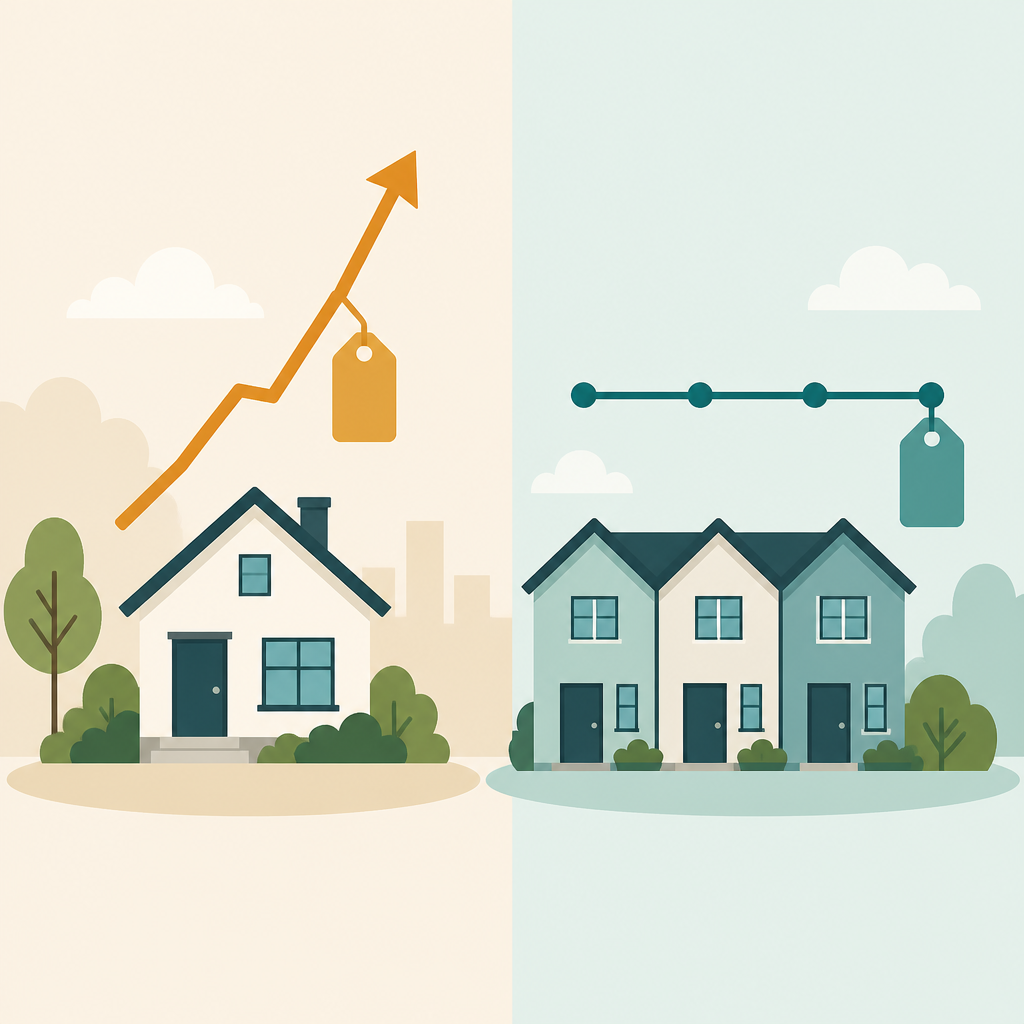
What it means for cooperative housing specifically
This is where the bill is quietly significant, and where it intersects most directly with the work we do at Built By DAO.
Embedded in the package are provisions — associated with Rep. Nydia Velázquez's long-running advocacy for cooperative housing — that explicitly authorize and recognize housing cooperatives within federal housing programs. Co-ops have existed in the U.S. for over a century and currently support roughly 1.5 million families, yet federal program design has often treated them as an afterthought, written around rental and single-family ownership rather than around shared, member-owned models. Explicit authorization changes the default. When statute names cooperatives as eligible participants, it becomes far harder for an agency to exclude them on a technicality.
Why does cooperative ownership matter for affordability in the first place? Co-ops — particularly limited-equity cooperatives — are one of the most durable affordability tools available. Residents collectively own the building or development through a cooperative corporation and hold shares rather than individual deeds. Resale formulas can keep units permanently affordable across generations of owners, instead of letting each sale reset to market price. That permanence is the key difference from most subsidized rental or down-payment-assistance programs, where affordability can erode or expire. A well-structured co-op locks affordability in.
The catch has always been the on-ramp. Forming a cooperative, securing financing, and navigating program eligibility is complex, and that complexity has kept the model smaller than its track record deserves. Federal recognition removes one barrier. It does not remove all of them.
How Built By DAO + Blueprint fit in
Built By DAO is a venture studio for community-owned development. Our ecosystem — including Urban Array, which develops cooperative housing in disinvested communities, and Running Start Digital — exists to make shared ownership practical, not just theoretically possible. The ROAD to Housing Act improves the policy environment; our job is to make the model usable on the ground.
That is what Blueprint is built for. Blueprint is software to plan, finance, and launch affordable housing cooperatives. It takes the hardest parts of forming a co-op — modeling the financials, structuring ownership, mapping a path to capital, and meeting program requirements — and turns them into a guided, repeatable process. When federal law explicitly authorizes cooperatives in its programs, the bottleneck shifts from "is this allowed?" to "how do we actually execute?" Blueprint is the execution layer for that second question.
If you are a community organization, a mission-aligned developer, or a group of residents who want to own where you live, the 2026 bill opened a door. Start with Blueprint to see what a cooperative could look like for your community.
What comes next
A passed bill is the start of a process, not the end. A few things to watch:
- Enactment and implementation. Confirm the bill's final signing status, then watch how agencies write the rules that put the statute into practice. Streamlining and cooperative authorization both depend on regulatory follow-through.
- Funding. Authorization is not appropriation. The provisions that need money — especially anything aimed at the lowest-income households — will only deliver if Congress funds them.
- State and local response. Federal streamlining works best when paired with local zoning and permitting reform. The biggest supply gains will come where layers of government move in the same direction.
- Cooperative pipeline. With co-ops named in federal programs, expect more organizations to test the model. The constraint becomes capacity to form and finance co-ops well — exactly the gap tools like Blueprint exist to close.
Frequently asked questions
What is the 21st Century ROAD to Housing Act?
It is a 2026 federal housing law (H.R.6644) that consolidates House and Senate housing bills into one package. It passed the House 396-13 and the Senate 85-5 on final passage, became law in July 2026, and is widely described as the largest housing affordability legislation since the 1990 Cranston-Gonzalez National Affordable Housing Act.
What does the 2026 housing bill do?
Its core measures streamline regulations to encourage more housing supply, restrict large institutional investors from buying single-family homes, modernize federal mortgage and program definitions, and incorporate dozens of previously introduced bipartisan provisions. The aim is to address both the supply and the access sides of the affordability crisis.
How does the bill affect housing cooperatives?
It includes provisions that explicitly authorize and recognize housing cooperatives within federal housing programs, and it updates definitions so that cooperative and condominium units are clearly named as eligible. This makes it harder to exclude co-ops on technicalities and opens federal pathways that were previously ambiguous for the roughly 1.5 million families co-ops already serve.
Why are housing cooperatives considered good for affordability?
Cooperatives, especially limited-equity models, let residents collectively own their housing through shares rather than individual deeds. Resale formulas can keep units permanently affordable across owners, rather than resetting to market price at each sale. That durability makes co-ops one of the most lasting affordability tools available.
Has the bill been signed into law?
Congress passed the bill in late June 2026. The White House declined to sign it, and under the Constitution's ten-day rule it became law in July 2026 without a presidential signature. Enactment is settled.
How can my community start a housing cooperative under the new law?
The bill improves federal recognition of co-ops, but forming one still requires planning, financing, and program navigation. Blueprint by Built By DAO is software designed to guide that process end to end. You can explore it at blueprint.builtbydao.com.