Building Stronger Neighborhoods Through Shared Ownership
When residents own a stake in their buildings, neighborhoods stabilize. Here's how shared ownership reduces displacement and creates community wealth.
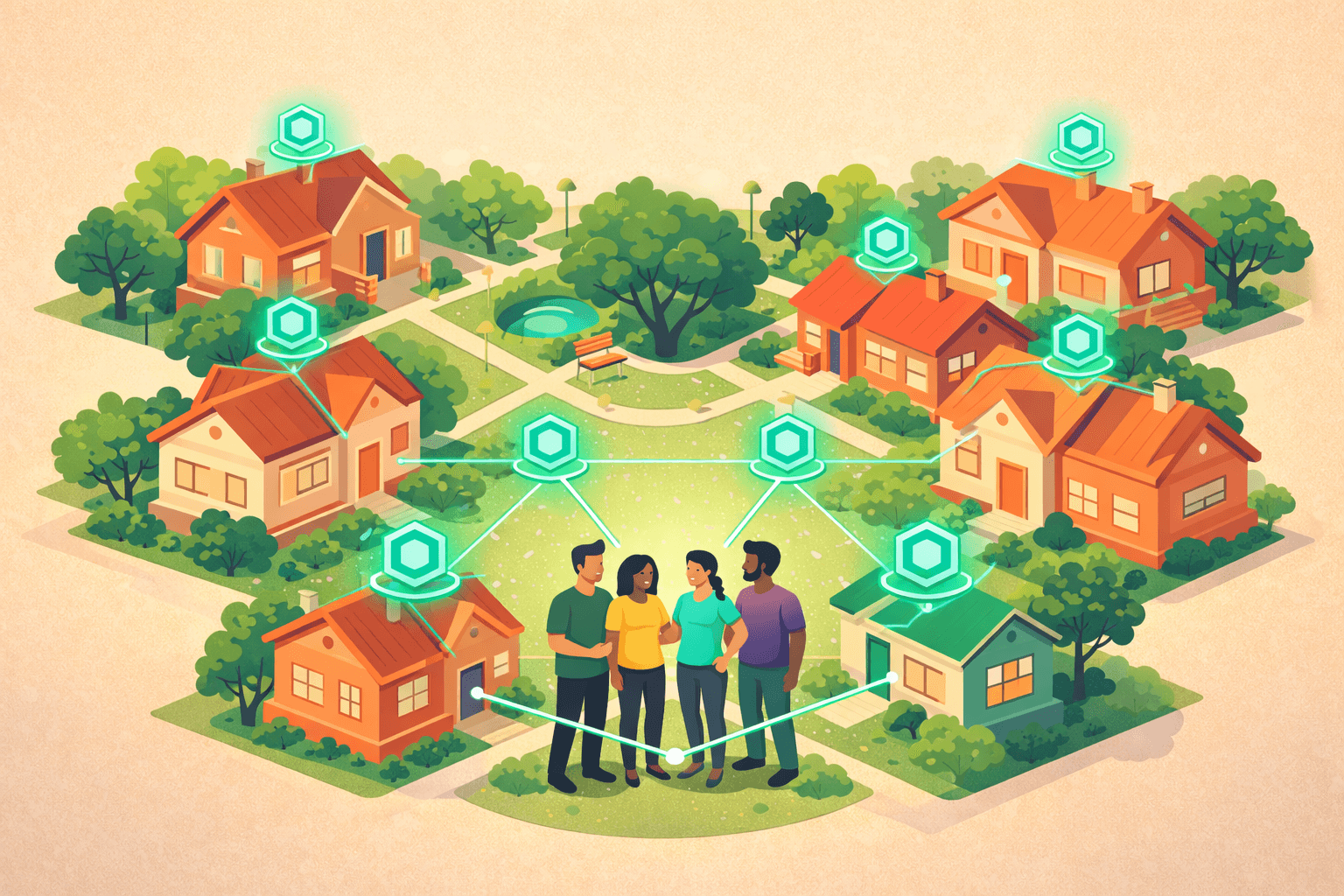
Ownership Changes Everything
There is a well-documented difference between how people treat places they own and places they rent. Homeowners are more likely to invest in maintenance, participate in local governance, build relationships with neighbors, and stay rooted in a community long enough to see it improve.
This is not a moral judgment about renters versus owners. It is a structural reality. When you have a financial stake in your neighborhood, you have a reason to care about its future. When your lease can end in 12 months and your landlord can sell the building at any time, your relationship to the community is fundamentally more fragile.
Shared ownership models aim to give renters that same sense of stake — without requiring them to qualify for a mortgage or save $50,000 for a down payment.
What Shared Ownership Looks Like
Shared ownership is not a single model. It encompasses several approaches:
- Community land trusts (CLTs) hold land in trust permanently and sell or rent homes at below-market rates. Residents own their units but not the land underneath, keeping prices affordable across generations.
- Limited-equity cooperatives allow residents to buy shares in a building at affordable prices. When they move, they sell their shares back at a formula-based price — building modest equity without feeding speculative price increases.
- Rent-to-equity programs like Built By DAO credit a portion of each rent payment toward ownership equity. Renters accumulate a financial stake over time without needing upfront capital.
All three share a common principle: the people who live in a place should benefit from its value.
How Shared Ownership Stabilizes Neighborhoods
Reduced displacement
When a neighborhood improves — new transit lines, better schools, commercial investment — property values rise. In a traditional rental market, rising values mean rising rents, which push out the existing residents who contributed to the neighborhood's appeal in the first place.
Shared ownership breaks this cycle. Residents with equity stakes are not displaced by rising values — they benefit from them. A community land trust or equity-based lease ensures that improvements help the people already there, not just the next wave of higher-income tenants.
Longer tenancy, deeper roots
Data from community land trusts across the country shows that CLT residents stay in their homes significantly longer than comparable renters. Longer tenancy means deeper neighborhood connections: parents who know the teachers at the local school, residents who show up to city council meetings, neighbors who watch out for each other.
These are not soft benefits. Research from the Urban Institute has found that neighborhood stability correlates with lower crime rates, better health outcomes, and higher school performance.
Community wealth building
In a traditional rental model, 100% of the wealth generated by a property flows to the owner — typically an individual, corporation, or REIT that does not live in the neighborhood. That wealth leaves the community.
In a shared ownership model, a meaningful portion stays. When residents accumulate equity, they build personal wealth. When they spend that wealth locally — on home improvements, education, small businesses — it circulates through the neighborhood economy.
This is the concept economists call the local multiplier effect. Money that stays in a community gets spent and re-spent, generating more economic activity than money that is extracted by absentee owners.
The Evidence for Community Impact
Shared ownership is not a theory. It has a decades-long track record:
- Champlain Housing Trust in Burlington, Vermont — one of the oldest and largest CLTs in the country — has maintained affordable housing for over 2,000 families while keeping foreclosure rates below 1%.
- Limited-equity co-ops in New York City have provided stable, affordable housing in neighborhoods where market-rate rents have tripled over the past 20 years.
- Resident-owned communities (ROCs) for manufactured housing have shown that when residents collectively own their community, lot rents increase at roughly one-third the rate of investor-owned parks.
The pattern repeats across geographies and models: when residents have ownership, outcomes improve — for individuals and for the neighborhoods they live in.
How Built By DAO Extends This Model
Built By DAO takes the shared ownership concept and adds two layers: blockchain-verified equity and democratic governance.
Every rent payment generates EQT credits — 10% of your monthly rent, tracked transparently on-chain. You can see your balance, verify the math, and know that your equity is real. No opaque accounting. No fine print.
On the governance side, Built By DAO operates as a decentralized autonomous organization. That means residents vote on building decisions: maintenance priorities, community rules, future development plans. Your voice is proportional to your stake, and every vote is recorded transparently.
This is not just about putting money in people's pockets. It is about giving residents genuine agency over the places they call home.
The Neighborhood You Want to Live In
Strong neighborhoods are not accidents. They are built by people who are invested — financially and emotionally — in their community's future. Shared ownership creates that investment without requiring the kind of wealth that most renters do not have.
Own a Piece of Where You Live
Built By DAO is building housing where residents have a real stake. 10% of your rent becomes equity. Your vote shapes your community. That is shared ownership in practice.
Join the waitlist to be part of the first wave, or learn how governance works in our community model.
Related Posts
Community Property Records: Connecting Decisions, Work and Money
The four records that make shared property understandable: decisions, work, money and outcomes—and how BBD connects them.
Own What You Help Build: Why DAOs Matter Now
DAOs are here, and they're changing how organizations run — with code instead of bosses, and power flowing to those who show up and contribute. Here's why now is the time to get involved.
Built By DAO: A Solution for Young Adults Seeking Homeownership and a Digital Nomad Lifestyle
Young adults face unprecedented barriers to homeownership. Built By DAO combines cooperative ownership with digital nomad flexibility to create a new path to building equity.